







Equipment-change approval
Route proposed swaps through qualified review, commercial approval and the permitted purchasing or billing updates.
Explore workflows ↗ Salesforce
  HubSpot
  NetSuite
  Zendesk
  Microsoft Dynamics 365 Sales
  Dynamics 365 F&O
  Attio
Attio  Pipedrive
  Zoho CRM
  Campfire
  Rillet
  Front
Front  Shopify
  Amazon Seller Central
  SendGrid
 Solar installation and O&M services
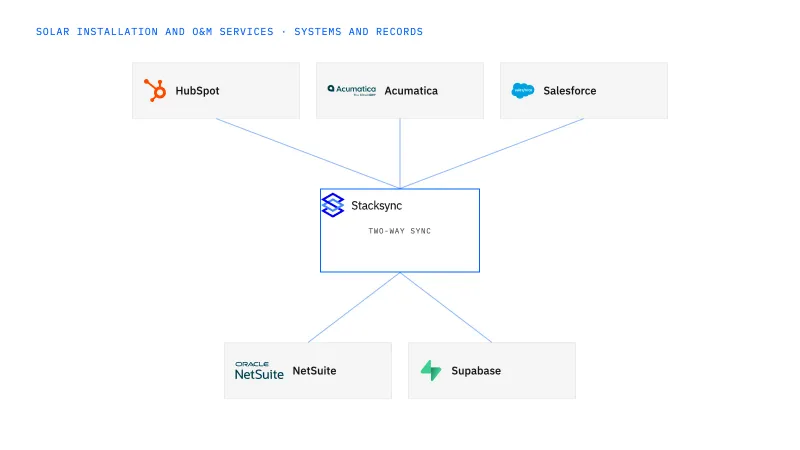
Align approved customer scope, equipment identity, project handover and ongoing solar service records.
Equipment changes and ownership transitions leave sales, project, asset and billing records describing different versions of the installation.
Explore your process in a demo, or get our shared two-way sync architecture guide.
The platform, in operating order
Keep shared customer, order, and operational records aligned, with clear field ownership.
Explore two-way sync 02Move approved work between systems, assign exceptions, and confirm the result.
Explore workflows 03Investigate cross-system questions, assemble the evidence, and prepare the next action.
Explore ai agents (genies) 04Connect trading-partner documents to operational records and exception handling.
Explore ediBuilt around your operations
US commercial solar installers and O&M providers with 100–1,000 employees that combine equipment supply, installation and service.
Route proposed swaps through qualified review, commercial approval and the permitted purchasing or billing updates.
Explore workflows ↗Connect performed work, applicable coverage and customer authorization before finance review.
Explore workflows ↗Assemble serial, completion and handover evidence against the final approved equipment scope.
Explore Genies ↗Your systems and records
| Record | Owner | Operating rule |
|---|---|---|
| Project customer | Finance | Verify the legal customer separately from the site coordinator. |
| Equipment scope | Qualified project owners | Preserve approved substitutions and final configuration. |
| Asset ownership | Account and contract owners | Use effective dates and retain historical billing relationships. |
| Handover packet | Project administration | Distinguish prepared, reviewed, delivered and accepted evidence. |
Panel, inverter and accessory procurement with partial shipments, backorders and warehouse versus project-site receiving.
Evaluate your next process
Connect solar sales opportunities to approved customer and project context.
Keep solar asset, service and billing relationships aligned across ownership changes.
Route equipment substitutions through technical review, customer approval and revised commercial handoffs.
Assemble solar equipment identity and handover evidence against the final approved project scope.
Implementation and operating guides
Connect solar sales opportunities to approved Acumatica project customers without losing site, payer or scope identity.
Handle solar asset ownership changes without moving historical service obligations or invoices to the wrong customer.
Share verified solar project milestones through a customer portal with explicit site access and status ownership.
Route solar equipment changes through technical review, customer scope approval and a traceable billing revision.
Connect solar O&M visit evidence to coverage and billing review without assuming every completed visit is chargeable.
Use Genies to prepare a solar project handover packet with traceable equipment and completion evidence.
Resolve solar closeout evidence conflicts before marking a customer handover packet complete.
Connect solar supplier documents to project equipment requirements and distinguish shipment, receipt and installation states.
It should first pass the qualified and commercial reviews required for that change, then update the accepted scope through verified actions.
Historical financial ownership remains with finance's authorized process. Preserve prior relationships and approve future billing separately.
A forecast date is not proof of completion. Publish the verified event from its owning process and keep estimates labeled.
Bring one real process
Bring the systems, record types, and exceptions your team handles today. We’ll scope the connections and actions, then walk through the path to a confirmed result.
Explore your process in a demo, or get our shared two-way sync architecture guide.


