







Keep the proposed change explicit
Link the original item, alternative and affected project scope under one change reference.
 Salesforce
  HubSpot
  NetSuite
  Zendesk
  Microsoft Dynamics 365 Sales
  Dynamics 365 F&O
  Attio
Attio  Pipedrive
  Zoho CRM
  Campfire
  Rillet
  Front
Front  Shopify
  Amazon Seller Central
  SendGrid
 Solar installation and O&M services
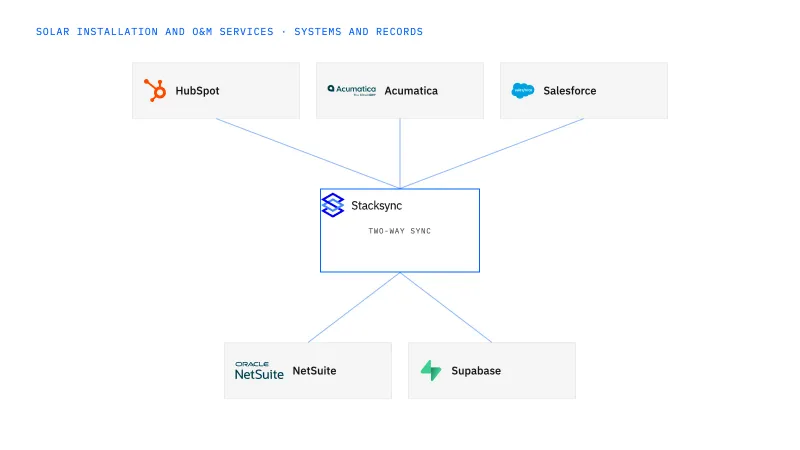
Coordinate proposed solar equipment swaps with the approved project scope. The workflow gathers supplier evidence, routes qualified review, records commercial consequences and prepares the permitted purchasing or billing update. Original requirements stay visible until the accepted revision is applied.
Procurement finds an alternative component, but engineering, the customer and finance have not accepted the same revision.
Explore your process in a demo, or get our shared two-way sync architecture guide.
When this fits
US commercial solar installers and O&M providers with 100–1,000 employees that combine equipment supply, installation and service.
Link the original item, alternative and affected project scope under one change reference.
Qualified reviewers decide suitability; authorized commercial owners approve price, timing and scope effects.
Return verified purchase or billing references and prevent repeated updates from creating duplicate handoffs.
The process, end to end
an inverter delivery delay prompts a proposed substitute. The workflow collects the specification and supplier terms, then routes the distinct technical and customer decisions before project records change.
Scope your implementation
Review current platform pricing alongside the records, volume, and actions in your process. Use your own operating baseline to evaluate the economics.
Explore your process in a demo, or get our shared two-way sync architecture guide.
From foundation to action
Keep shared customer, order, and operational records aligned, with clear field ownership.
Explore two-way sync 02Move approved work between systems, assign exceptions, and confirm the result.
Explore workflows 03Investigate cross-system questions, assemble the evidence, and prepare the next action.
Explore ai agents (genies) 04Connect trading-partner documents to operational records and exception handling.
Explore ediGo deeper
Route solar equipment changes through technical review, customer scope approval and a traceable billing revision.
Connect solar O&M visit evidence to coverage and billing review without assuming every completed visit is chargeable.
Explore all solar installation and O&M services integration and automation guides ↗
It supports the qualified review; it does not make the technical suitability decision.
Keep the shipment history and route disposition or return as a separate decision.
Yes. A traceable approved-change packet is a useful first workflow boundary.
Usually, yes. The workflow needs one approved equipment baseline that HubSpot and Acumatica both reference, and two-way sync is what keeps the opportunity, project and accepted scope pointing at the same revision. With that in place, workflows route each proposed swap through qualified review and commercial approval. Genies come after, comparing installed equipment and handover evidence with the accepted substitutions for a project owner to validate. EDI is a later step for distributor acknowledgments and shipment notices on those same purchase lines.


