Solar Project Change Orders: Route Equipment Swaps Through Approval and Revised Billing
Route solar equipment changes through technical review, customer scope approval and a traceable billing revision.
- Author
- Ignacio Malpartida · GTM Engineer
- Published
- Read time
- 5 min read
The operating decision
A solar equipment-change workflow should connect the proposed substitution to technical review, revised commercial scope, customer authorization and the resulting purchasing or billing handoff. Keep each decision separate. A supplier offering another model does not establish technical suitability or customer approval. Preserve the original equipment requirement and approved revision so project, procurement and finance teams can see exactly what changed before they act.
Explore the complete solar installation and O&M services integration and automation hub for the systems and processes around this guide.
What this looks like in solar installation and O&M services
A commercial installer learns that an ordered inverter will arrive later than planned. Procurement identifies an alternative, the technical team needs to review it, and the customer may need a revised proposal. Finance cannot simply replace the item description on the existing billable scope. A workflow can route the evidence and record the approved decision, then prepare the permitted purchasing and commercial updates under the same change reference.
Records, ownership, and update rules
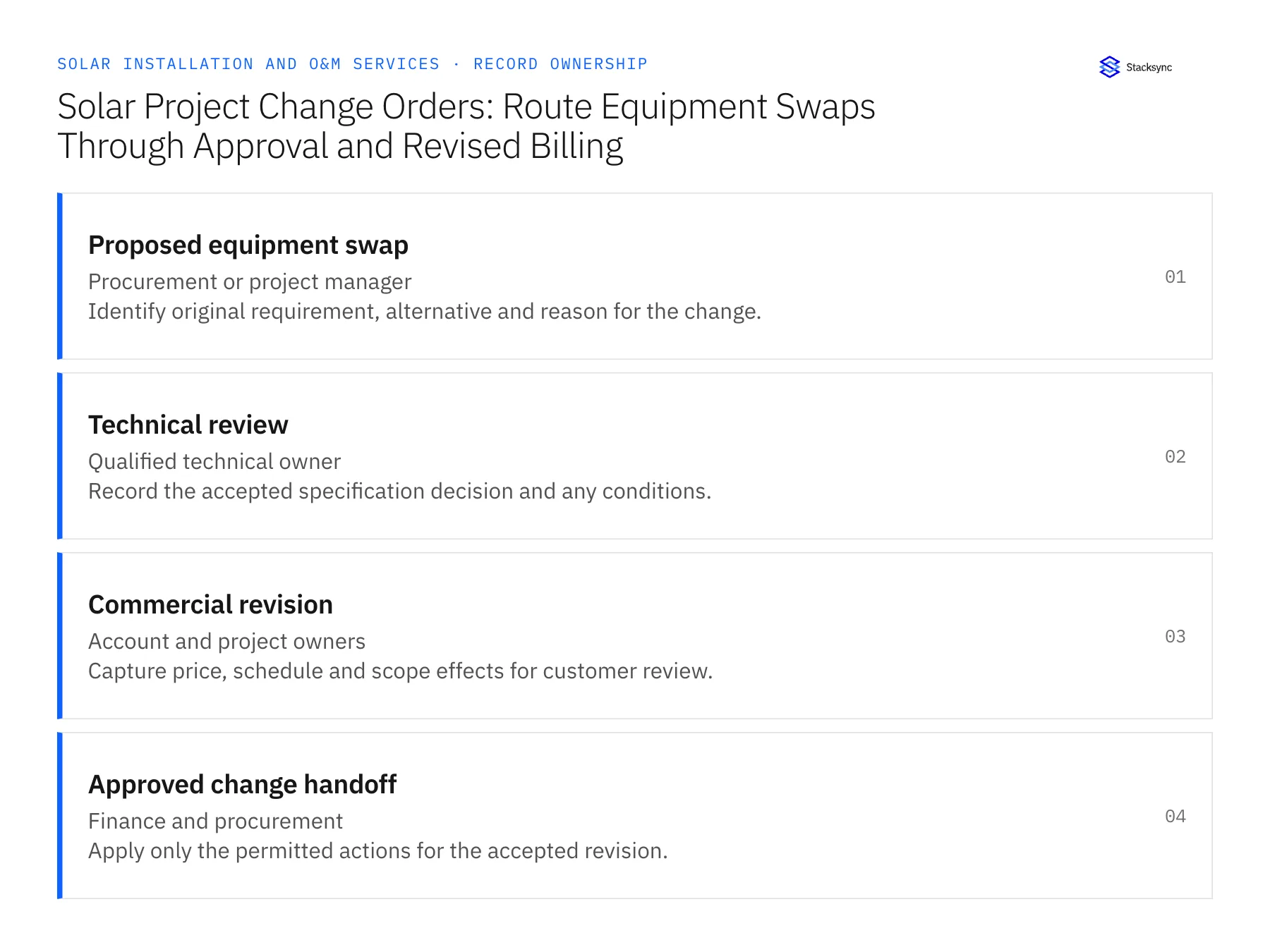
| Record | Owner | Operating rule |
|---|---|---|
| Proposed equipment swap | Procurement or project manager | Identify original requirement, alternative and reason for the change. |
| Technical review | Qualified technical owner | Record the accepted specification decision and any conditions. |
| Commercial revision | Account and project owners | Capture price, schedule and scope effects for customer review. |
| Approved change handoff | Finance and procurement | Apply only the permitted actions for the accepted revision. |
Work through the process
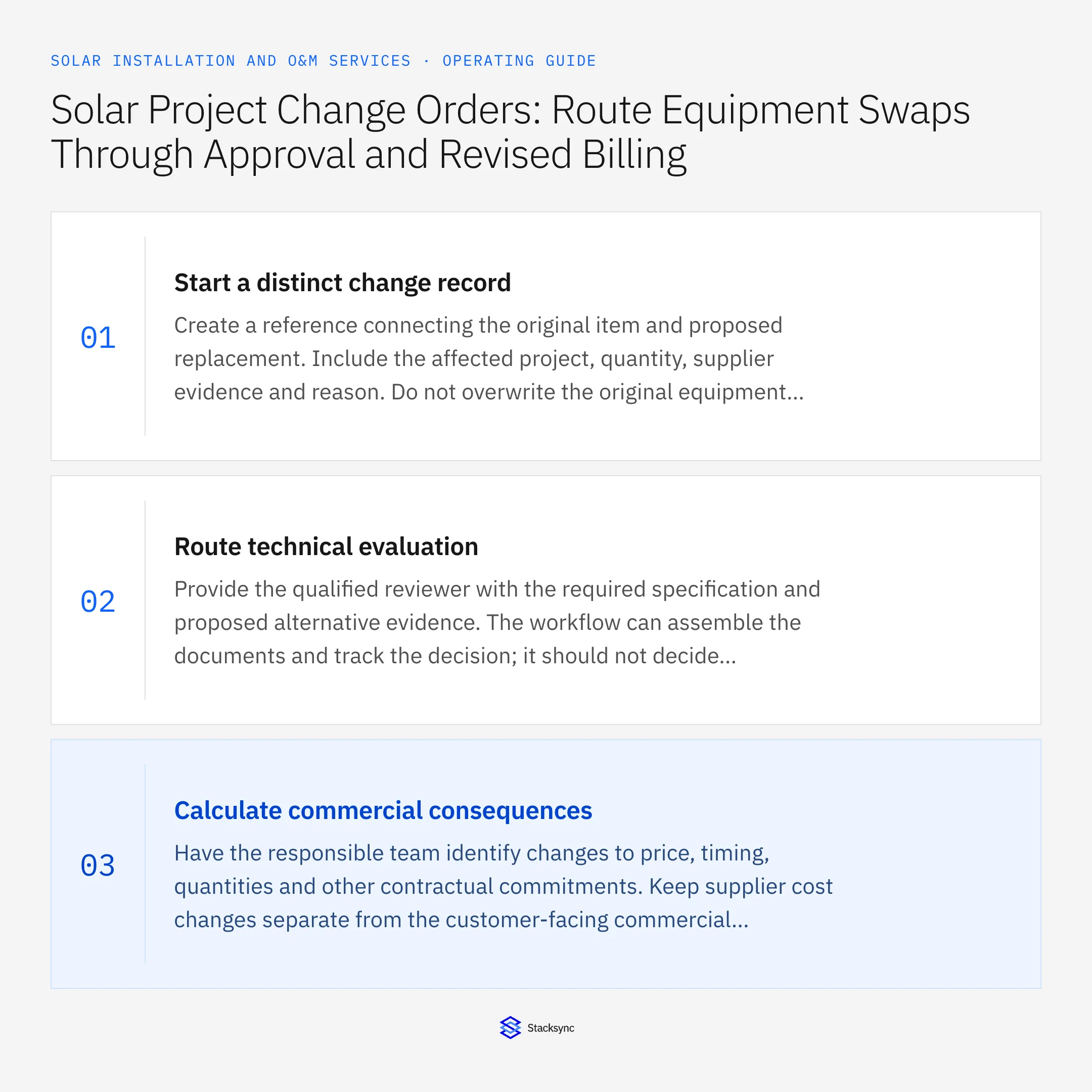
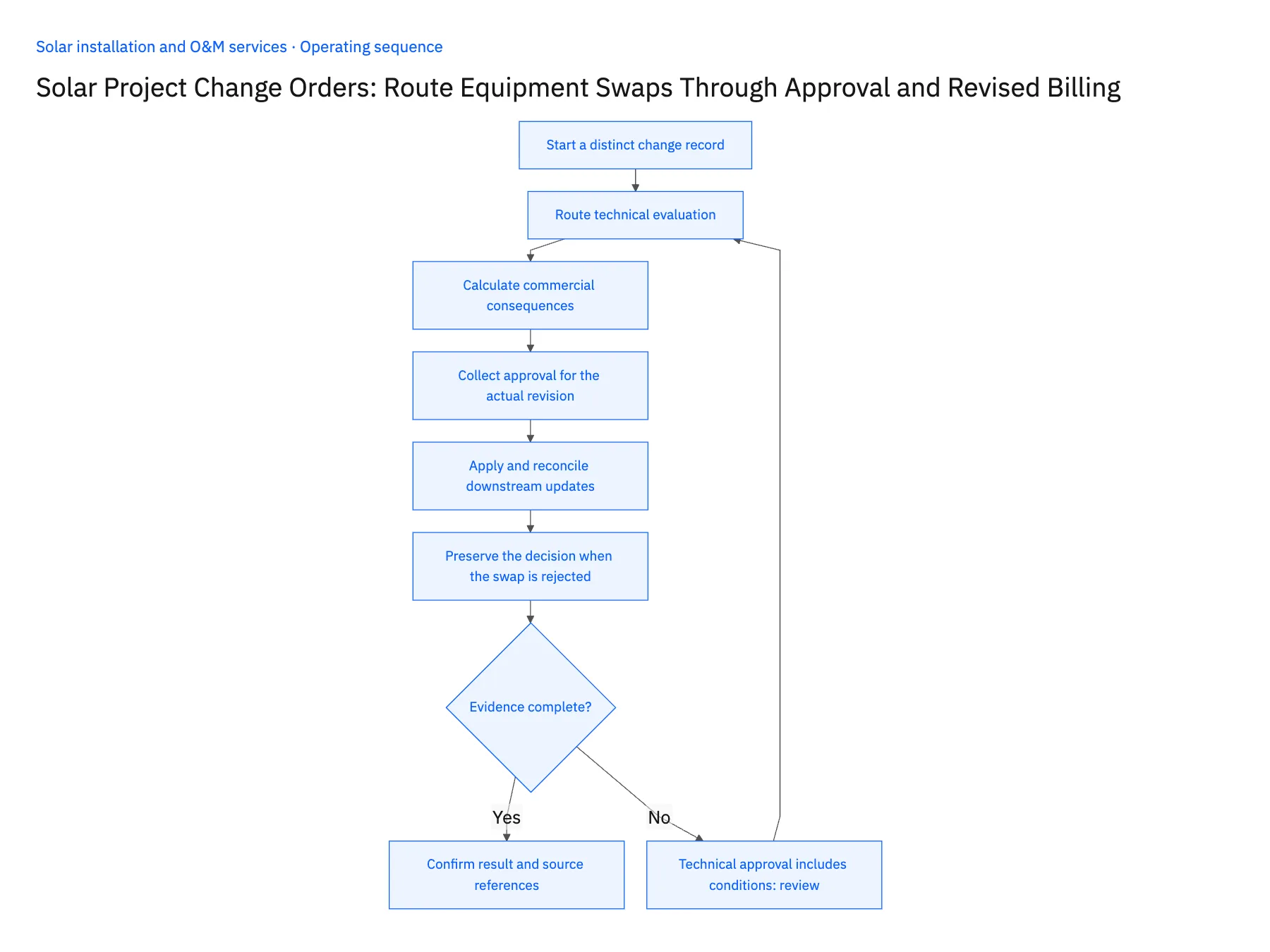
- 01Start a distinct change recordCreate a reference connecting the original item and proposed replacement. Include the affected project, quantity, supplier evidence and reason. Do not overwrite the original equipment requirement while the proposal is under review, because other teams may still be working from the accepted baseline.
- 02Route technical evaluationProvide the qualified reviewer with the required specification and proposed alternative evidence. The workflow can assemble the documents and track the decision; it should not decide compatibility or compliance. Record any conditions that must travel with the accepted substitution.
- 03Calculate commercial consequencesHave the responsible team identify changes to price, timing, quantities and other contractual commitments. Keep supplier cost changes separate from the customer-facing commercial decision. A lower supplier price does not automatically determine the revised customer charge.
- 04Collect approval for the actual revisionTie customer and internal approvals to the final scope version. If the proposed equipment or price changes after review, reopen the affected approval. Preserve partial decisions where only some equipment or project phases are accepted.
- 05Apply and reconcile downstream updatesRoute purchasing changes and billing revisions through verified actions and authorized owners. Store the resulting order or billing references under the change record. Confirm that the old requirement is superseded only after the accepted revision is applied, and prevent repeated triggers from creating duplicate requests.
- 06Preserve the decision when the swap is rejectedA rejected alternative remains useful project history. Record the reason, reviewer and affected equipment requirement without replacing the active specification. Procurement can then investigate another option without repeating the same technical question. Sales should see the resulting commercial or timing issue, but the rejection itself should not automatically create a customer price change. Keep the next proposed alternative as a separate version so its approvals cannot accidentally inherit the rejected proposal's context.
Handle the exceptions explicitly
Technical approval includes conditions
Keep those conditions attached to the handoff and verify the responsible team accepts them.
Customer approves timing but not price
Leave the commercial revision unresolved until the required scope and price decision exists.
Original equipment already shipped
Route the return or disposition decision separately instead of pretending the order was never placed.
What to verify before expanding
- Original and proposed equipment remain distinguishable.
- Qualified review precedes the accepted specification change.
- Approvals identify the exact commercial revision.
- Purchasing and billing updates retain the same change reference.

Connect this process to the rest of your operation
Explore Stacksync workflows and scope the records and actions against your actual systems. Book a demo with a real proposed equipment swap example and the exception your team handles most often, for example technical approval includes conditions.
- Solar Equipment Change-Order Workflows
- Solar Service Visits: Route Confirmed Repair Completion Into O&M Billing
- Genies for Solar Project Closeout: Assemble Serial Numbers, Completion Evidence, and Handover Records
- Solar Closeout Exceptions: Missing Serial Numbers, Changed Equipment, and Incomplete Handover Evidence
- Check Solar Installation Readiness Across Salesforce and NetSuite
- Identify Equipment Allocation, Permit, and Crew Blockers
The shared architecture guide covers record matching, ownership, and recovery across systems.
Technical references
FAQ
Frequently asked questions










Related articles