Solar Service Visits: Route Confirmed Repair Completion Into O&M Billing
Connect solar O&M visit evidence to coverage and billing review without assuming every completed visit is chargeable.
- Author
- Ignacio Malpartida · GTM Engineer
- Published
- Read time
- 5 min read

The operating decision
A solar O&M billing workflow should join the service visit, asset context, performed work, agreement coverage and customer evidence before finance receives the handoff. A technician's completed status does not establish that all work is chargeable. Separate included service, warranty questions, additional authorized repairs and follow-up recommendations. The workflow can assemble the packet and route unresolved items while qualified service staff and finance retain their respective decisions.
Explore the complete solar installation and O&M services integration and automation hub for the systems and processes around this guide.
What this looks like in solar installation and O&M services
A solar service provider visits a commercial installation after an equipment alert. The technician performs inspection and a repair, then recommends additional work for a later date. The agreement includes some service activity but requires separate approval for certain replacements. Billing needs to know which actions occurred, which were authorized and which remain recommendations. A workflow can preserve that distinction and avoid treating the entire visit narrative as an invoice.
Records, ownership, and update rules
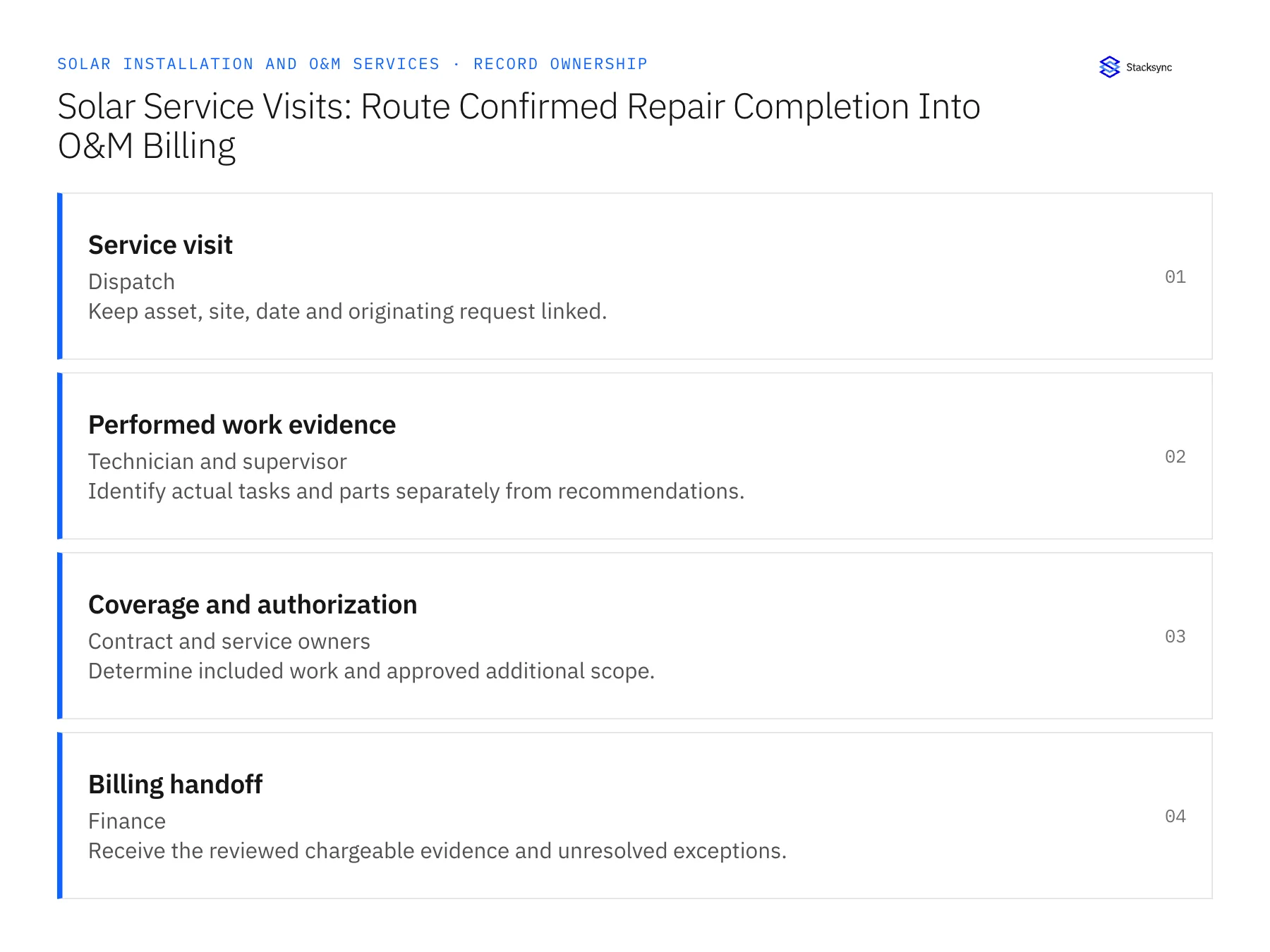
| Record | Owner | Operating rule |
|---|---|---|
| Service visit | Dispatch | Keep asset, site, date and originating request linked. |
| Performed work evidence | Technician and supervisor | Identify actual tasks and parts separately from recommendations. |
| Coverage and authorization | Contract and service owners | Determine included work and approved additional scope. |
| Billing handoff | Finance | Receive the reviewed chargeable evidence and unresolved exceptions. |
Work through the process
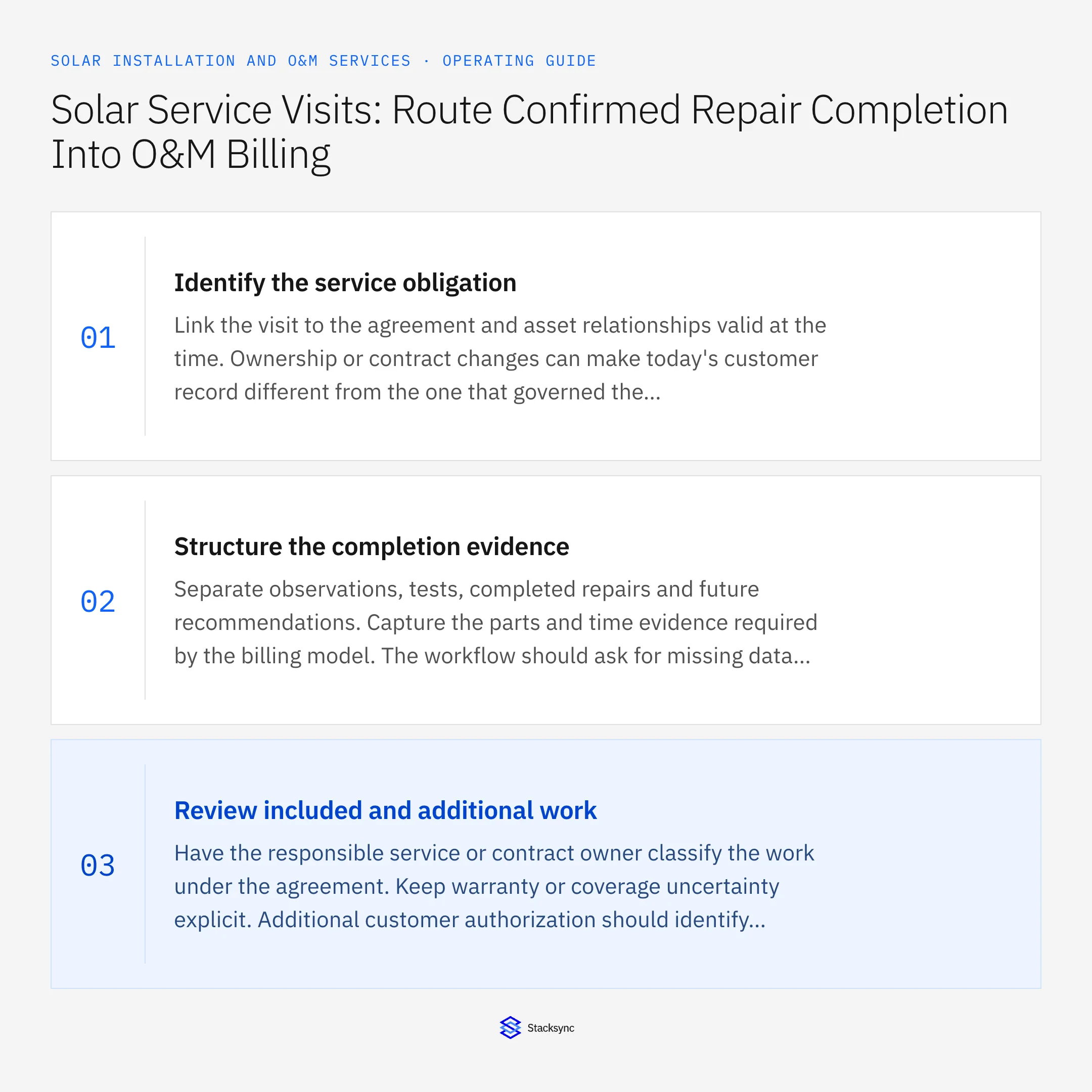
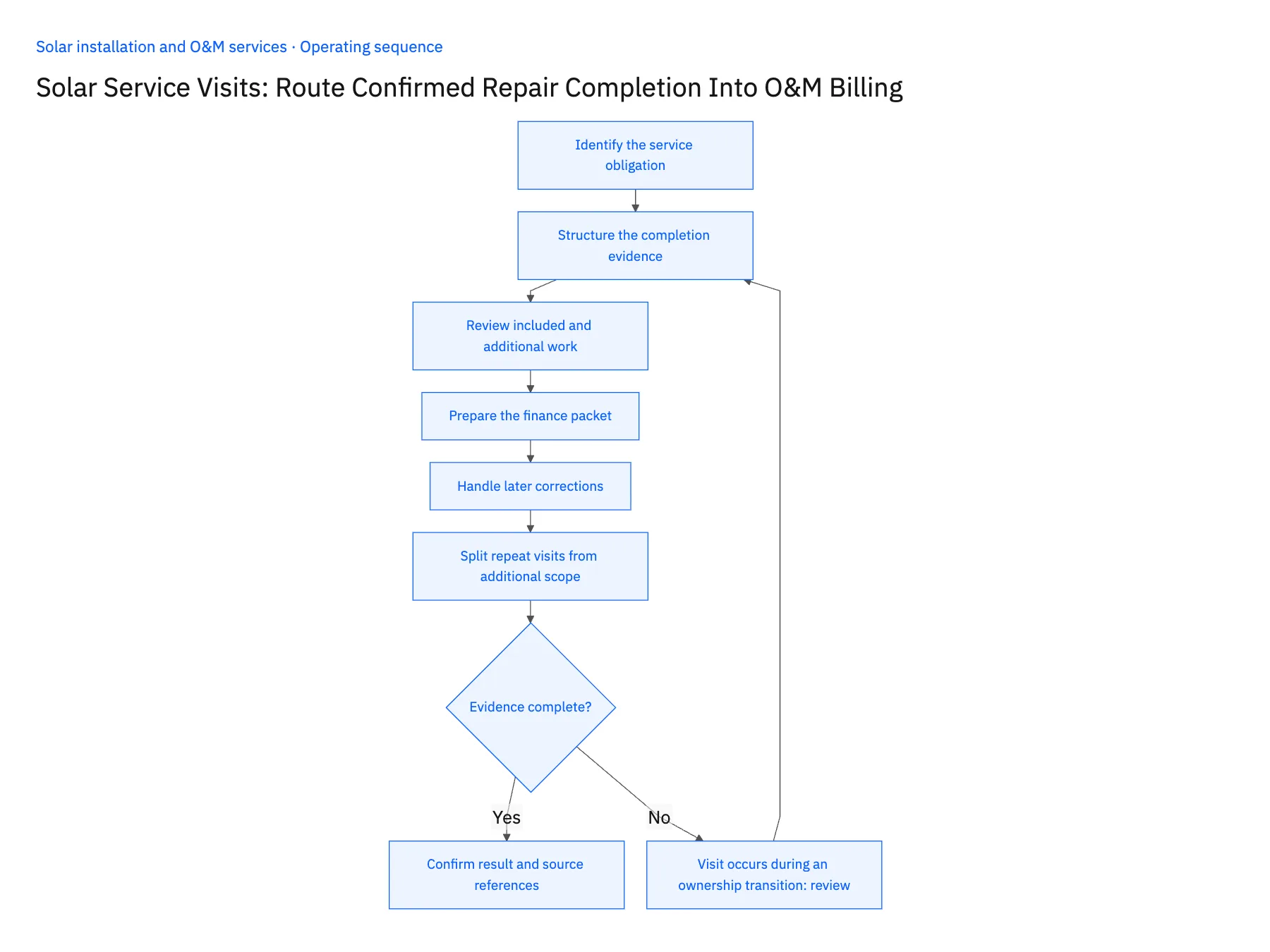
- 01Identify the service obligationLink the visit to the agreement and asset relationships valid at the time. Ownership or contract changes can make today's customer record different from the one that governed the visit. Preserve the applicable term so the reviewer does not judge historical work using only current coverage.
- 02Structure the completion evidenceSeparate observations, tests, completed repairs and future recommendations. Capture the parts and time evidence required by the billing model. The workflow should ask for missing data rather than infer that every mentioned part was installed or every recommendation was performed.
- 03Review included and additional workHave the responsible service or contract owner classify the work under the agreement. Keep warranty or coverage uncertainty explicit. Additional customer authorization should identify the relevant repair scope and price basis instead of relying on a general permission to visit the site.
- 04Prepare the finance packetAssemble the approved chargeable lines with the visit, customer and agreement references. Include any excluded work and the reason so billing does not have to repeat the review. Use a supported draft or task operation, and retain the destination identifier once the handoff succeeds.
- 05Handle later correctionsIf the service supervisor changes a part quantity or coverage decision, compare it with the packet already handed off. Route the change to finance with the original reference. Do not create another complete invoice request or overwrite a posted record through a casual status update.
- 06Split repeat visits from additional scopeA return visit may finish an earlier authorized repair, investigate a new issue or perform separately approved work. Keep the visit relationship and scope classification explicit rather than combining all activity under the original case. Finance needs to know whether the second visit adds a chargeable line or completes evidence for a prior handoff. The service owner should decide that classification with the agreement and actual performed work available.
Handle the exceptions explicitly
Visit occurs during an ownership transition
Use the reviewed relationship effective at the visit date and route ambiguity to contract administration.
Technician recommends further repair
Keep that scope outside completed and billable work until separately performed and authorized.
Replacement may fall under warranty
Hold the affected charge classification for the designated reviewer.
What to verify before expanding
- Every chargeable line has performed-work and authorization evidence.
- Recommendations remain separate from completed repairs.
- The agreement context matches the visit date.
- A revised closeout refers to the original finance handoff.

Connect this process to the rest of your operation
Explore Stacksync workflows and scope the records and actions against your actual systems. Book a demo with a real service visit example and the exception your team handles most often, for example visit occurs during an ownership transition.
- Solar Equipment Change-Order Workflows
- Solar Project Change Orders: Route Equipment Swaps Through Approval and Revised Billing
- Genies for Solar Project Closeout: Assemble Serial Numbers, Completion Evidence, and Handover Records
- Solar Closeout Exceptions: Missing Serial Numbers, Changed Equipment, and Incomplete Handover Evidence
- Blu Banyan and Stacksync: A Partnership Built for the Next Era of Solar and Construction Operations
- Qualify and Route Commercial Solar Inquiries in HubSpot
The shared architecture guide covers record matching, ownership, and recovery across systems.
Technical references
FAQ
Frequently asked questions










Related articles