







Design-to-factory release
Route revisions with material commitments and qualified approvals before scheduling accepted work.
Explore workflows ↗ Salesforce
  HubSpot
  NetSuite
  Zendesk
  Microsoft Dynamics 365 Sales
  Dynamics 365 F&O
  Attio
Attio  Pipedrive
  Zoho CRM
  Campfire
  Rillet
  Front
Front  Shopify
  Amazon Seller Central
  SendGrid
 Modular and prefab building supply and installation
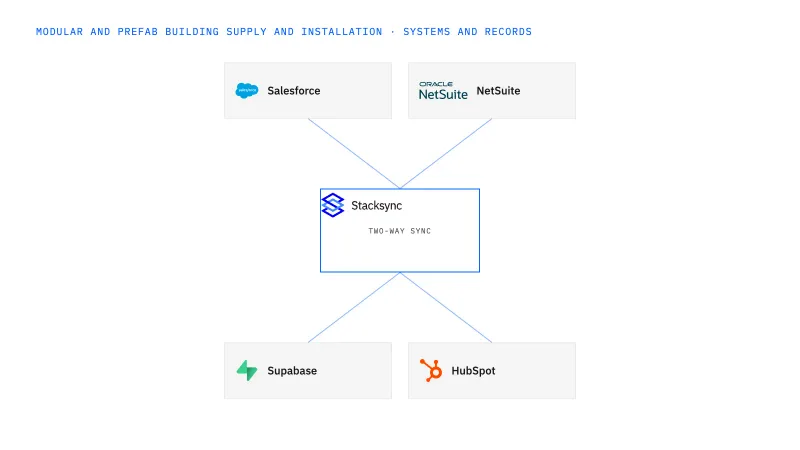
Connect design revisions, factory production, module delivery and site acceptance to the commercial project.
Factory complete, shipped, received and accepted are collapsed into one project status, leaving logistics and progress billing without reliable evidence.
Explore your process in a demo, or get our shared two-way sync architecture guide.
The platform, in operating order
Keep shared customer, order, and operational records aligned, with clear field ownership.
Explore two-way sync 02Move approved work between systems, assign exceptions, and confirm the result.
Explore workflows 03Investigate cross-system questions, assemble the evidence, and prepare the next action.
Explore ai agents (genies) 04Connect trading-partner documents to operational records and exception handling.
Explore ediBuilt around your operations
US modular and prefab building companies with 100–1,000 employees that combine manufacturing or supply with onsite delivery and installation.
Route revisions with material commitments and qualified approvals before scheduling accepted work.
Explore workflows ↗Combine factory readiness, confirmed site window and transport evidence for the authorized shipment decision.
Explore workflows ↗Assemble factory, delivery, acceptance and approved-variation evidence for finance.
Explore Genies ↗Your systems and records
| Record | Owner | Operating rule |
|---|---|---|
| Released design | Qualified technical and production owners | Identify the approved configuration for the permitted production scope. |
| Module identity | Factory administration | Preserve a stable reference from factory through site records. |
| Custody and receipt | Logistics and site receiver | Record movement and condition separately from acceptance. |
| Billing milestone | Finance and project authority | Apply the actual agreement rule to supported scope and prior billing. |
Component supplier EDI with separate factory receipts and direct-site receiving, linked to purchase lines and project allocations.
Evaluate your next process
Align modular customer configurations with approved orders, project revisions and meaningful milestones.
Track module identity from factory release to site receipt and acceptance with authorized project access.
Coordinate factory readiness, site release and confirmed transport before committing a modular shipment.
Connect supplier documents to factory and site receiving without counting the same material in both places.
Implementation and operating guides
Link Salesforce module options to the released design revision and NetSuite order so sales edits cannot rewrite released scope or blur factory and site milestones.
Track module identity through factory release, shipment, site receipt and acceptance without treating those events as equivalent.
Connect prefab buyer and project context to a portal with explicit dealer, contractor and owner access.
Coordinate prefab design release with approved scope, material commitments and factory scheduling decisions.
Connect modular factory readiness to site, transport and receiving decisions without treating delivery as project acceptance.
Use Genies to prepare modular progress-billing evidence while preserving contract-specific milestone decisions.
Resolve the modular billing evidence gaps an AI-prepared review must not silently complete.
Map prefab supplier EDI to the correct factory or site destination and preserve component allocation by project.
No. Factory release, shipment, receipt and contractual acceptance require separate evidence.
It can assemble and compare evidence. Finance and project authorities interpret the agreement and approve the permitted financial action.
Use the designated site receiving process and preserve the purchase reference without also treating the goods as factory stock.
Bring one real process
Bring the systems, record types, and exceptions your team handles today. We’ll scope the connections and actions, then walk through the path to a confirmed result.
Explore your process in a demo, or get our shared two-way sync architecture guide.


