







Acceptance-to-recurring billing
Collect the required handover and customer evidence before the authorized billing-start decision.
Explore workflows ↗ Salesforce
  HubSpot
  NetSuite
  Zendesk
  Microsoft Dynamics 365 Sales
  Dynamics 365 F&O
  Attio
Attio  Pipedrive
  Zoho CRM
  Campfire
  Rillet
  Front
Front  Shopify
  Amazon Seller Central
  SendGrid
 Fire, life-safety and security integrators
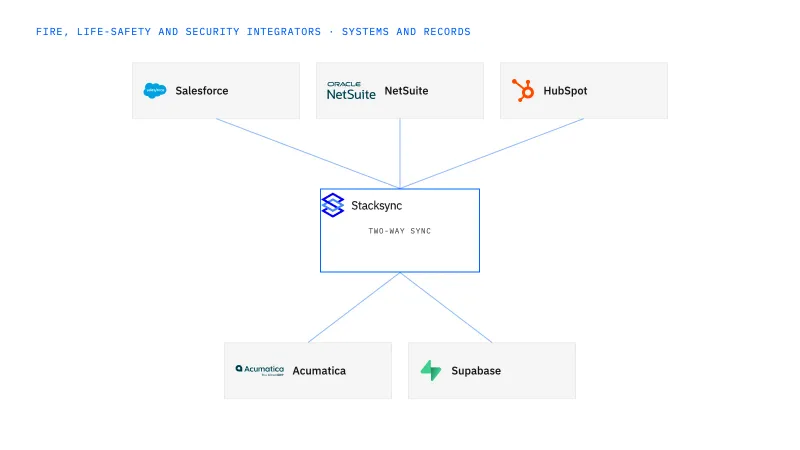
Connect installed-equipment identities, service agreements, inspection follow-ups and commercial handoffs.
Device labels, site records and agreement terms do not line up, so coordinators repeat the evidence search before service or billing review.
Explore your process in a demo, or get our shared two-way sync architecture guide.
The platform, in operating order
Keep shared customer, order, and operational records aligned, with clear field ownership.
Explore two-way sync 02Move approved work between systems, assign exceptions, and confirm the result.
Explore workflows 03Investigate cross-system questions, assemble the evidence, and prepare the next action.
Explore ai agents (genies) 04Connect trading-partner documents to operational records and exception handling.
Explore ediBuilt around your operations
US fire, life-safety, alarm and access-control integrators with 100–1,000 employees that supply equipment and deliver installation or recurring service.
Collect the required handover and customer evidence before the authorized billing-start decision.
Explore workflows ↗Link findings to existing work, qualified scope review and approved remedial requests.
Explore workflows ↗Assemble asset, inspection and agreement evidence with explicit identity and approval gaps.
Explore Genies ↗Your systems and records
| Record | Owner | Operating rule |
|---|---|---|
| Installed device | Asset administrator | Preserve device identity and replacement history. |
| Inspection finding | Qualified inspection owner | Retain the original technical evidence and scope. |
| Service agreement | Contract administrator | Identify current covered sites and commercial terms. |
| Remedial-work authorization | Qualified and commercial owners | Separate technical scope from approval to perform the work. |
Project equipment procurement with supplier shipment detail and serial evidence where actually provided, followed by verified receiving and asset association.
Evaluate your next process
Keep installed-equipment, site and billing-customer context connected through the service lifecycle.
Align renewal conversations with the actual inspection, monitoring and billing agreement context.
Route the evidence needed to start recurring charges after a security installation.
Assemble inspection, asset and service-agreement evidence into a focused review packet.
Implementation and operating guides
Connect installed fire and security asset context to customer and service records without losing device identity.
Separate inspection and monitoring agreement terms from sales renewal stages and finance-owned billing accounts.
Build a multisite alarm and access-control asset register with clear identity, service history and authorized access.
Connect installation acceptance to the correct recurring-billing start decision for security integrators.
Turn inspection findings into owned commercial follow-ups while preserving technical review and customer authorization.
Use Genies to assemble fire and security service context while keeping technical and commercial decisions with their owners.
Resolve identity and authorization exceptions before an AI-prepared fire or security handoff becomes a work commitment.
Connect supplier equipment shipments to project purchase lines and preserve serial evidence when the supplier transmits it.
No. These use cases organize administrative evidence and handoffs. Qualified personnel retain technical judgments and required certifications.
Purchasing provenance runs from the project purchase line through the supplier shipment and the receiving record, and it stays attached to the device through any move between staging and projects. Service history starts only once asset administration confirms the installed device at a customer site from reviewed installation evidence. A shipment notice or a receiving entry does not open that history on its own.
No. Any asset portal needs explicit authorization for the user's sites and role.
Bring one real process
Bring the systems, record types, and exceptions your team handles today. We’ll scope the connections and actions, then walk through the path to a confirmed result.
Explore your process in a demo, or get our shared two-way sync architecture guide.


