







Keep equipment history intact
Separate the device from its functional location so replacements do not erase the evidence for prior work.
 Salesforce
  HubSpot
  NetSuite
  Zendesk
  Microsoft Dynamics 365 Sales
  Dynamics 365 F&O
  Attio
Attio  Pipedrive
  Zoho CRM
  Campfire
  Rillet
  Front
Front  Shopify
  Amazon Seller Central
  SendGrid
 Fire, life-safety and security integrators
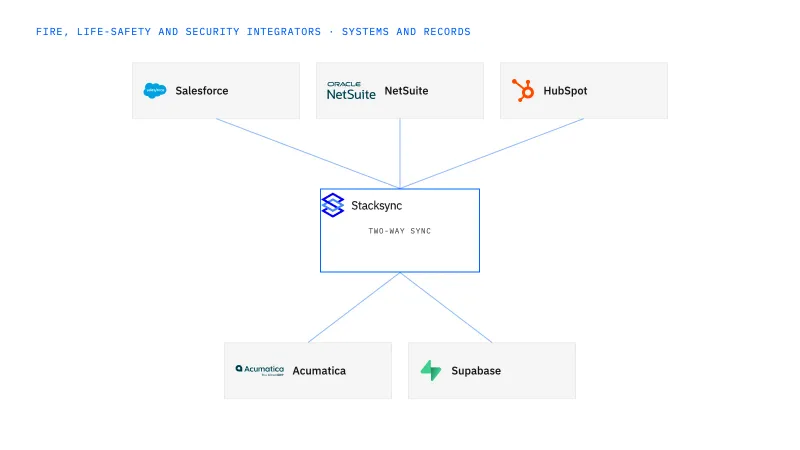
Connect Salesforce customer and asset context with the approved NetSuite commercial records for fire, life-safety and security service. Preserve device identity, site relationships and replacement history while finance controls billing customers. Scope the supported objects and actions against your actual asset model.
Service teams find one device label in a report, another in the CRM and a different customer relationship in billing.
Explore your process in a demo, or get our shared two-way sync architecture guide.
When this fits
US fire, life-safety, alarm and access-control integrators with 100–1,000 employees that supply equipment and deliver installation or recurring service.
Separate the device from its functional location so replacements do not erase the evidence for prior work.
Let account and service teams find the correct customer and agreement references without changing finance-owned decisions.
Validate object eligibility and permissions rather than assuming every installed-asset representation supports the same writes.
The process, end to end
an integrator replaces a panel at a long-served property. The current device changes, but historical service records and the property's customer relationship must remain traceable to the correct equipment and dates.
Scope your implementation
Review current platform pricing alongside the records, volume, and actions in your process. Use your own operating baseline to evaluate the economics.
Explore your process in a demo, or get our shared two-way sync architecture guide.
From foundation to action
Keep shared customer, order, and operational records aligned, with clear field ownership.
Explore two-way sync 02Move approved work between systems, assign exceptions, and confirm the result.
Explore workflows 03Investigate cross-system questions, assemble the evidence, and prepare the next action.
Explore ai agents (genies) 04Connect trading-partner documents to operational records and exception handling.
Explore ediGo deeper
Connect installed fire and security asset context to customer and service records without losing device identity.
Separate inspection and monitoring agreement terms from sales renewal stages and finance-owned billing accounts.
Build a multisite alarm and access-control asset register with clear identity, service history and authorized access.
Explore all fire, life-safety and security integrators integration and automation guides ↗
No. It maintains administrative context; qualified personnel retain inspection and technical decisions.
Yes. Preserve asset identity and review ownership, service and billing relationships separately.
Validate a replacement device, a multisite account and the customer lookup used by service and finance.
Start with two-way sync between Salesforce and NetSuite so installed-asset, site and billing-customer records share one identity before anything acts on them. Add workflows once that context holds, for example routing a disputed serial number or a property ownership change to the person who owns it. Bring in Genies when coordinators want replacement history and agreement references assembled into a review packet that a person still approves. EDI comes last, as a separate transport for supplier shipment documents on project equipment headed into NetSuite.


