Automotive supplier delays: build recovery plans around firm customer releases
A recovery case sizes the shortage against firm releases only, checks transfers and expedites already in place, and closes a quantity once it is usable.
- Author
- Ignacio Malpartida · GTM Engineer
- Published
- Read time
- 4 min read

The operating decision
An automotive supplier-delay workflow should connect a late component or outside supply to the firm customer releases it threatens, keeping broader forecast context separate. Automate the gathering of existing stock, incoming supply and current supplier confirmation, then route recovery decisions to purchasing and planning. A shortage indication should not automatically create another purchase order, reallocate stock or change a customer promise. The accepted plan must identify which quantities and commitments it actually resolves.
Explore the complete automotive components integration and automation hub for the systems and processes around this guide.
What this looks like in automotive components
A component supplier learns that a purchased insert will arrive late. The planning report shows both forecast demand and firm releases, while another plant has an incoming transfer already approved for part of the requirement. If the team expedites against the combined total, it may buy unnecessary material and still miss the nearest accepted release. A connected recovery case identifies the actionable demand, existing coverage and remaining gap. Purchasing can then obtain a precise supplier option and planning can approve which releases the recovered quantity will support.
Records, ownership, and update rules
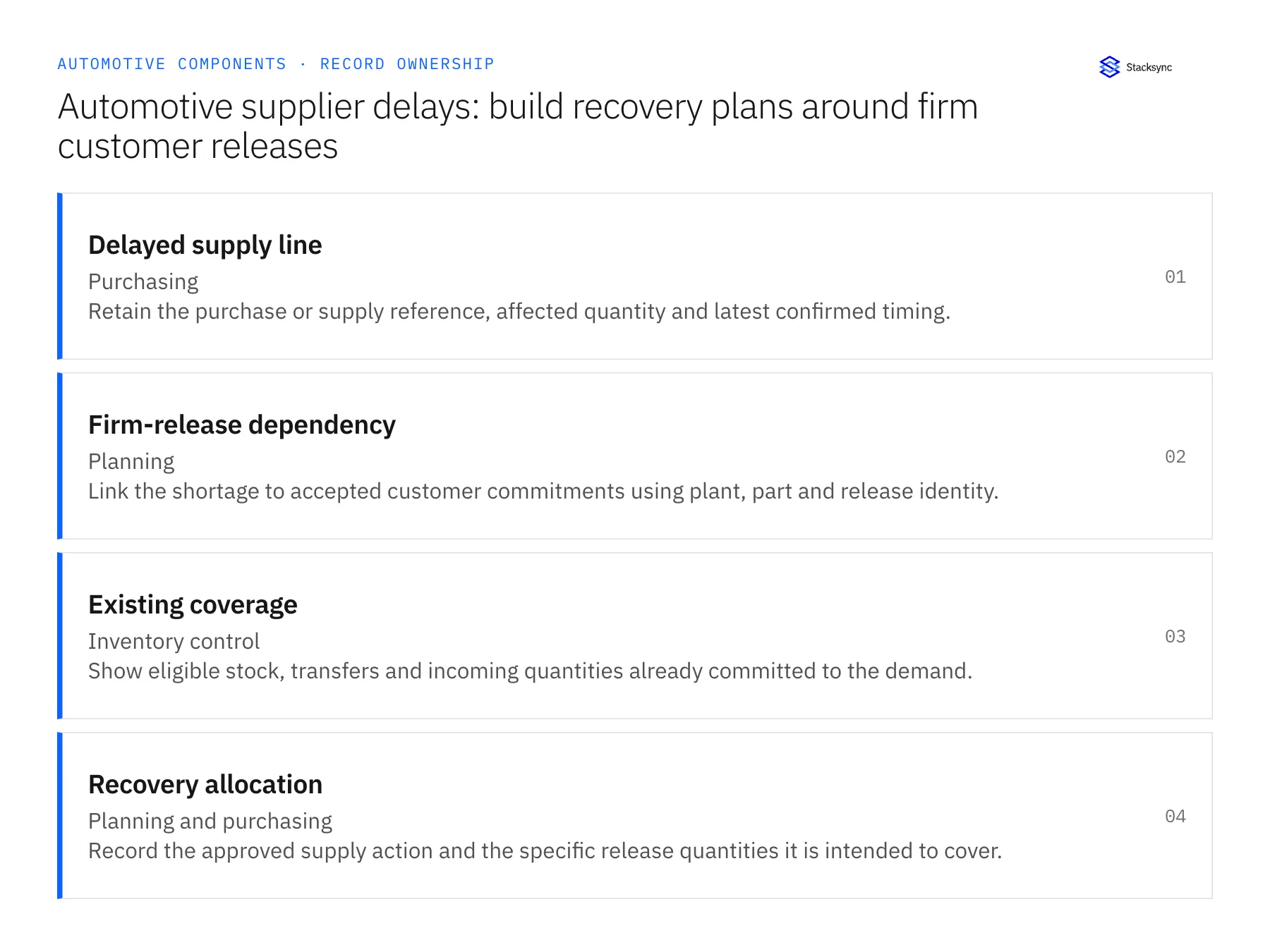
| Record | Owner | Operating rule |
|---|---|---|
| Delayed supply line | Purchasing | Retain the purchase or supply reference, affected quantity and latest confirmed timing. |
| Firm-release dependency | Planning | Link the shortage to accepted customer commitments using plant, part and release identity. |
| Existing coverage | Inventory control | Show eligible stock, transfers and incoming quantities already committed to the demand. |
| Recovery allocation | Planning and purchasing | Record the approved supply action and the specific release quantities it is intended to cover. |
Work through the process
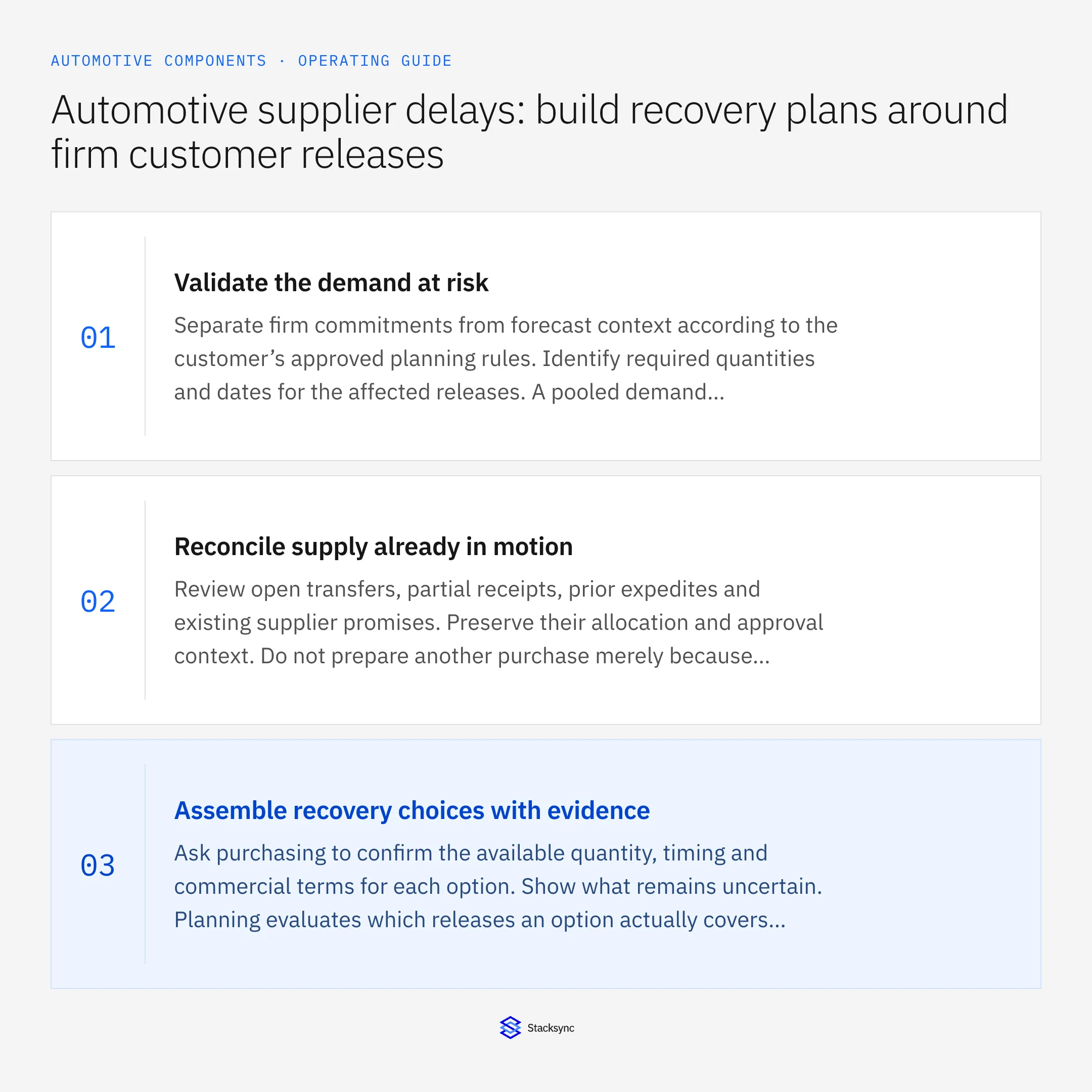
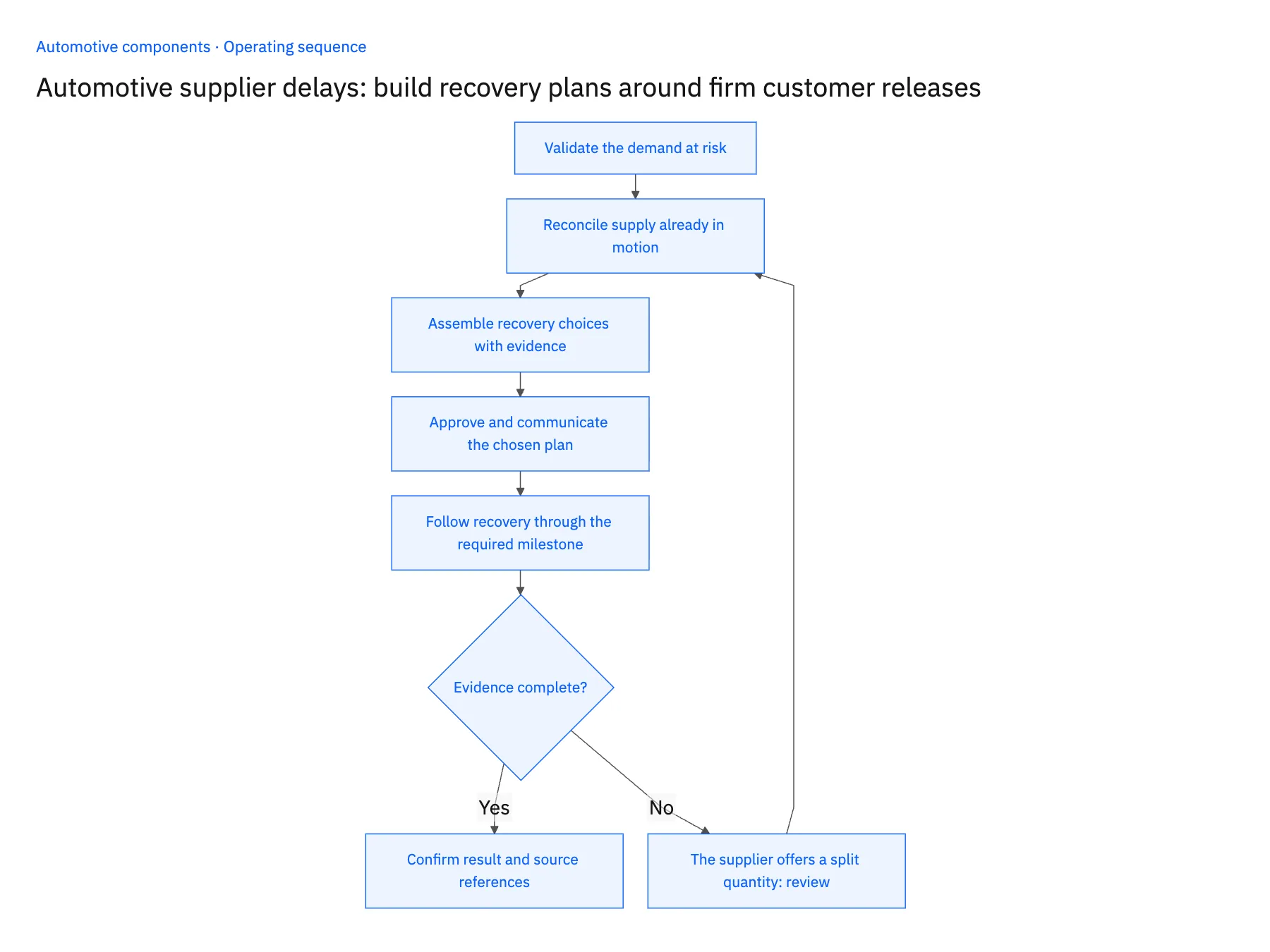
- 01Validate the demand at riskSeparate firm commitments from forecast context according to the customer’s approved planning rules. Identify required quantities and dates for the affected releases. A pooled demand total is insufficient when the recovery decision must prioritize near-term execution.
- 02Reconcile supply already in motionReview open transfers, partial receipts, prior expedites and existing supplier promises. Preserve their allocation and approval context. Do not prepare another purchase merely because one delayed line appears uncovered in an incomplete local view.
- 03Assemble recovery choices with evidenceAsk purchasing to confirm the available quantity, timing and commercial terms for each option. Show what remains uncertain. Planning evaluates which releases an option actually covers and identifies any resulting conflict with other accepted commitments.
- 04Approve and communicate the chosen planRecord the accepted allocation, additional spend where relevant and revised internal schedule. Customer operations communicates only the promise approved under the account process. Technical substitutions require their separate approval before the supply can be counted as eligible.
- 05Follow recovery through the required milestoneTrack supplier confirmation, dispatch, receipt and any necessary quality release separately. Close only the covered quantity when it reaches the accepted usable state. Keep the remaining shortage visible under the same release-specific case.
Handle the exceptions explicitly
The supplier offers a split quantity
Assign the accepted portion to explicit releases and retain the unresolved balance.
A transfer is delayed too
Reassess the coverage rather than leaving the demand marked recovered because the transfer order exists.
A substitute needs customer approval
Keep the technical and commercial review pending; available stock is not usable coverage until the requirement is satisfied.
What to verify before expanding
- Recovery quantities reconcile to the firm releases identified as at risk.
- Existing transfers and expedites are included before new supply is proposed.
- Approved customer promises remain distinct from supplier estimates.
- An unreceived or unreleased quantity cannot close the shortage case.

Connect this process to the rest of your operation
Explore Stacksync workflows and scope the records and actions against your actual systems. Book a demo with a real delayed supply line example and the exception your team handles most often, for example the supplier offers a split quantity.
- Engineering-cutover workflows for automotive component suppliers
- Automotive component engineering cutovers: coordinate open demand and existing inventory
- AI agents for automotive release review: assemble quantity, date and revision differences
- Automotive release AI exceptions: stale versions, plant mappings and part changes
- Keeping Dynamics 365 Finance & Operations and PostgreSQL in Step
- Bi-Directional Sync vs CDC Duplicates: Reliability Guide
The shared architecture guide covers record matching, ownership, and recovery across systems.
Technical references
FAQ
Frequently asked questions










Related articles