Plastics brands using NetSuite and Shopify: preserve pack sizes and released stock
A direct store that sells packs while NetSuite counts pieces needs a variant cross-reference, a versioned pack definition and a channel stock rule that excludes held lots.
- Author
- Ruben Burdin · Founder & CEO
- Published
- Read time
- 4 min read

The operating decision
A plastics manufacturer selling through Shopify should map each sellable variant to the correct NetSuite item and reviewed pack definition. Publish stock that is eligible for the channel, keeping production output, quality-held quantity and available finished goods distinct. Two-way sync should preserve the original order quantity and its selling unit. The team must verify the specific inventory and order operations it needs rather than assuming a product connection includes every fulfillment action.
Explore the complete plastics and molding integration and automation hub for the systems and processes around this guide.
What this looks like in plastics and molding
A plastics business sells storage components in single units to distributors and packs of six through its direct store. A new color is molded in a trial run, but most of that lot remains on hold pending inspection. If the store receives the gross piece count as the pack quantity, it can accept more orders than the company can fulfill. The integration needs a product-variant cross-reference, an approved pack conversion and a channel availability rule that uses released stock instead of treating every completed molding cycle as saleable inventory.
Records, ownership, and update rules
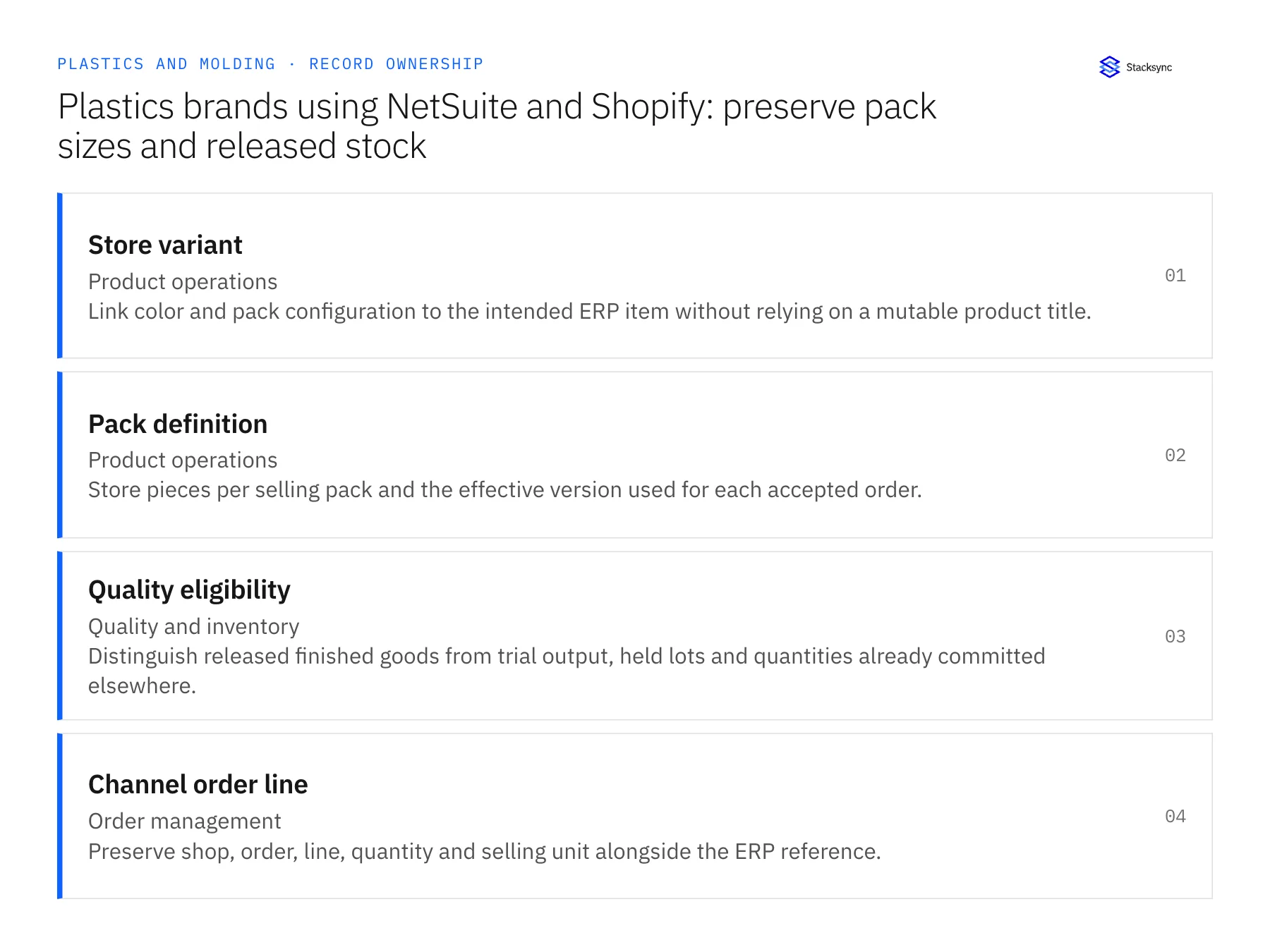
| Record | Owner | Operating rule |
|---|---|---|
| Store variant | Product operations | Link color and pack configuration to the intended ERP item without relying on a mutable product title. |
| Pack definition | Product operations | Store pieces per selling pack and the effective version used for each accepted order. |
| Quality eligibility | Quality and inventory | Distinguish released finished goods from trial output, held lots and quantities already committed elsewhere. |
| Channel order line | Order management | Preserve shop, order, line, quantity and selling unit alongside the ERP reference. |
Work through the process
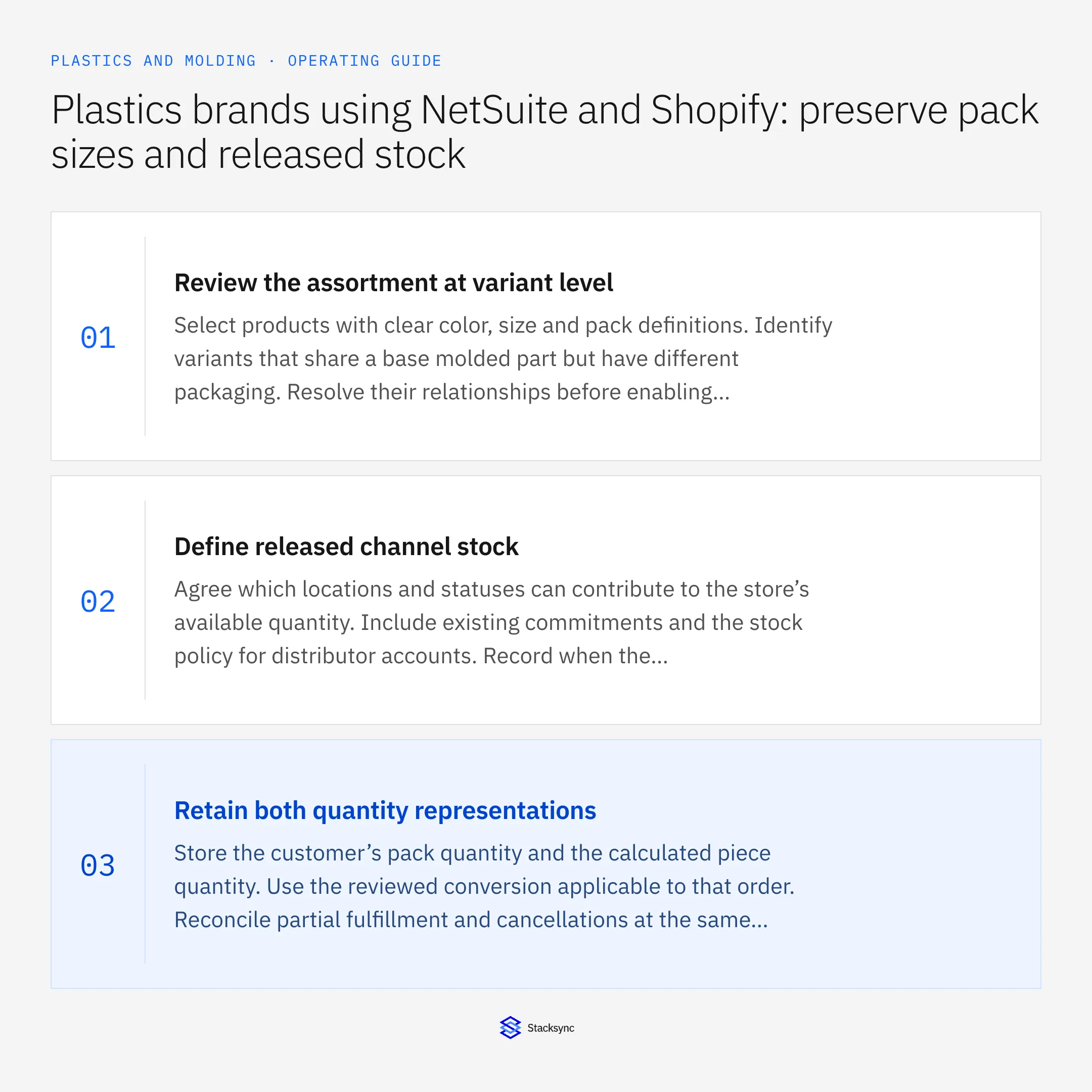
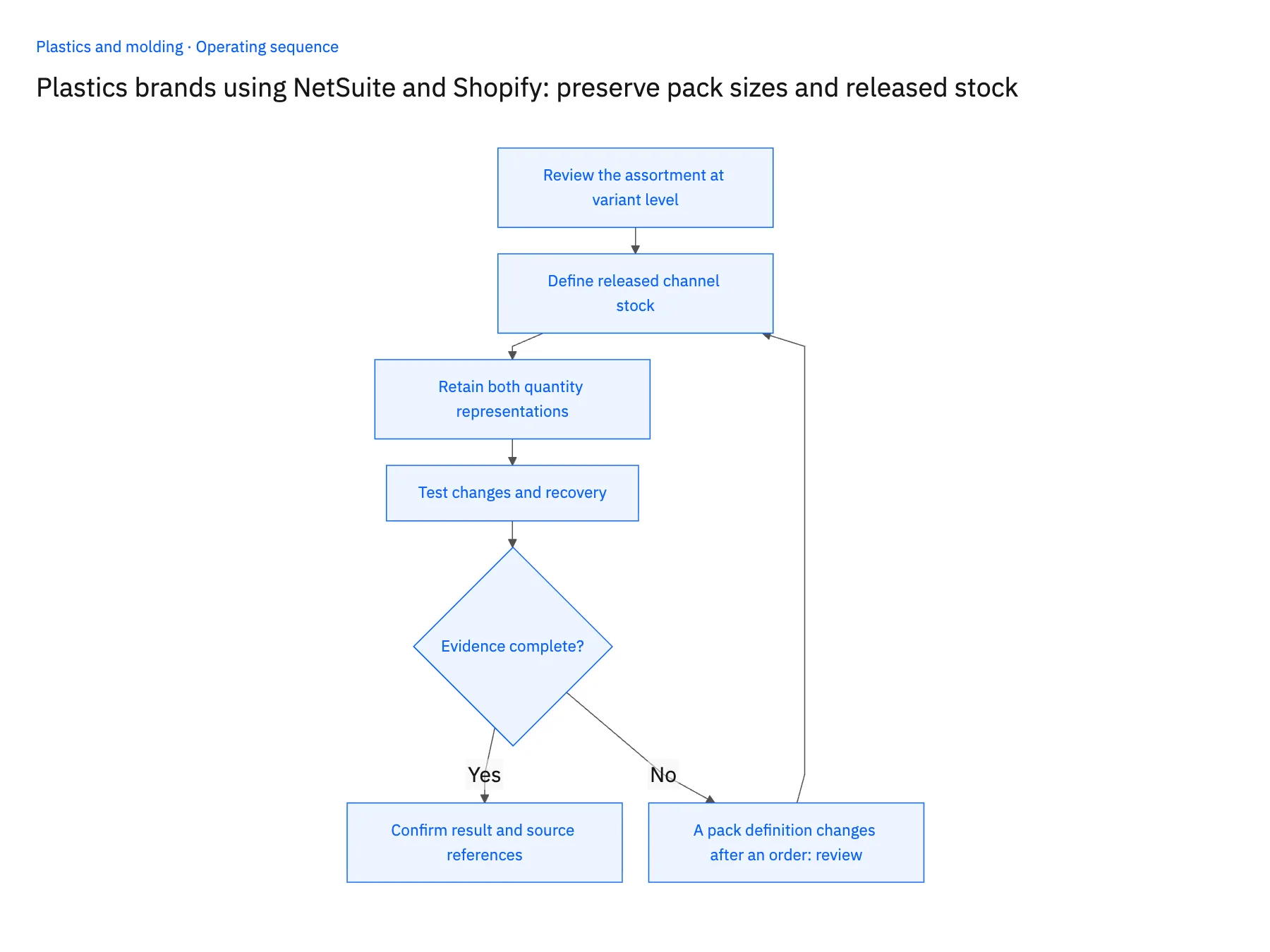
- 01Review the assortment at variant levelSelect products with clear color, size and pack definitions. Identify variants that share a base molded part but have different packaging. Resolve their relationships before enabling order transfer so a common SKU description does not conceal a different unit of sale.
- 02Define released channel stockAgree which locations and statuses can contribute to the store’s available quantity. Include existing commitments and the stock policy for distributor accounts. Record when the underlying availability was measured so a stale projection can be distinguished from a current shortage.
- 03Retain both quantity representationsStore the customer’s pack quantity and the calculated piece quantity. Use the reviewed conversion applicable to that order. Reconcile partial fulfillment and cancellations at the same grain rather than subtracting pieces from a field that represents packs.
- 04Test changes and recoveryExercise an order, a pack-definition change and a quality hold on a contributing lot. Reconcile authoritative order state after delayed or repeated messages. Confirm the exact destination operations and permissions used to publish quantity and accept the order.
Handle the exceptions explicitly
A pack definition changes after an order
Keep the accepted order’s original conversion. Apply the new definition only to the approved scope and future orders.
A color variant is held for inspection
Remove only the ineligible quantity from the relevant variant’s offer and route existing affected commitments to review.
A cancellation follows partial shipment
Reconcile the remaining accepted quantity through the approved process. Do not treat a whole-order cancellation message as proof that shipped units returned to stock.
What to verify before expanding
- One six-pack produces six pieces of demand under the approved mapping.
- Held trial output does not increase the offered stock.
- Historical orders retain their original pack definition after a catalog change.
- Replayed messages cannot create another order or restore cancelled demand.

Connect this process to the rest of your operation
Explore Stacksync two-way sync and scope the records and actions against your actual systems. Book a demo with a real store variant example and the exception your team handles most often, for example A pack definition changes after an order.
- Salesforce and NetSuite two-way sync for plastics manufacturers
- NetSuite and Shopify two-way sync for plastics brands
- Plastics manufacturing: connect Dynamics resin lots to a SQL Server readiness view
- Plastics manufacturing resin substitutions: coordinate evidence before changing the run
- Plastics quality holds: update customer promises when a color lot is blocked
- Optimize NetSuite Shopify Integration and HubSpot Sync with Stacksync
- Design Reliable Sync: Ditch Exactly-Once Delivery, Embrace Idempotency
The shared architecture guide covers record matching, ownership, and recovery across systems.
Technical references
FAQ
Frequently asked questions










Related articles