Metal fabrication outside-processing delays: route late returns to the right job owner
When a processor returns heat-treated parts late or in a split shipment, one shared case shows the unresolved quantity, the affected next operation and who decides the allocation.
- Author
- Ignacio Malpartida · GTM Engineer
- Published
- Read time
- 4 min read

The operating decision
An outside-processing delay workflow should identify which sent batches remain unresolved, which downstream jobs need them and who can approve a recovery plan. Compare the subcontractor’s latest confirmation with the internal requirement, then coordinate purchasing and planning follow-up. Keep expected return, carrier movement, physical receipt and inspection acceptance separate. The workflow is complete when the affected job has accepted material or an approved alternative, not when a reminder has been sent.
Explore the complete metal fabrication and machining integration and automation hub for the systems and processes around this guide.
What this looks like in metal fabrication and machining
A shop outsources heat treatment for three jobs. The processor confirms that one batch will return late but can split the shipment. A buyer currently forwards that email to several planners, each of whom may call the supplier independently. A shared delay case can collect the sent quantities, required return dates, existing responses and affected operations. Purchasing can request one coherent recovery plan, while planners decide whether a partial return changes their schedules and who should receive the limited available quantity.
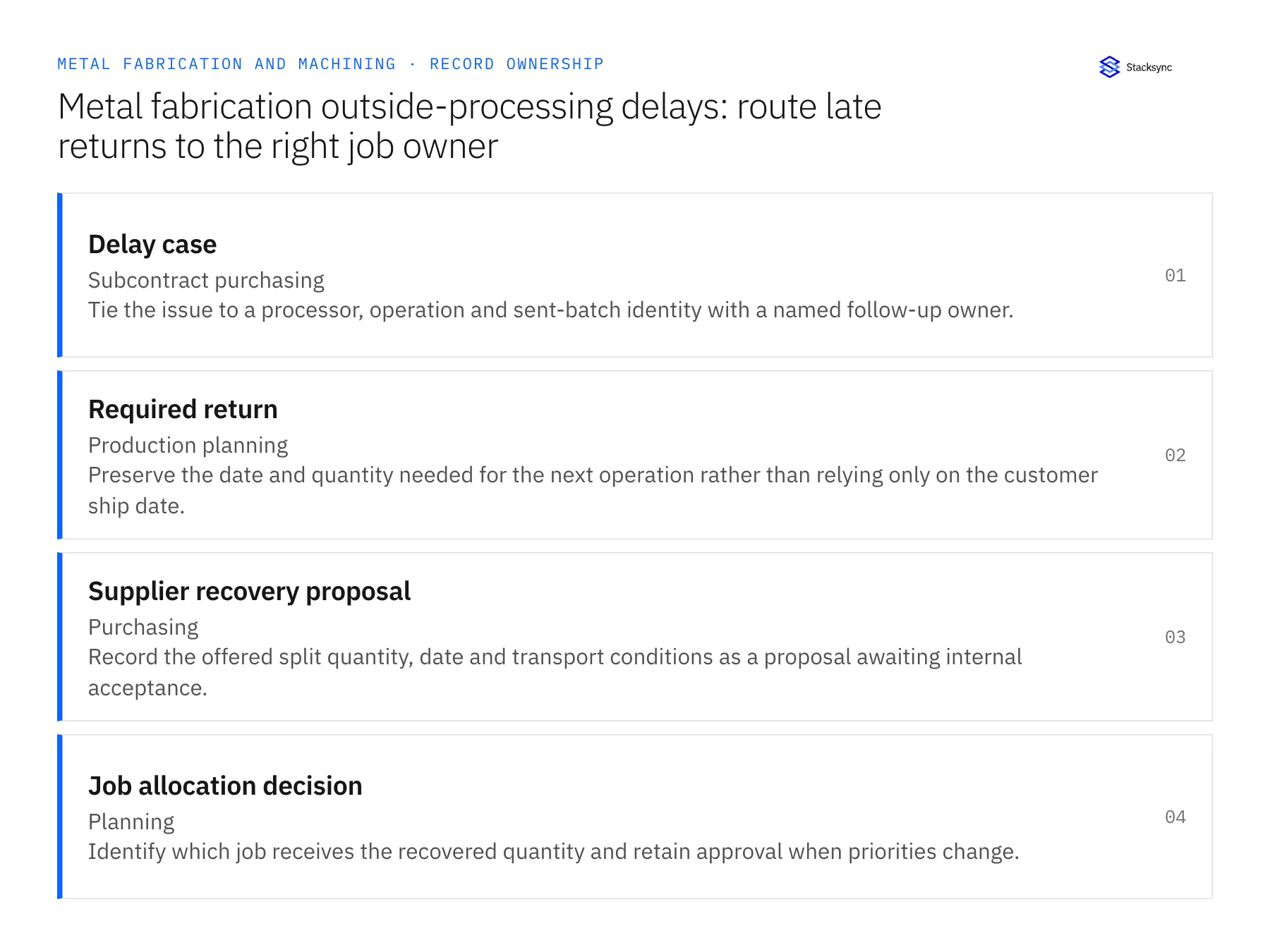
Records, ownership, and update rules
| Record | Owner | Operating rule |
|---|---|---|
| Delay case | Subcontract purchasing | Tie the issue to a processor, operation and sent-batch identity with a named follow-up owner. |
| Required return | Production planning | Preserve the date and quantity needed for the next operation rather than relying only on the customer ship date. |
| Supplier recovery proposal | Purchasing | Record the offered split quantity, date and transport conditions as a proposal awaiting internal acceptance. |
| Job allocation decision | Planning | Identify which job receives the recovered quantity and retain approval when priorities change. |
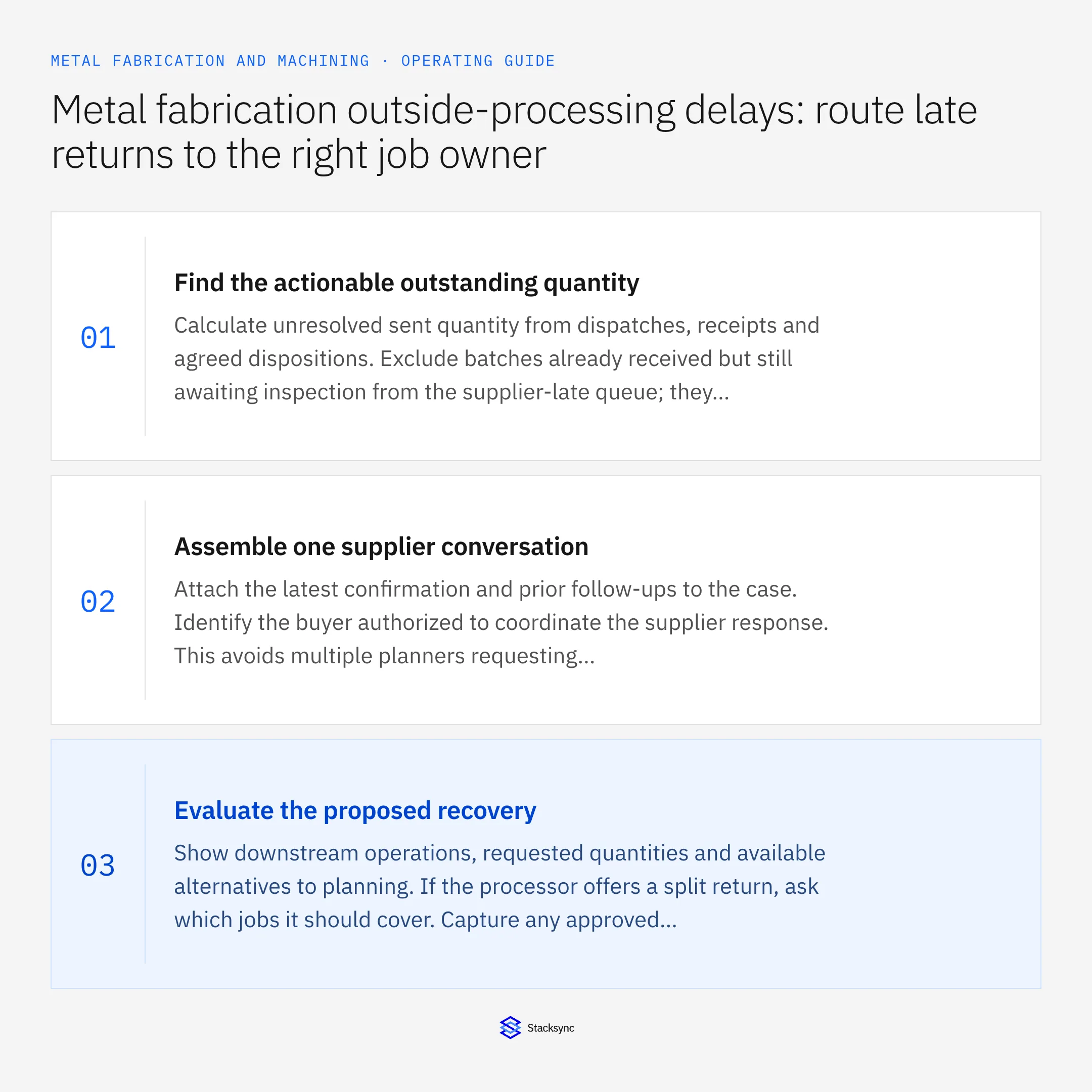
Work through the process
- 01Find the actionable outstanding quantityCalculate unresolved sent quantity from dispatches, receipts and agreed dispositions. Exclude batches already received but still awaiting inspection from the supplier-late queue; they need a quality or receiving follow-up instead.
- 02Assemble one supplier conversationAttach the latest confirmation and prior follow-ups to the case. Identify the buyer authorized to coordinate the supplier response. This avoids multiple planners requesting incompatible delivery promises against the same constrained batch.
- 03Evaluate the proposed recoveryShow downstream operations, requested quantities and available alternatives to planning. If the processor offers a split return, ask which jobs it should cover. Capture any approved transport or process change before communicating an accepted plan.
- 04Follow the batch through acceptanceTrack the revised commitment, dispatch evidence, receipt and required inspection. Escalate when a promised milestone is missed. Close only the quantity actually resolved and keep the remainder open under the same traceable case.
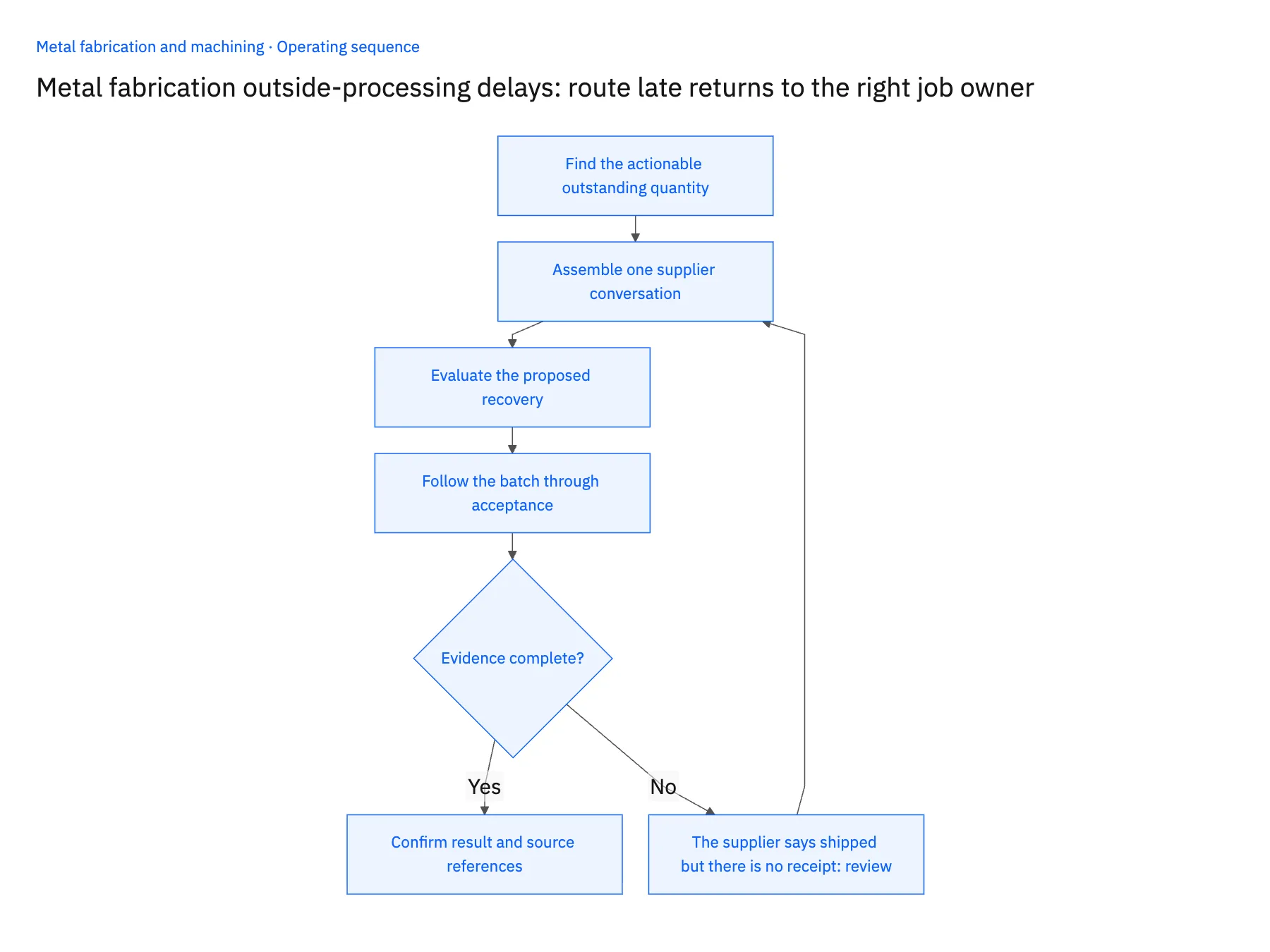
Handle the exceptions explicitly
The supplier says shipped but there is no receipt
Keep the case in transit or awaiting receipt and retain the relevant evidence. Shipping confirmation does not make the parts available to the next operation.
Two jobs compete for a partial return
Route allocation to the planner who owns prioritization. Do not divide the batch automatically merely to clear both overdue flags.
The returned work is rejected
Create the appropriate quality disposition and reconnect the unresolved quantity to the delay case so purchasing does not assume recovery is complete.
What to verify before expanding
- Each late quantity has one current supplier-follow-up owner.
- A partial recovery closes only the accepted quantity and leaves the balance visible.
- Planners can see the next operation affected by the delay.
- Supplier shipment confirmation cannot mark inspection-dependent work ready.

Connect this process to the rest of your operation
Explore Stacksync workflows and scope the records and actions against your actual systems. Book a demo with a real delay case example and the exception your team handles most often, for example the supplier says shipped but there is no receipt.
- Outside-processing follow-up automation for metal fabricators
- Machining drawing revisions: review a change against work already released
- AI RFQ intake for metal fabricators: prepare a complete estimating packet
- AI RFQ exceptions in metal fabrication: resolve material, revision and quantity ambiguity
- Acumatica API Integration: A Practical Guide
- Real-Time NetSuite to Database Sync: Implementation Guide and Best Practices
The shared architecture guide covers record matching, ownership, and recovery across systems.
Technical references
FAQ
Frequently asked questions










Related articles