







Prioritize the real downstream impact
Connect late quantities to the next operation and accepted customer commitment so the buyer knows why a batch matters.
 Salesforce
  HubSpot
  NetSuite
  Zendesk
  Microsoft Dynamics 365 Sales
  Dynamics 365 F&O
  Attio
Attio  Pipedrive
  Zoho CRM
  Campfire
  Rillet
  Front
Front  Shopify
  Amazon Seller Central
  SendGrid
 Metal fabrication and machining
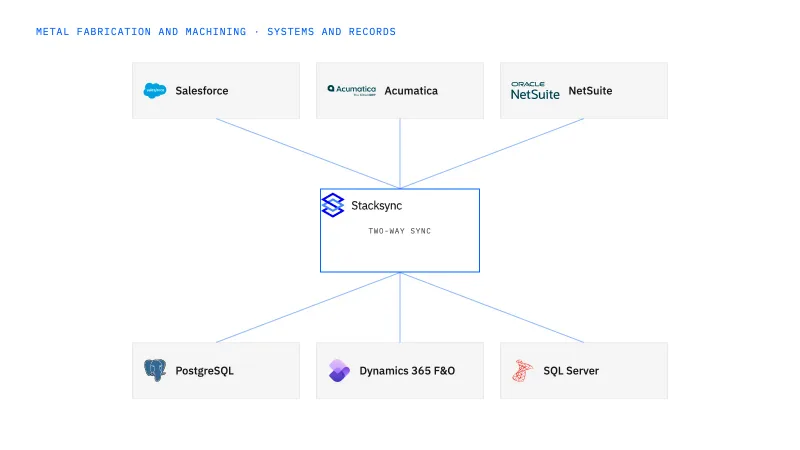
Coordinate late coating, plating, heat-treatment and other outsourced operations around the jobs they affect. Stacksync workflows can bring the relevant records into one handoff so purchasing and planning work from the same unresolved quantities. Start with evidence collection, owned follow-up and accepted recovery plans before extending transactional actions.
Buyers and planners contact the same processor separately while the next shop operation waits for a return nobody has confirmed.
Explore your process in a demo, or get our shared two-way sync architecture guide.
When this fits
Operations leaders, production planners and IT teams at US metal fabricators and machine shops with 100–1,000 employees.
Connect late quantities to the next operation and accepted customer commitment so the buyer knows why a batch matters.
Retain supplier responses and assigned ownership, reducing duplicated status chasing across planners.
Keep supplier dispatch, receipt and quality acceptance separate, with only the resolved quantity closed.
The process, end to end
an operations director manages several subcontract processors and needs one view of late batches, affected jobs and current promises. The evaluation should include a partial return and a missed revised date, showing who follows up and what remains unresolved.
Scope your implementation
Review current platform pricing alongside the records, volume, and actions in your process. Use your own operating baseline to evaluate the economics.
Explore your process in a demo, or get our shared two-way sync architecture guide.
From foundation to action
Keep shared customer, order, and operational records aligned, with clear field ownership.
Explore two-way sync 02Move approved work between systems, assign exceptions, and confirm the result.
Explore workflows 03Investigate cross-system questions, assemble the evidence, and prepare the next action.
Explore ai agents (genies) 04Connect trading-partner documents to operational records and exception handling.
Explore ediGo deeper
When a processor returns heat-treated parts late or in a split shipment, one shared case shows the unresolved quantity, the affected next operation and who decides the allocation.
A customer's revision D arriving mid-run should open a review of the pieces at each stage, not overwrite the revision C the shop and its processor are working to.
Explore all metal fabrication and machining integration and automation guides ↗
It can assemble approved alternatives and supporting information. Purchasing, engineering and quality retain the decision about the permitted process and supplier.
A late batch offered as a split return, competing downstream jobs and the resulting approved allocation.
Use manual coordination time and delay-case aging, while keeping freight, rework and supplier performance outcomes separately attributed.
It comes second. Two-way sync between NetSuite and Postgres goes first, because a delay case needs the sent batch, required return date and affected job to resolve to the same records purchasing and planning already use. Then workflows carry the supplier’s recovery proposal, the allocation decision and escalation to named owners. Genies come later, if estimating wants RFQ emails and drawings turned into an evidence-based packet. EDI stays separate and last, covering customer PO lines and releases rather than anything a processor sends back.


