Fence Material Quote Exceptions: Gauge, Coating, Length, Freight, and Minimum-Order Differences
Resolve the specification and commercial gaps that make fencing supplier quotes incomparable.
- Author
- Ignacio Malpartida · GTM Engineer
- Published
- Read time
- 5 min read

The operating decision
Fence-material quote exceptions should identify exactly why a supplier line cannot yet be compared with the approved requirement. Differences in section or gauge, coating, stock length, freight and minimum order can change both suitability and total cost. A Genie can collect the evidence and draft the clarification needed. It should not silently treat similar descriptions as equivalent, invent missing logistics charges or accept a larger purchase quantity on the buyer's behalf.
Explore the complete fencing fabrication and installation integration and automation hub for the systems and processes around this guide.
What this looks like in fencing fabrication and installation
A fabricator receives a low quote for material described as matching the project, but the coating is not stated and the supplied length differs from the fabrication requirement. The supplier also has a minimum order above the required quantity and excludes delivery. The lowest unit price may be real, yet the offer is not comparable. The exception review should separate the technical questions from the buyer's commercial decisions and preserve the original quote.
Records, ownership, and update rules
| Record | Owner | Operating rule |
|---|---|---|
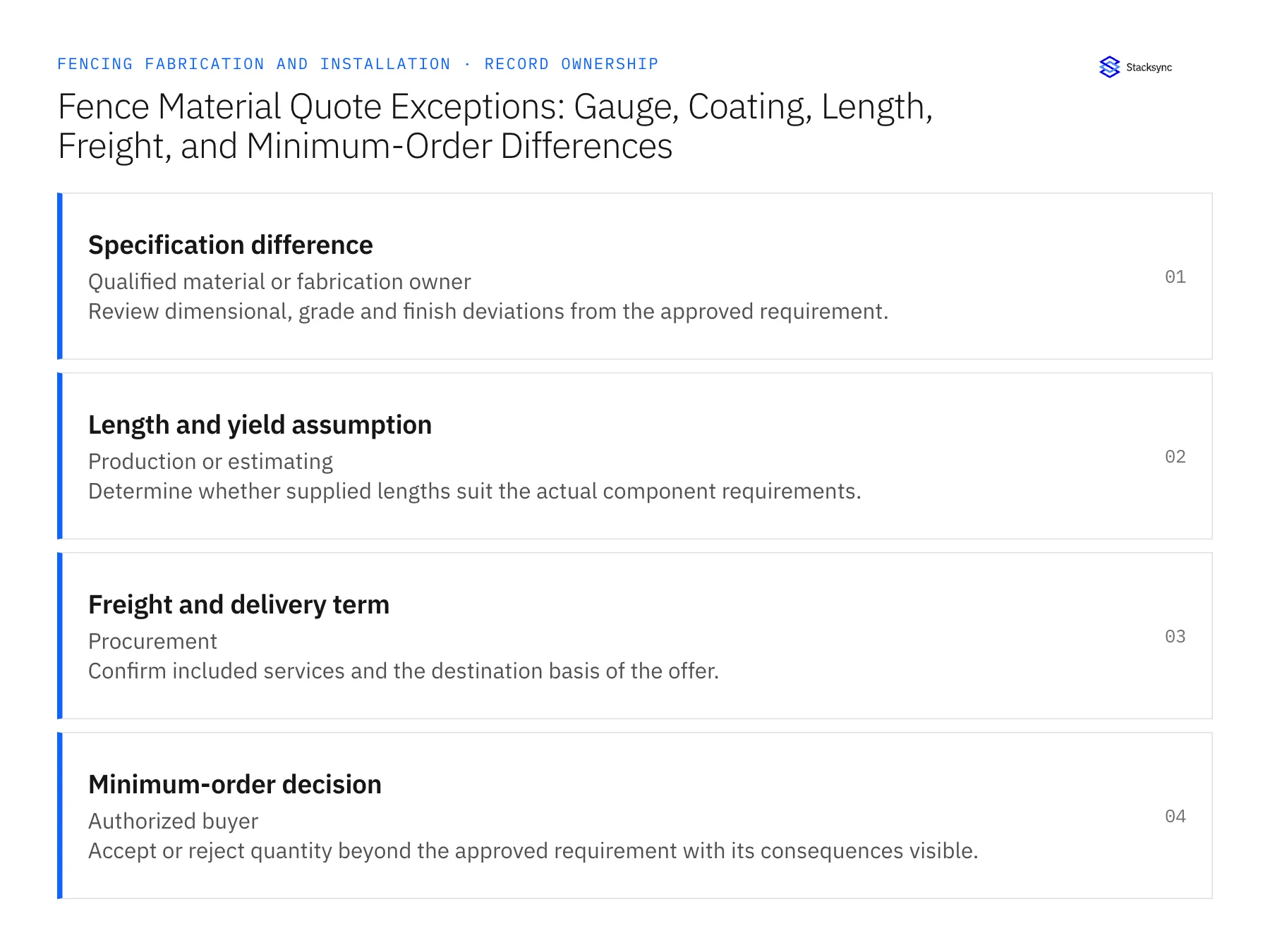
| Specification difference | Qualified material or fabrication owner | Review dimensional, grade and finish deviations from the approved requirement. |
| Length and yield assumption | Production or estimating | Determine whether supplied lengths suit the actual component requirements. |
| Freight and delivery term | Procurement | Confirm included services and the destination basis of the offer. |
| Minimum-order decision | Authorized buyer | Accept or reject quantity beyond the approved requirement with its consequences visible. |
Work through the process
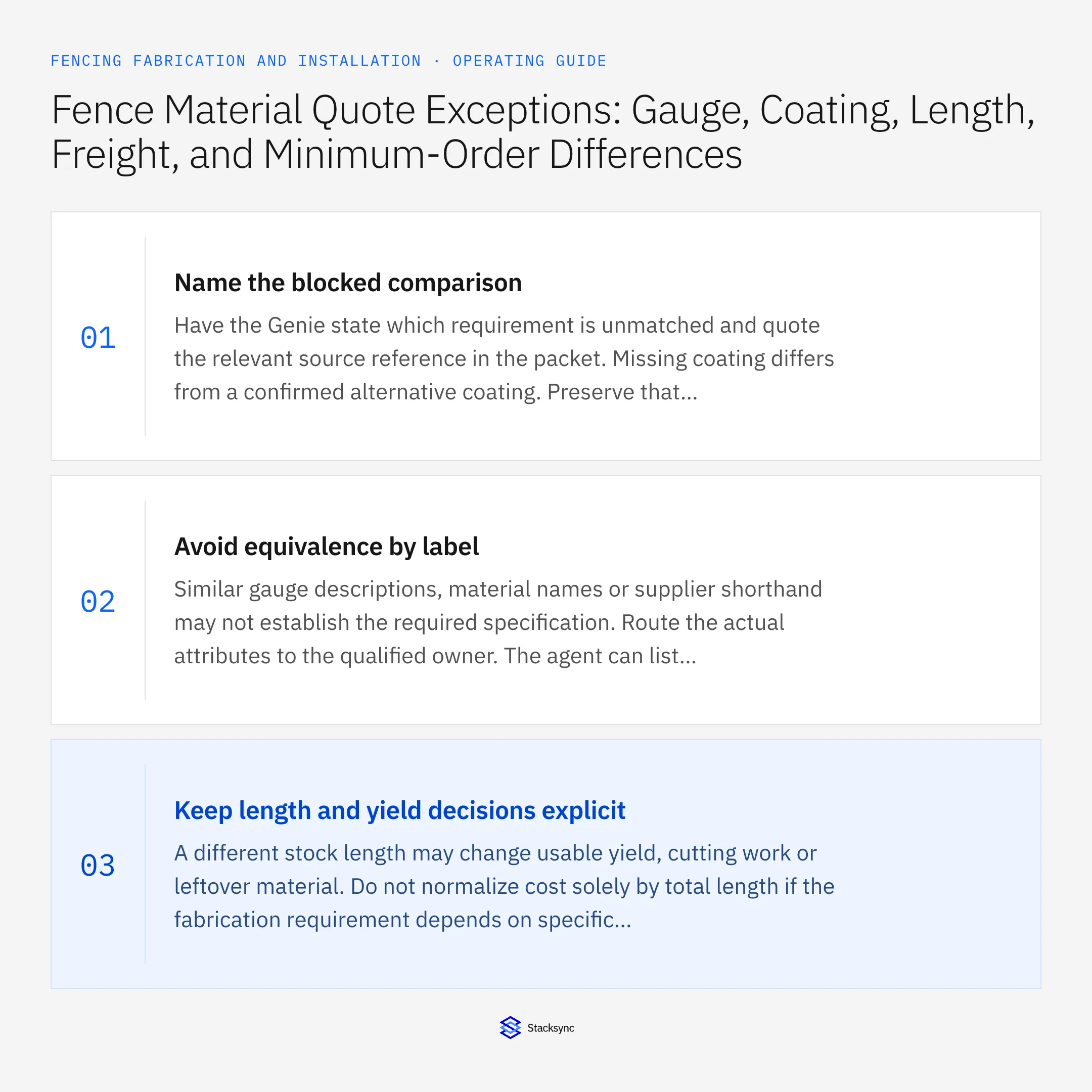
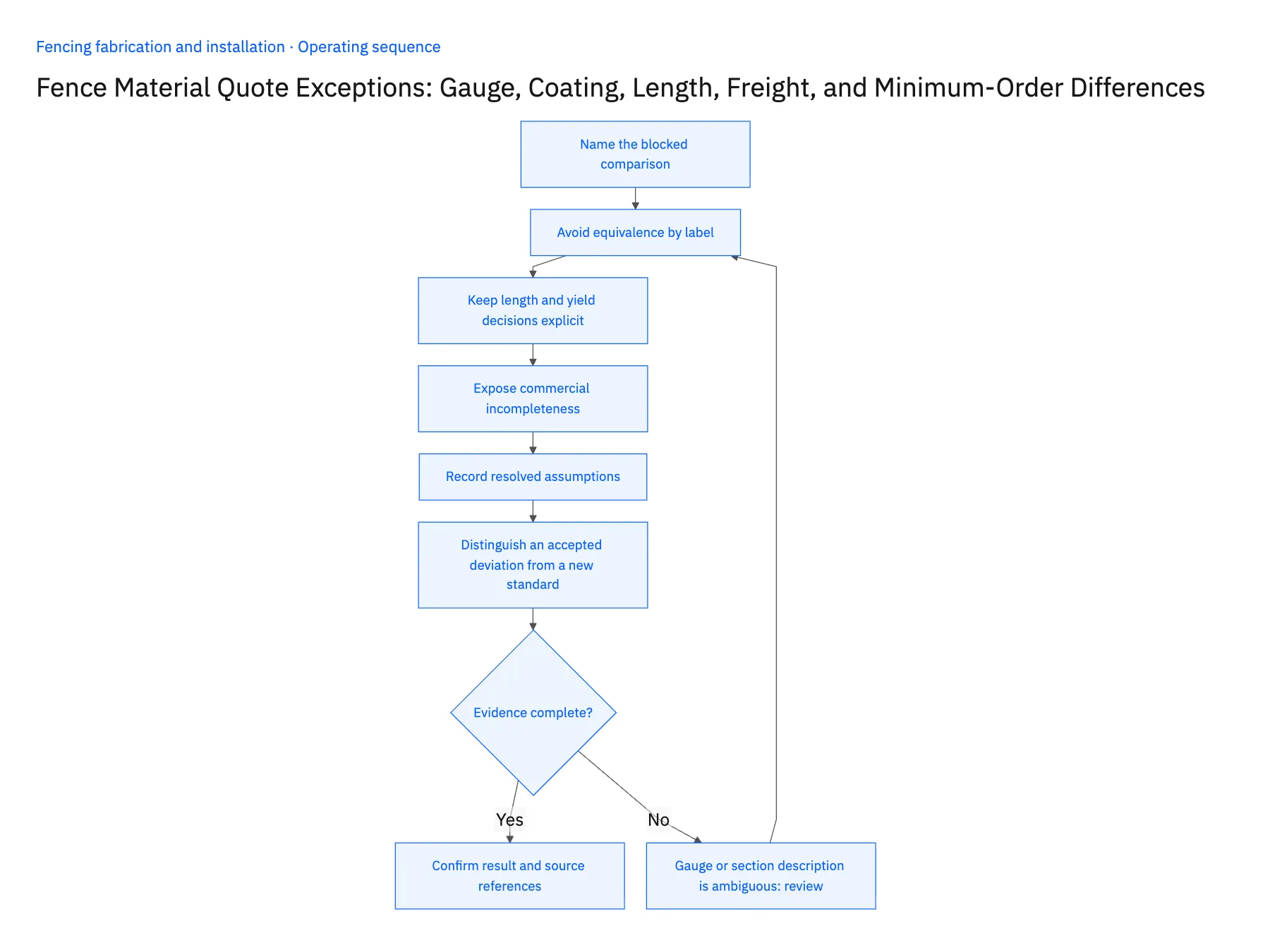
- 01Name the blocked comparisonHave the Genie state which requirement is unmatched and quote the relevant source reference in the packet. Missing coating differs from a confirmed alternative coating. Preserve that distinction so the reviewer knows whether to ask for information or evaluate a proposed deviation.
- 02Avoid equivalence by labelSimilar gauge descriptions, material names or supplier shorthand may not establish the required specification. Route the actual attributes to the qualified owner. The agent can list similarities and differences, but it should not infer technical equivalence from common naming alone.
- 03Keep length and yield decisions explicitA different stock length may change usable yield, cutting work or leftover material. Do not normalize cost solely by total length if the fabrication requirement depends on specific component sizes. Ask production or estimating for the approved yield basis before presenting a comparable effective cost.
- 04Expose commercial incompletenessSeparate missing freight, uncertain destination, minimum quantities and other stated conditions from the base material price. When the supplier requires more material than the job needs, show the proposed purchase quantity and excess explicitly. The buyer decides whether that tradeoff is acceptable.
- 05Record resolved assumptionsStore the supplier clarification or internal approval with the quote version. Recalculate the comparison using the accepted information and preserve the prior result for review. If the quote changes afterward, reopen the affected questions instead of carrying forward approvals for obsolete terms.
- 06Distinguish an accepted deviation from a new standardWhen a qualified reviewer accepts a particular alternative for one job, store the decision with that project, material and quote revision. Do not let the agent treat it as permission to substitute the same material on every future order. The evidence may depend on dimensions, intended use or customer requirements that differ elsewhere. Future comparisons should still start from the approved requirement for the actual job.
Handle the exceptions explicitly
Gauge or section description is ambiguous
Request the exact specification and qualified review rather than accepting a name match.
Longer stock looks cheaper per foot
Check the approved cutting or yield basis before declaring a lower usable cost.
Minimum order exceeds project needs
Show the excess quantity and route the purchasing decision instead of inflating the job requirement.
What to verify before expanding
- Missing information is distinct from a confirmed deviation.
- Technical equivalence has a qualified decision owner.
- Freight and minimum-order effects remain visible.
- A revised quote invalidates approvals tied to changed terms.

Connect this process to the rest of your operation
Explore Stacksync AI agents (Genies) and scope the records and actions against your actual systems. Book a demo with a real specification difference example and the exception your team handles most often, for example gauge or section description is ambiguous.
- AI Supplier Quote Comparison for Fence Fabricators
- Genies for Fence Material Purchasing: Compare Supplier Quotes Against the Approved Bill of Materials
- Steel and Fence-Material Supplier EDI: Map Bundles, Pieces, and Lengths to Project Purchase Orders
- Fence Fabricators and Installers: Align Salesforce Approved Configurations With NetSuite Sales Orders
- NetSuite Two-Way Sync Solutions: Enterprise Integration Guide
- Build vs. Buy: Should You Develop Custom Code or Use a Platform to Sync CRM Data?
The shared architecture guide covers record matching, ownership, and recovery across systems.
Technical references
FAQ
Frequently asked questions










Related articles