Genies for Fence Material Purchasing: Compare Supplier Quotes Against the Approved Bill of Materials
Use a Genie to compare fencing supplier quotes against approved material requirements with visible unit and specification differences.
- Author
- Ignacio Malpartida · GTM Engineer
- Published
- Read time
- 5 min read
The operating decision
A fence-material purchasing Genie can read accessible supplier quotes and compare their lines with the approved bill of materials. Ask it to match item identity, dimensions, material, finish, quantity, unit, freight and stated lead-time terms, while showing the supporting source for each comparison. It should prepare a buyer's comparison and exception list. Technical suitability, supplier selection and purchase approval remain with the authorized people; the agent should not equate the lowest total with the best approved offer.
Explore the complete fencing fabrication and installation integration and automation hub for the systems and processes around this guide.
What this looks like in fencing fabrication and installation
A fence fabricator requests quotes for steel sections, mesh and gate hardware. One supplier prices full lengths, another prices weight, and a third excludes freight. A Genie can assemble a comparison against the released material list and highlight missing coating or dimension details. The buyer then knows which prices are actually comparable and which need clarification before committing the order.
Records, ownership, and update rules
| Record | Owner | Operating rule |
|---|---|---|
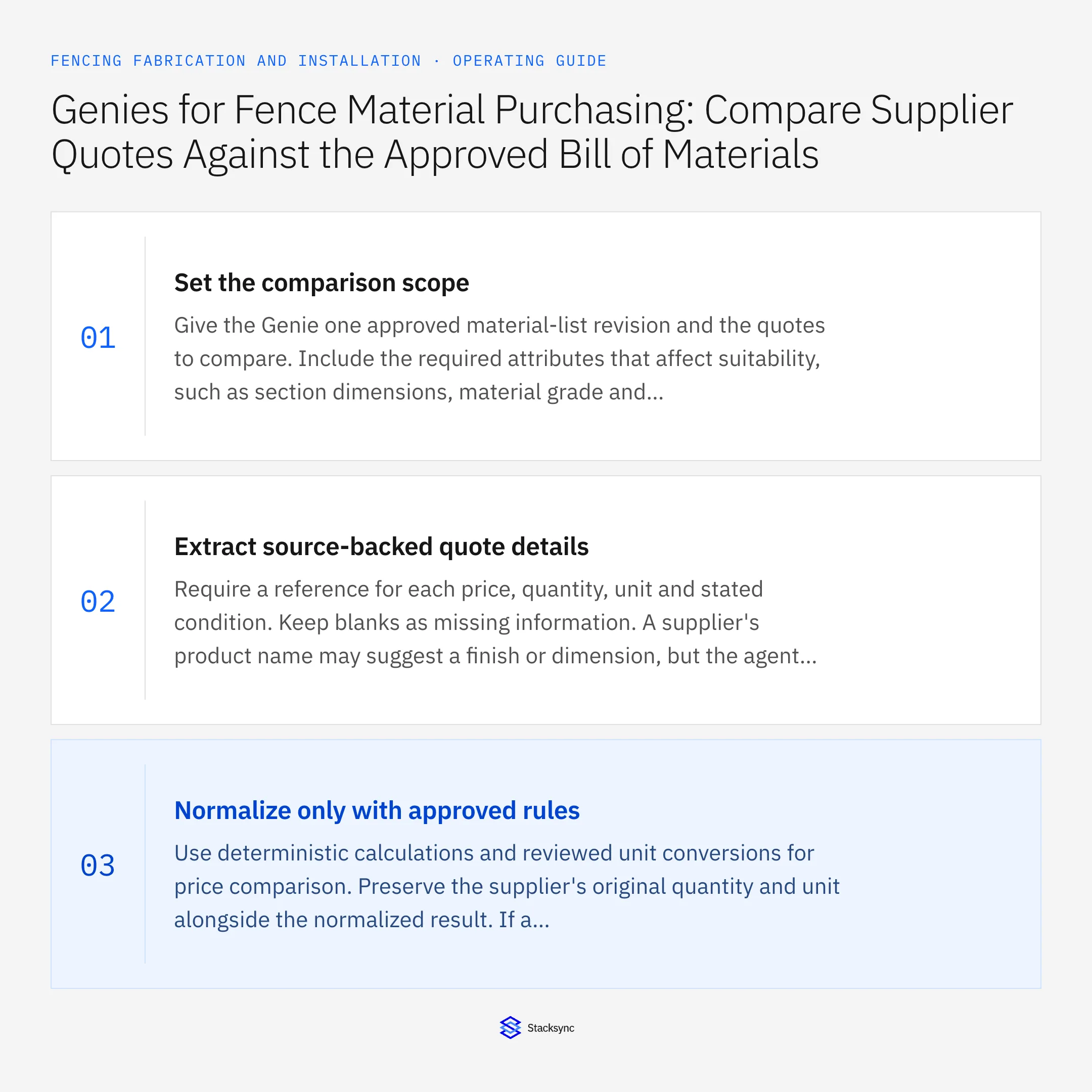
| Approved material requirement | Fabrication or estimating owner | Provide item attributes, quantities and the governing revision. |
| Supplier quote line | Supplier | Retain the original description, unit, price and commercial conditions. |
| Comparison proposal | Genie, reviewed by buyer | Show matched requirements, normalized values and unresolved assumptions. |
| Purchase decision | Procurement authority | Approve supplier selection and any accepted deviations. |
Work through the process
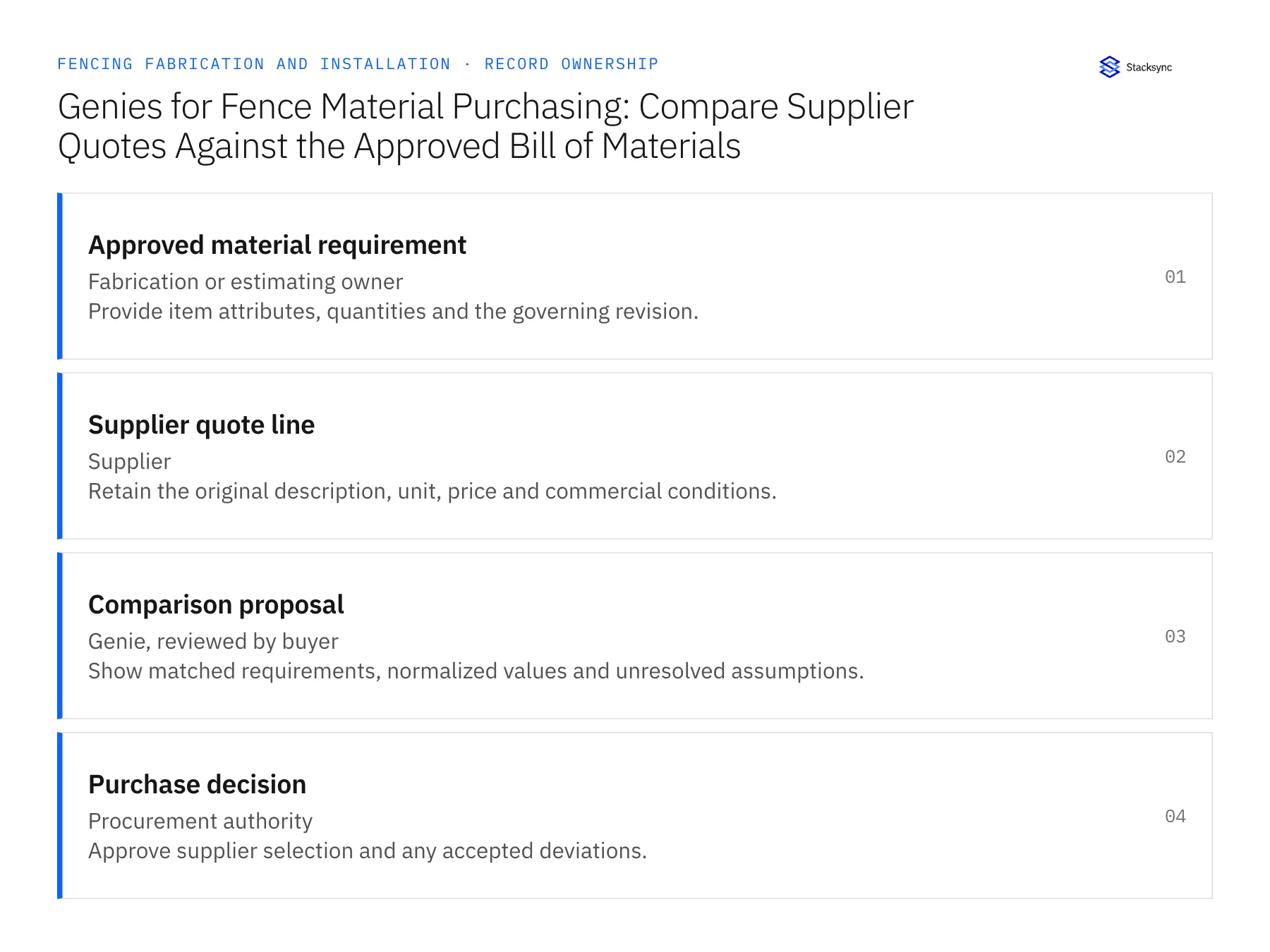
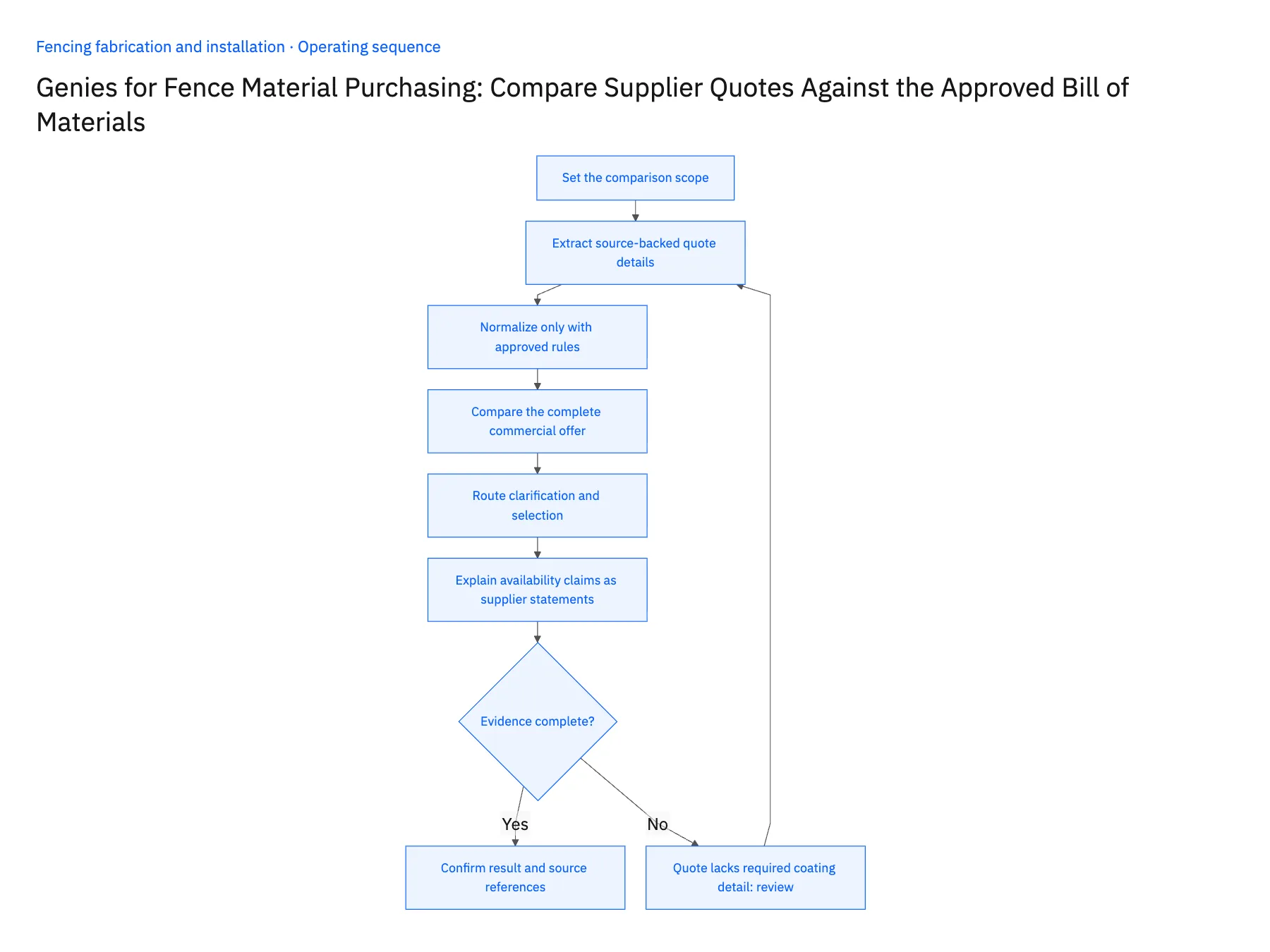
- 01Set the comparison scopeGive the Genie one approved material-list revision and the quotes to compare. Include the required attributes that affect suitability, such as section dimensions, material grade and finish. Do not ask it to choose the cheapest option without defining what counts as a conforming offer.
- 02Extract source-backed quote detailsRequire a reference for each price, quantity, unit and stated condition. Keep blanks as missing information. A supplier's product name may suggest a finish or dimension, but the agent should not fill a required specification unless the quote or approved catalog evidence supports it.
- 03Normalize only with approved rulesUse deterministic calculations and reviewed unit conversions for price comparison. Preserve the supplier's original quantity and unit alongside the normalized result. If a weight-to-length relationship is not established for the exact material, mark the quotes incomparable until the buyer resolves it.
- 04Compare the complete commercial offerShow freight, minimum order, packaging, availability and stated delivery conditions separately from unit price. A low material price can come with a different purchase quantity or excluded transport cost. The Genie should explain these differences without inventing an all-in cost where terms are missing.
- 05Route clarification and selectionCreate focused questions for suppliers or internal owners, but keep external communication and purchase placement within the authorized process. After the buyer decides, record the selected quote version and any accepted deviations. Use that approved record for the downstream order handoff rather than the agent's initial ranking.
- 06Explain availability claims as supplier statementsKeep the quote's stated stock or lead-time language and the date it was provided. A quote saying available does not reserve material for the contractor, and a comparison prepared later may be using an outdated promise. The buyer should reconfirm the relevant condition through the approved purchasing process before committing the project schedule. The Genie can flag old or ambiguous availability evidence without converting it into a guaranteed delivery date.
Handle the exceptions explicitly
Quote lacks required coating detail
Ask procurement to obtain clarification before treating the line as conforming.
One quote prices weight and another length
Use an approved conversion for the exact section or leave the comparison unresolved.
Freight is excluded
Show the missing commercial component and avoid presenting a false delivered-cost total.
What to verify before expanding
- Every compared price links to its source quote line.
- Required specification gaps remain explicit.
- Normalized values retain their original units and assumptions.
- Supplier selection requires the authorized buyer's decision.

Connect this process to the rest of your operation
Explore Stacksync AI agents (Genies) and scope the records and actions against your actual systems. Book a demo with a real approved material requirement example and the exception your team handles most often, for example quote lacks required coating detail.
- AI Supplier Quote Comparison for Fence Fabricators
- Fence Material Quote Exceptions: Gauge, Coating, Length, Freight, and Minimum-Order Differences
- Steel and Fence-Material Supplier EDI: Map Bundles, Pieces, and Lengths to Project Purchase Orders
- Fence Fabricators and Installers: Align Salesforce Approved Configurations With NetSuite Sales Orders
- How Stacksync Manages Schema Changes: Ensuring Continuous Data Flow Between CRM and Databases
- NetSuite Two-Way Sync Solutions: Enterprise Integration Guide
The shared architecture guide covers record matching, ownership, and recovery across systems.
Technical references
FAQ
Frequently asked questions










Related articles