Electronic-component returns: reconcile distributor quantities, lots and credit decisions
Customer service, receiving and finance each hold a different return quantity; reconcile packs, pieces and lot evidence before anyone prepares a credit.
- Author
- Ignacio Malpartida · GTM Engineer
- Published
- Read time
- 4 min read
The operating decision
A distributor-return workflow for electrical and electronic components should connect the request to the original shipment, item, selling unit and recorded lot or serial evidence. Keep authorization to return, physical receipt, inspection and credit approval distinct. Automation can assemble the comparison and route discrepancies to the right owner. A returned package or matching product description does not establish that the full claimed quantity is eligible for the requested financial remedy.
Explore the complete electrical and electronic components integration and automation hub for the systems and processes around this guide.
What this looks like in electrical and electronic components
A component manufacturer authorizes a distributor to return several unopened packs. The received shipment includes mixed pack sizes and one item reference that differs from the original sale. Customer service sees the authorized quantity and wants to close the case, while receiving has counted pieces and finance needs the accepted commercial quantity. A connected workflow preserves both units and the original shipment mapping, identifies the mismatch and obtains disposition before preparing the approved credit or replacement.
Records, ownership, and update rules
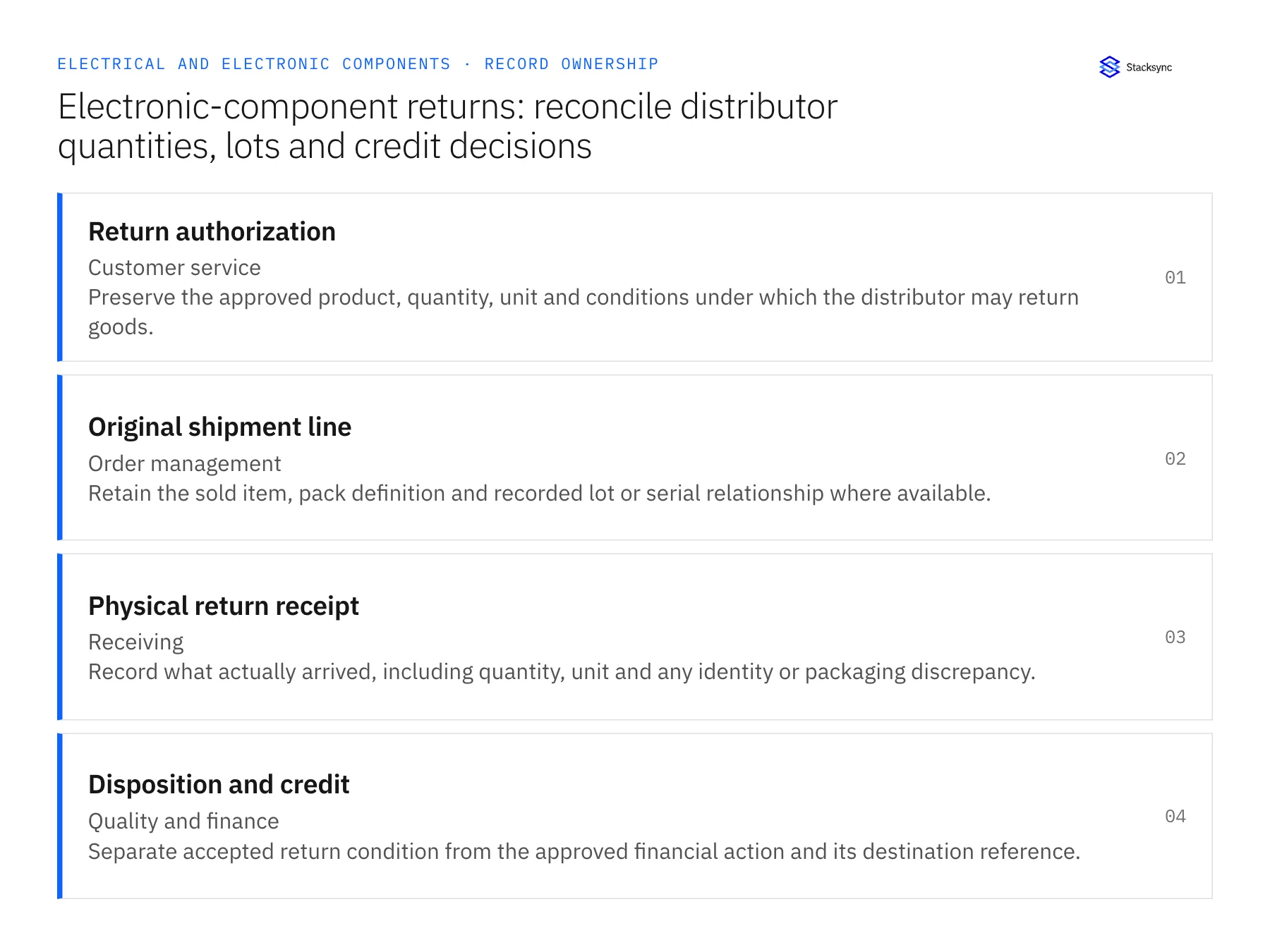
| Record | Owner | Operating rule |
|---|---|---|
| Return authorization | Customer service | Preserve the approved product, quantity, unit and conditions under which the distributor may return goods. |
| Original shipment line | Order management | Retain the sold item, pack definition and recorded lot or serial relationship where available. |
| Physical return receipt | Receiving | Record what actually arrived, including quantity, unit and any identity or packaging discrepancy. |
| Disposition and credit | Quality and finance | Separate accepted return condition from the approved financial action and its destination reference. |
Work through the process
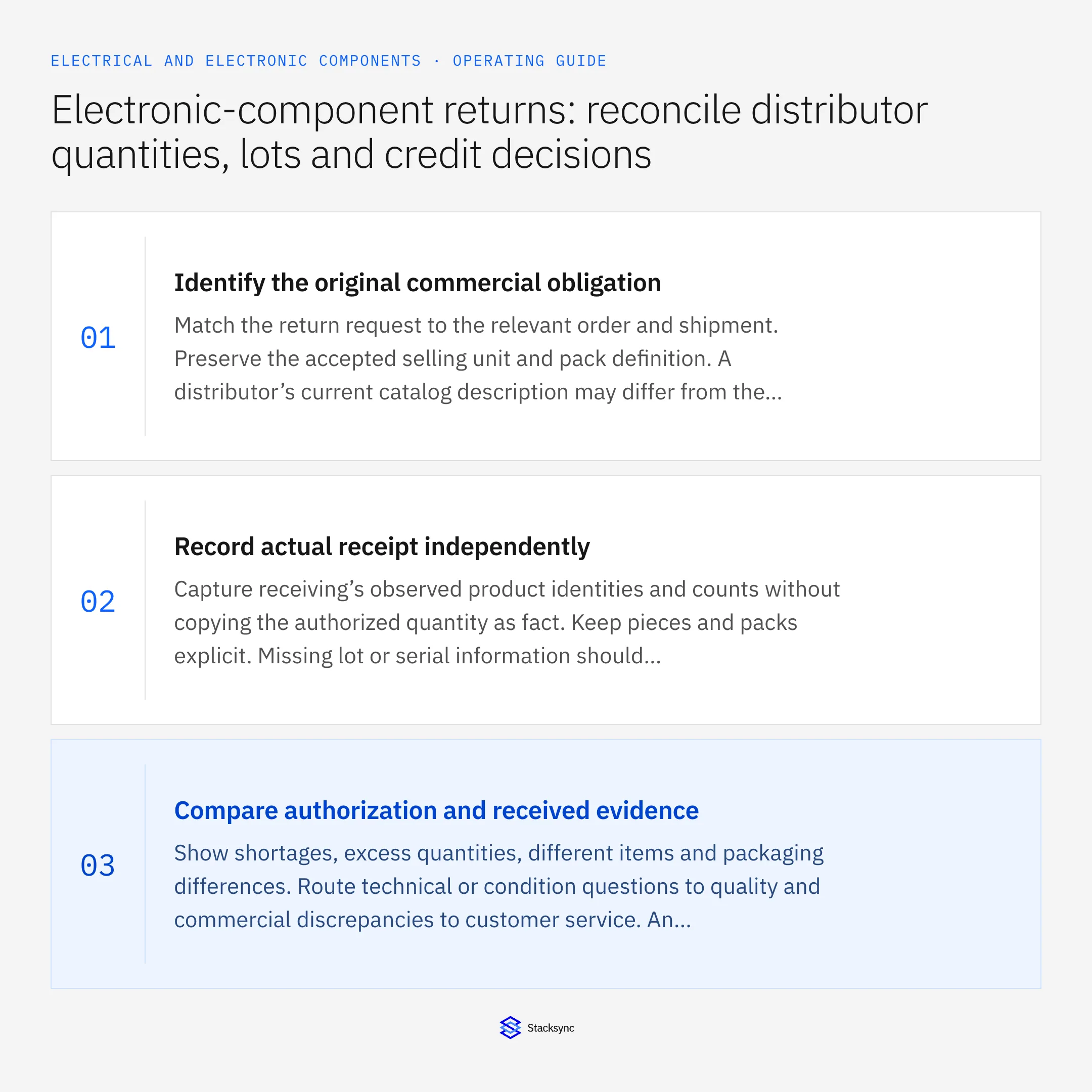
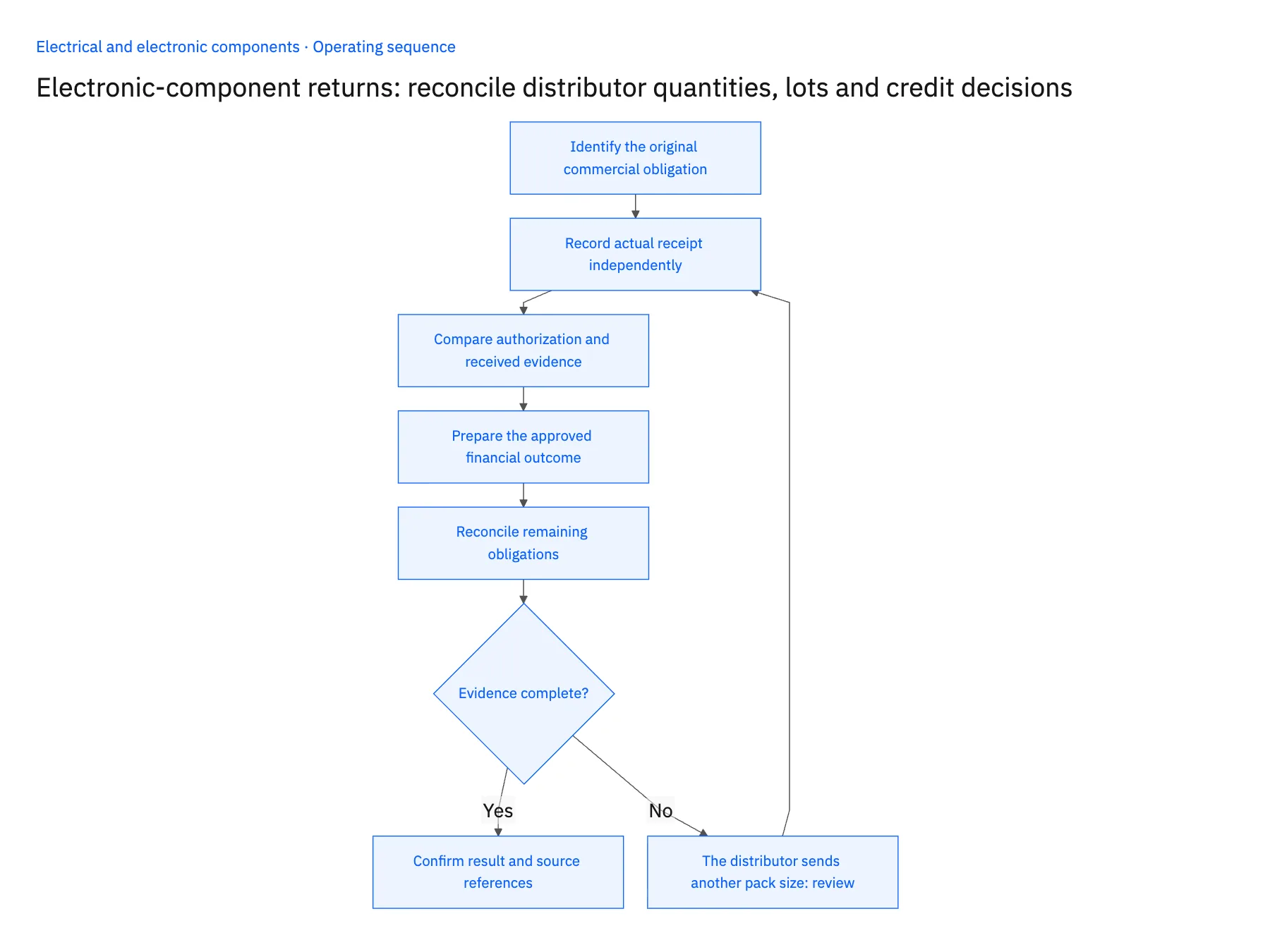
- 01Identify the original commercial obligationMatch the return request to the relevant order and shipment. Preserve the accepted selling unit and pack definition. A distributor’s current catalog description may differ from the product or packaging version used when the goods were sold.
- 02Record actual receipt independentlyCapture receiving’s observed product identities and counts without copying the authorized quantity as fact. Keep pieces and packs explicit. Missing lot or serial information should remain a review issue when the return process requires it.
- 03Compare authorization and received evidenceShow shortages, excess quantities, different items and packaging differences. Route technical or condition questions to quality and commercial discrepancies to customer service. An authorized return is not automatic acceptance of everything in the received box.
- 04Prepare the approved financial outcomeAfter disposition, present the accepted quantity and applicable terms to finance. Check for existing credits or replacements tied to the same authorization. Execute only the approved operation through the verified application route.
- 05Reconcile remaining obligationsTrack any rejected material, replacement shipment or unresolved balance separately. Close the return only when the accepted quantities and approved remedies agree. Retain the original and corrected evidence so later distributor questions can be answered consistently.
Handle the exceptions explicitly
The distributor sends another pack size
Preserve its actual quantity and ask the owner to confirm the commercial treatment using the original sale and return terms.
The lot reference does not match the shipment
Route the discrepancy for review instead of changing the historical shipment relationship to fit the return.
A credit already exists for part of the claim
Show the prior action and calculate only the unresolved approved scope, preventing a duplicate remedy.
What to verify before expanding
- Actual received quantity remains separate from authorized quantity.
- Pack and piece counts reconcile under the applicable reviewed definition.
- Lot or item discrepancies require explicit disposition.
- A repeated return update cannot create a duplicate credit or replacement.

Connect this process to the rest of your operation
Explore Stacksync workflows and scope the records and actions against your actual systems. Book a demo with a real return authorization example and the exception your team handles most often, for example the distributor sends another pack size.
- Component-substitution workflows for electronics manufacturers
- Electronic component substitutions: route evidence to engineering before changing supply
- AI agents for electronics order intake: resolve customer part references for review
- Electronics AI mapping exceptions: part suffixes, packaging units and revision restrictions
- EDI vs API Integration for Supply Chain Data (2026 Guide)
- Acumatica Integrations: The Complete Guide
The shared architecture guide covers record matching, ownership, and recovery across systems.
Technical references
FAQ
Frequently asked questions










Related articles