Flooring Shortage Exceptions: Unit Conversions, Waste Allowances, Dye Lots, and Damaged Deliveries
Escalate flooring shortage cases where the quantity is calculable but the operational decision still needs evidence.
- Author
- Ignacio Malpartida · GTM Engineer
- Published
- Read time
- 5 min read

The operating decision
Flooring shortage exceptions need separate handling for inconsistent units, unapproved waste assumptions, unsuitable lot combinations and damaged deliveries. A Genie can surface these issues and assemble the related records, but the resolution belongs to estimating, project management, receiving or procurement. Require a source for the conversion and the approved material requirement. A mathematically correct total is not enough when the available material fails the specification or is not usable for the phase.
Explore the complete commercial flooring and interior installation integration and automation hub for the systems and processes around this guide.
What this looks like in commercial flooring and interior installation
An interiors contractor appears to have enough carpet for a final area when two delivery records are combined. One record uses square yards, the other uses rolls, and part of a roll was damaged. The remaining material includes a different batch. An agent that simply totals quantities could confidently report no shortage. The exception review should stop that conclusion and identify the conversion, condition and finish-continuity decisions needed before installation planning.
Records, ownership, and update rules
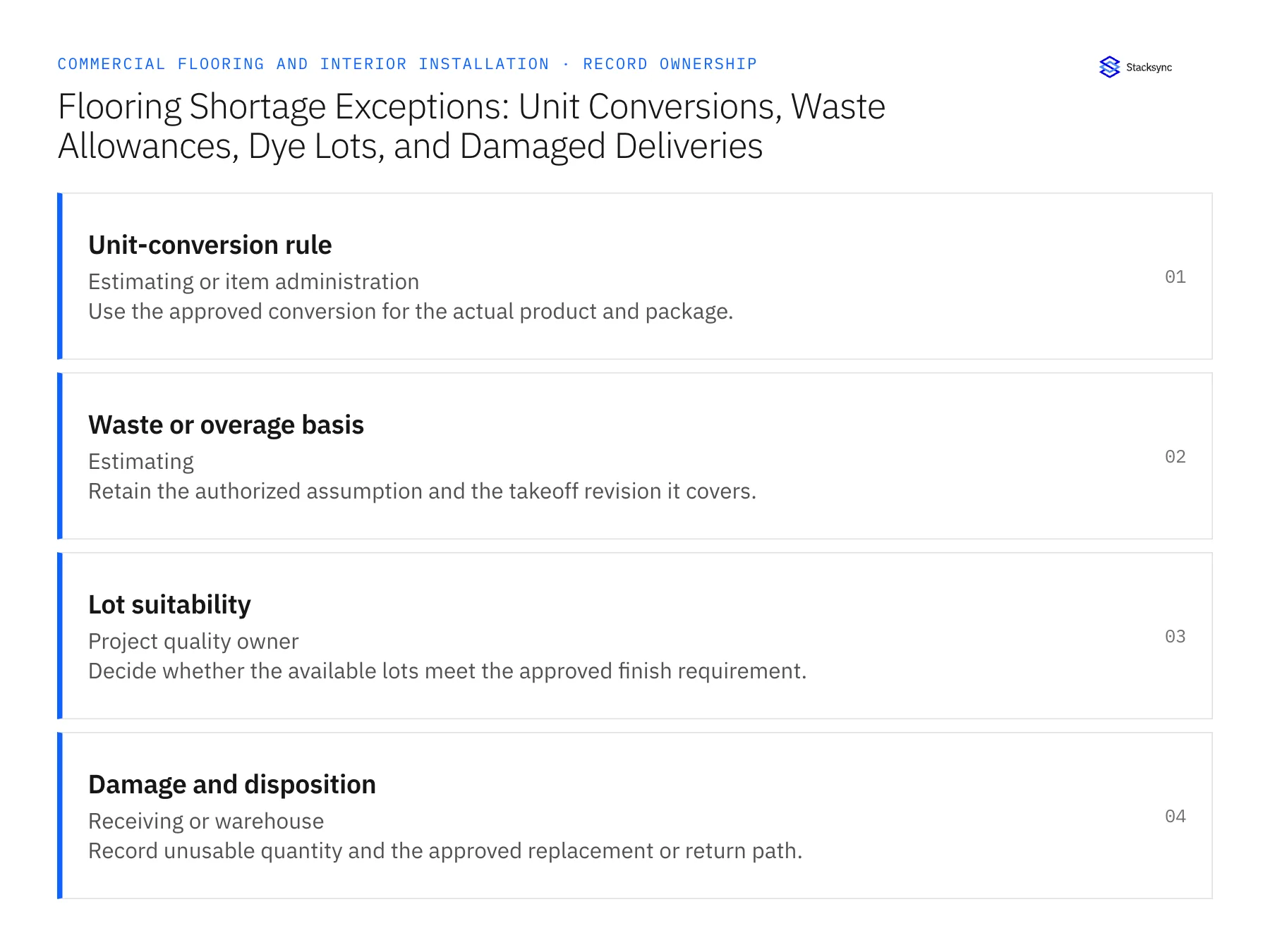
| Record | Owner | Operating rule |
|---|---|---|
| Unit-conversion rule | Estimating or item administration | Use the approved conversion for the actual product and package. |
| Waste or overage basis | Estimating | Retain the authorized assumption and the takeoff revision it covers. |
| Lot suitability | Project quality owner | Decide whether the available lots meet the approved finish requirement. |
| Damage and disposition | Receiving or warehouse | Record unusable quantity and the approved replacement or return path. |
Work through the process
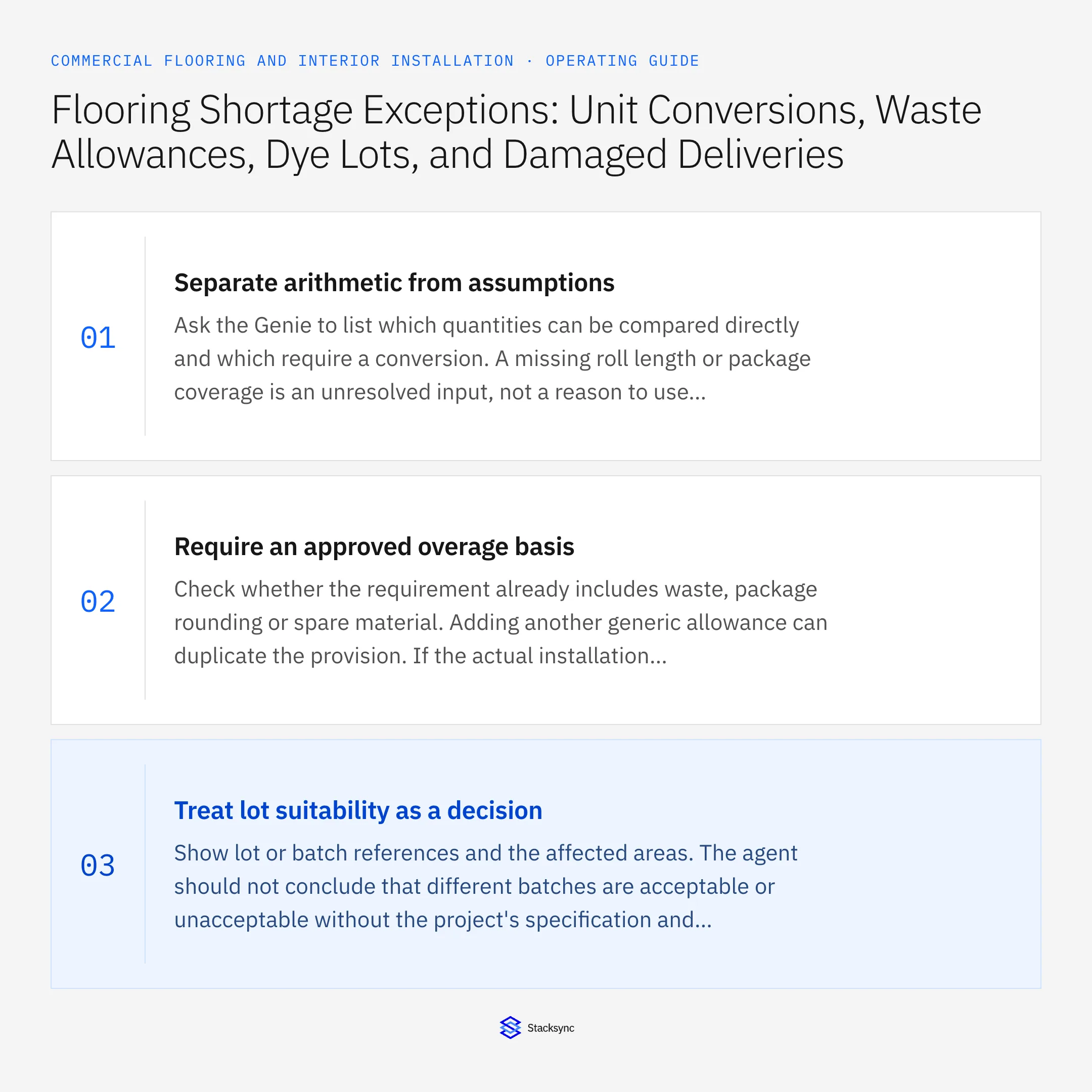
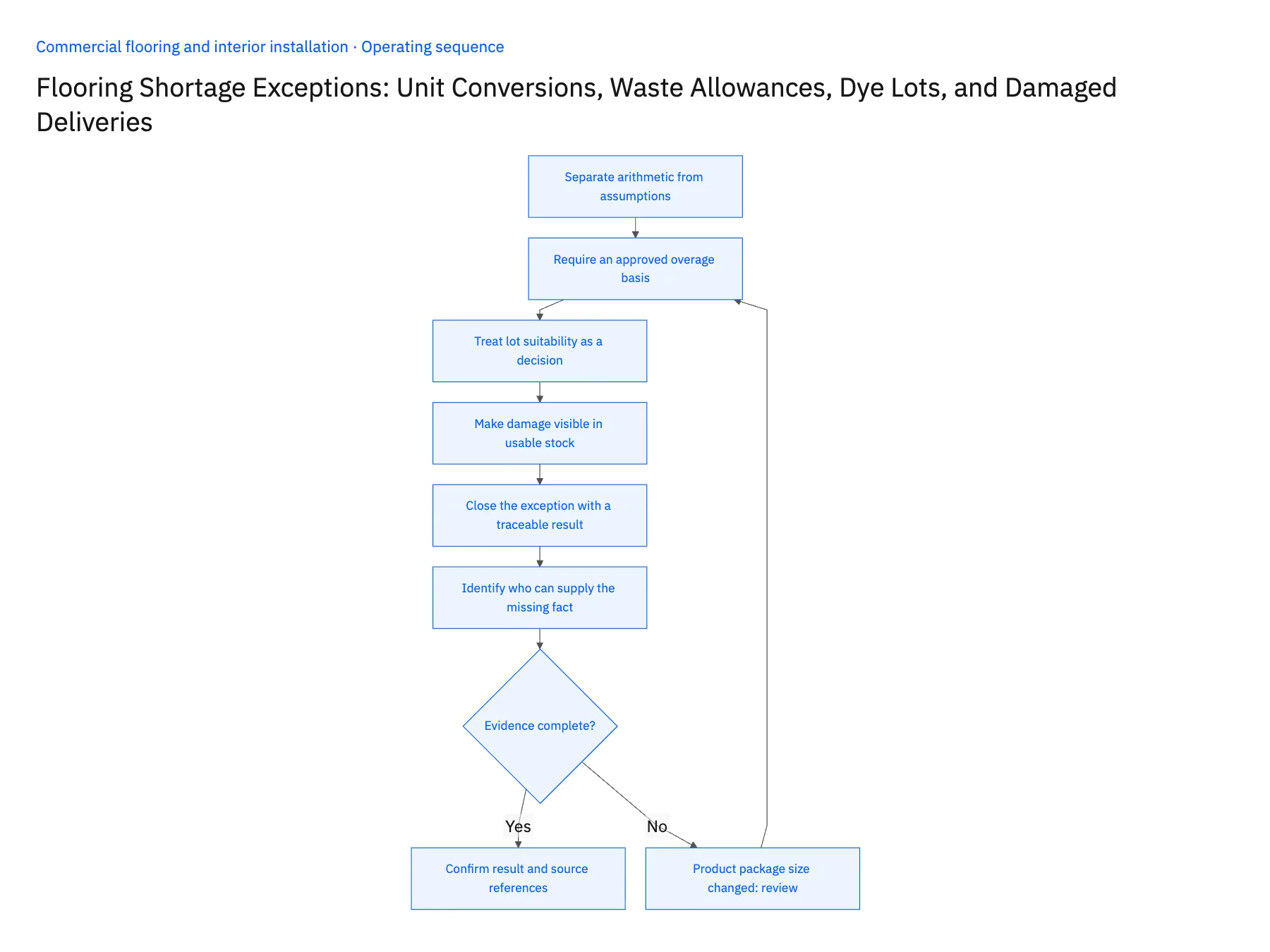
- 01Separate arithmetic from assumptionsAsk the Genie to list which quantities can be compared directly and which require a conversion. A missing roll length or package coverage is an unresolved input, not a reason to use an average. Keep the original reported units beside the normalized values.
- 02Require an approved overage basisCheck whether the requirement already includes waste, package rounding or spare material. Adding another generic allowance can duplicate the provision. If the actual installation creates a new need, route that fact to estimating or project management rather than silently expanding the approved requirement.
- 03Treat lot suitability as a decisionShow lot or batch references and the affected areas. The agent should not conclude that different batches are acceptable or unacceptable without the project's specification and qualified review. Preserve the difference between enough physical quantity and enough approved material for the intended finish.
- 04Make damage visible in usable stockConnect receiving evidence to the affected item, package and quantity. If the extent of damage is unclear, ask for the missing count or inspection record. A supplier credit and a replacement delivery are separate events; neither should automatically restore usable stock before material arrives.
- 05Close the exception with a traceable resultStore the approved conversion, revised requirement, lot decision or damage disposition under the same case. Recalculate only after those inputs are resolved. Route the resulting shortage or surplus to the appropriate owner and retain the earlier calculation for comparison.
- 06Identify who can supply the missing factUse the exception category to request the right evidence. A package conversion belongs with item administration or the supplier; a damaged quantity belongs with receiving; an approved finish decision belongs with the project owner. Sending every discrepancy to the estimator creates another manual sorting task. The Genie should name the missing fact, attach the relevant records and propose the appropriate internal owner without pretending that routing itself resolves the discrepancy.
Handle the exceptions explicitly
Product package size changed
Use the conversion tied to the actual supplied item and preserve old and new package references.
Takeoff already includes waste
Do not add another allowance; request review only if a new documented condition changes the requirement.
Supplier credits damaged goods
Keep the quantity unavailable until replacement or approved alternative material is actually accepted.
What to verify before expanding
- Unknown conversions block normalized totals.
- The review identifies whether overage is already included.
- Lot decisions name the affected material and project phase.
- A credit cannot masquerade as replacement inventory.

Connect this process to the rest of your operation
Explore Stacksync AI agents (Genies) and scope the records and actions against your actual systems. Book a demo with a real unit-conversion rule example and the exception your team handles most often, for example product package size changed.
- Genies for Flooring Shortage Reviews: Reconcile Takeoffs, Delivered Materials, and Installation Phases
- Flooring Supplier EDI: Keep Roll, Box, and Pallet Quantities Consistent From PO to Invoice
- Commercial Flooring Estimates: Align HubSpot Project Scope With NetSuite Approved Quotes
- Two-Way Sync Error Handling: Retries and Replay
- Reconcile Contractor Quotes, Approved Work, and Maintenance Invoices
The shared architecture guide covers record matching, ownership, and recovery across systems.
Technical references
FAQ
Frequently asked questions










Related articles