Flooring Delivery to Installation: Coordinate Site Release, Staged Materials, and Crew Tasks
Coordinate flooring installation release using material condition, phase staging and explicit site-readiness evidence.
- Author
- Ignacio Malpartida · GTM Engineer
- Published
- Read time
- 5 min read

The operating decision
A flooring delivery-to-installation workflow should verify that the correct materials are available for the right phase and that the site has been released for work by the responsible people. Keep delivery, staging, site readiness and crew assignment separate. The workflow can assemble evidence and route blockers, but it should not interpret a shipment notice as usable material or certify substrate conditions. Qualified project and field personnel make the installation-release decision.
Explore the complete commercial flooring and interior installation integration and automation hub for the systems and processes around this guide.
What this looks like in commercial flooring and interior installation
A flooring contractor receives material for a three-floor office project. The first floor is available, the second is still occupied, and the third has unresolved preparation work. Some material is stored offsite and one pallet arrived damaged. A project-level delivered flag would encourage premature crew scheduling. A useful workflow identifies which phase has the required usable material, the current site-release evidence and a confirmed next action for each blocker.
Records, ownership, and update rules
| Record | Owner | Operating rule |
|---|---|---|
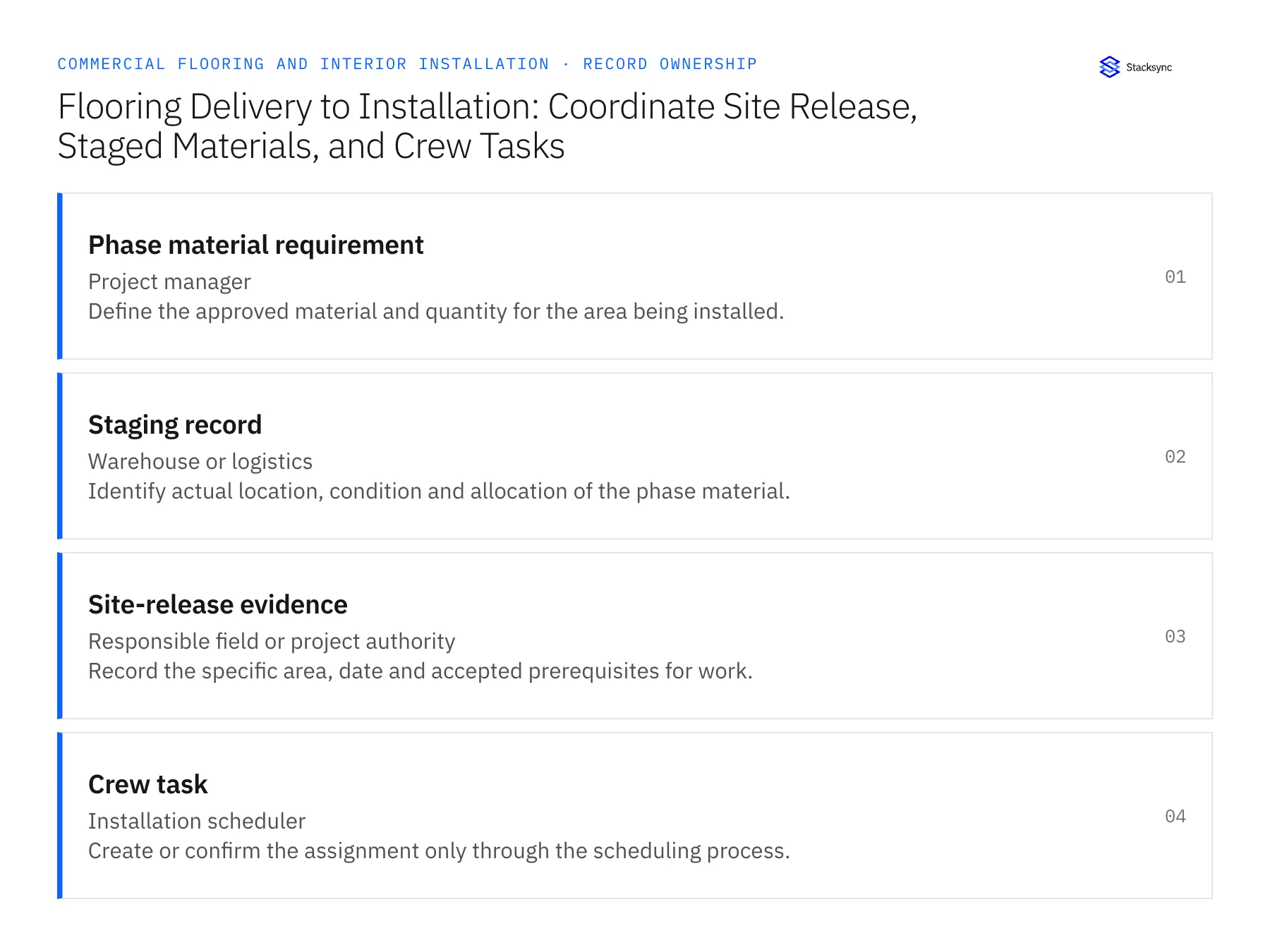
| Phase material requirement | Project manager | Define the approved material and quantity for the area being installed. |
| Staging record | Warehouse or logistics | Identify actual location, condition and allocation of the phase material. |
| Site-release evidence | Responsible field or project authority | Record the specific area, date and accepted prerequisites for work. |
| Crew task | Installation scheduler | Create or confirm the assignment only through the scheduling process. |
Work through the process
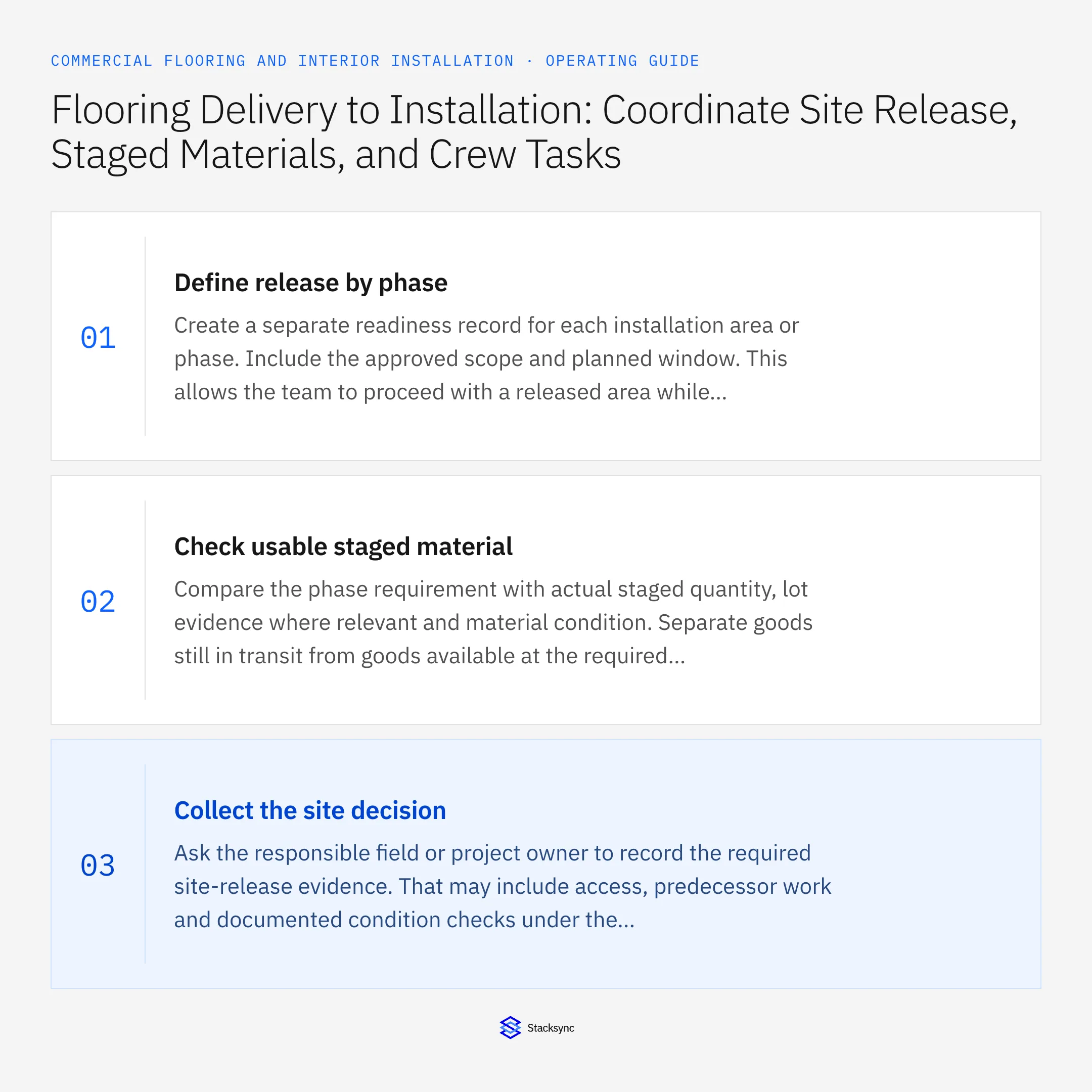
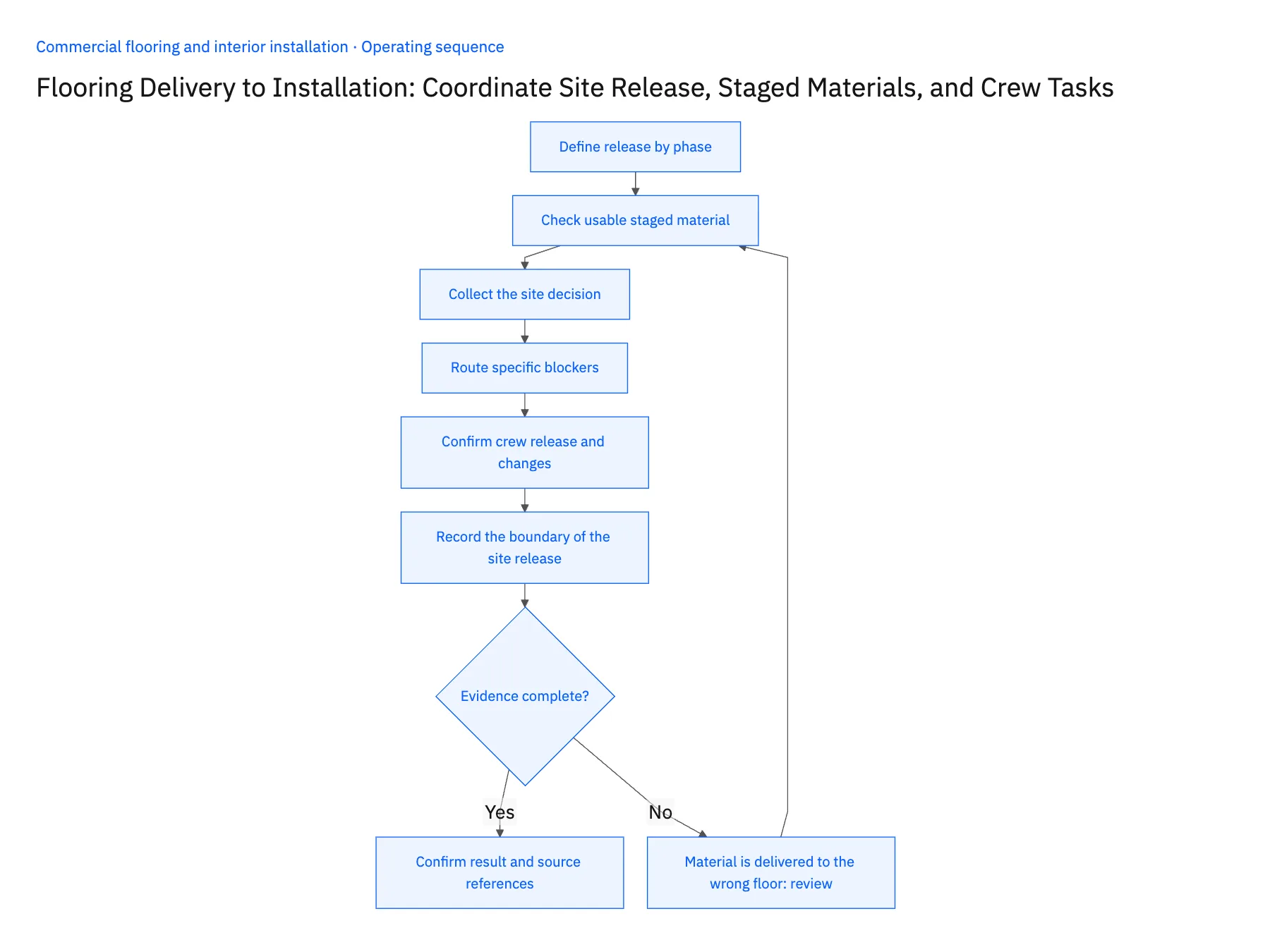
- 01Define release by phaseCreate a separate readiness record for each installation area or phase. Include the approved scope and planned window. This allows the team to proceed with a released area while keeping other areas blocked, rather than treating the entire project as either ready or unready.
- 02Check usable staged materialCompare the phase requirement with actual staged quantity, lot evidence where relevant and material condition. Separate goods still in transit from goods available at the required location. A delivery record should identify where the material is and who has accepted it, not merely that a supplier dispatched it.
- 03Collect the site decisionAsk the responsible field or project owner to record the required site-release evidence. That may include access, predecessor work and documented condition checks under the contractor's procedures. The workflow coordinates these records; it does not make technical judgments about whether a substrate or environment is suitable.
- 04Route specific blockersAssign damaged material to receiving or procurement, missing site access to the coordinator, and incomplete predecessor work to the project owner. Include the affected phase and planned installation date. A specific blocker task is more useful than a general message that the project is delayed.
- 05Confirm crew release and changesAfter the required evidence is accepted, route the phase for scheduling confirmation. Record the actual release decision and the version of the evidence used. If material condition or site availability changes, reopen the affected readiness item and inform the scheduler through the approved workflow.
- 06Record the boundary of the site releaseA site can be released for one activity while remaining unavailable for another. Preserve the area, work type and time window covered by the responsible person's decision. An access confirmation for material staging should not become approval to start installation. Likewise, a completed inspection record should not be generalized beyond the condition it actually documents. The scheduler needs the specific permitted work so the crew arrives with a task the site can support.
Handle the exceptions explicitly
Material is delivered to the wrong floor
Keep it unavailable for that phase until logistics confirms staging or transfer.
One pallet is damaged
Exclude the held quantity and show the shortfall to procurement and the project manager.
Site release is withdrawn
Reopen the phase and route the changed condition before confirming the crew task.
What to verify before expanding
- A shipment notice cannot mark a phase installation-ready.
- Each phase shows its actual staged material location.
- Technical site acceptance has an identified qualified owner.
- A withdrawn site release invalidates the prior scheduling recommendation.

Connect this process to the rest of your operation
Explore Stacksync workflows and scope the records and actions against your actual systems. Book a demo with a real phase material requirement example and the exception your team handles most often, for example material is delivered to the wrong floor.
- Flooring Procurement and Installation Handoff Workflows
- Approved Finish Schedule to Material Purchase: Automate Commercial Flooring Procurement Handoffs
- Genies for Flooring Shortage Reviews: Reconcile Takeoffs, Delivered Materials, and Installation Phases
- Flooring Shortage Exceptions: Unit Conversions, Waste Allowances, Dye Lots, and Damaged Deliveries
- Reconcile Contractor Quotes, Approved Work, and Maintenance Invoices
- Connect NetSuite with Supabase in Real-Time Using Stacksync
The shared architecture guide covers record matching, ownership, and recovery across systems.
Technical references
FAQ
Frequently asked questions










Related articles