







Preserve the exact product
Connect stable Shopify variants to approved ERP recipe and package definitions.
 Salesforce
  HubSpot
  NetSuite
  Zendesk
  Microsoft Dynamics 365 Sales
  Dynamics 365 F&O
  Attio
Attio  Pipedrive
  Zoho CRM
  Campfire
  Rillet
  Front
Front  Shopify
  Amazon Seller Central
  SendGrid
 Pet food and treats
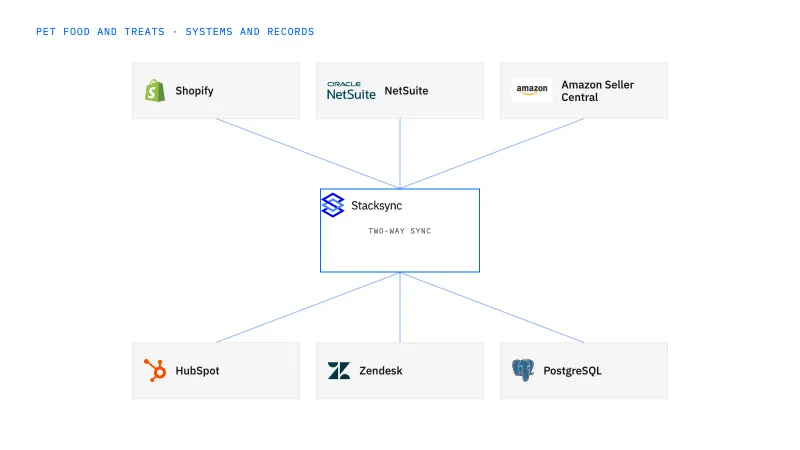
Connect pet-product ecommerce orders to the exact recipe, bag size, and variety-pack definition in the ERP. This fits brands combining DTC and wholesale when teams need a reliable shared purchase trail for fulfillment and support. Keep product identity accurate without assuming it establishes the production lot shipped.
Similar recipe names hide different bag sizes and mixed-pack contents across commerce and operational records.
Explore your process in a demo, or get our shared two-way sync architecture guide.
When this fits
Pet food and treat brands combining production, DTC, marketplaces, independent retail, and wholesale distribution.
Connect stable Shopify variants to approved ERP recipe and package definitions.
Keep historical pack and shipment references available for support while leaving lot attribution to verified operational evidence.
Shopify products, variants, orders, and customers are the listed sync objects. Ecommerce owns the purchased variant; product operations owns the approved NetSuite item and package definition. Derived totals and final financial states stay with the application that calculates them. Inventory levels and fulfillment actions are separate decisions, so product sync alone never allocates stock or releases a shipment.
The process, end to end
A pet brand sells two bag sizes of one recipe and a trial pack containing several recipes. A demo should preserve all purchased variants and components, then show how support follows the actual shipment reference rather than guessing a lot from the catalog or order date.
Scope your implementation
Review current platform pricing alongside the records, volume, and actions in your process. Use your own operating baseline to evaluate the economics.
Explore your process in a demo, or get our shared two-way sync architecture guide.
From foundation to action
Keep shared customer, order, and operational records aligned, with clear field ownership.
Explore two-way sync 02Move approved work between systems, assign exceptions, and confirm the result.
Explore workflows 03Investigate cross-system questions, assemble the evidence, and prepare the next action.
Explore ai agents (genies) 04Connect trading-partner documents to operational records and exception handling.
Explore ediGo deeper
One recipe in two bag sizes plus a trial pack should reach NetSuite as the same distinct products the customer chose in Shopify.
A refund for a variety pack sold weeks ago gets matched to its original Amazon order line and the pack contents on that date, not to today's catalog.
Reps see which store already has an accepted NetSuite order on the way, while the retailer's central payer and each location stay separate records in HubSpot.
Explore all pet food and treats integration and automation guides ↗
No. Product identity and lot attribution are different relationships. The latter needs reliable fulfillment or shipment evidence.
The purchased definition stays with the order. Your product team versions the variety-pack composition with effective dates, and the Shopify order line keeps the components it was sold with. NetSuite carries the approved item relationship for the new assortment going forward. When support later reviews an older purchase, the synced record shows the original recipes and quantities, not the current catalog. The same rule applies when a bag size is renamed: retain the stable variant identity and check whether the physical package changed.
Start with two-way sync between Shopify variants, orders, and customers and the approved NetSuite items, so every purchase carries its exact recipe and bag size. Add workflows once you want a defined handoff, such as routing a wholesale exception before an order is released. Bring in Genies when support needs a sourced trace from a complaint back to the order and shipment. Add EDI when independent retailers send purchase orders as partner documents rather than through your storefront.


