Building-products damage claims: connect shipment evidence, replacements and credit review
A claim workflow for staged loads that matches dealer photographs to the right shipment, catches duplicate reports, and routes replacement and credit decisions to their owners.
- Author
- Ignacio Malpartida · GTM Engineer
- Published
- Read time
- 4 min read
The operating decision
A building-products damage or shortage workflow should connect the claim to the actual shipment, affected product and quantity, then separate replacement and financial decisions. Automate evidence collection and routing while customer service, logistics and finance retain their approval roles. A photograph supports investigation but does not by itself establish the full affected quantity or authorize a credit. Keep the customer’s requested remedy distinct from the remedy the manufacturer accepts.
Explore the complete building products manufacturing integration and automation hub for the systems and processes around this guide.
What this looks like in building products manufacturing
A manufacturer ships several finishes to a jobsite in staged loads. The dealer reports damaged cartons and a shortage using photographs from two deliveries. Customer service wants to replace the affected goods quickly, but the original shipment references and quantities are unclear. A connected claim packet can align the reported items with shipment and receipt evidence, identify possible duplicate claims, and present a supported proposal. The team can then approve a replacement, investigate a short shipment or decide financial treatment without issuing inconsistent remedies through different channels.
Records, ownership, and update rules
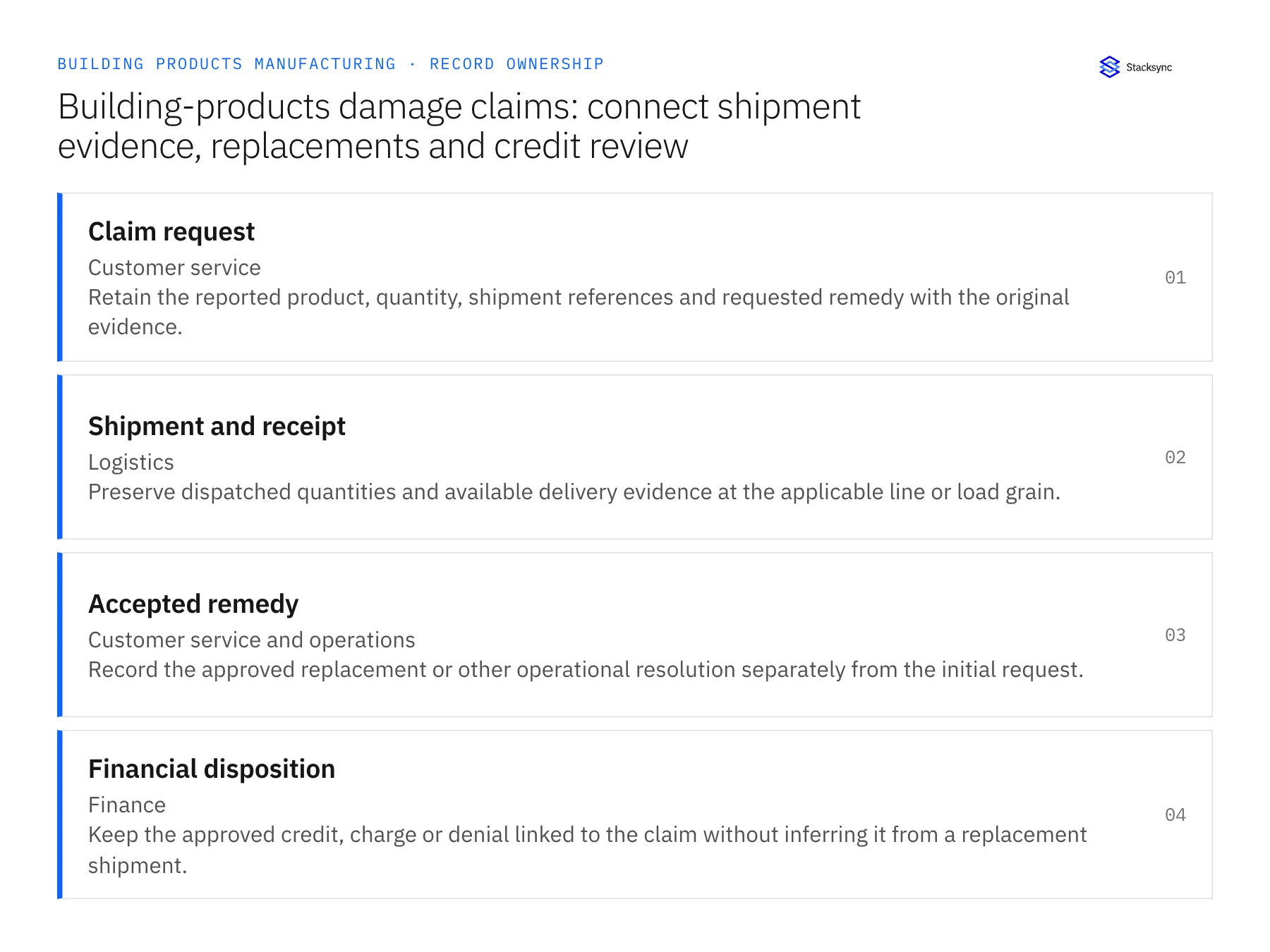
| Record | Owner | Operating rule |
|---|---|---|
| Claim request | Customer service | Retain the reported product, quantity, shipment references and requested remedy with the original evidence. |
| Shipment and receipt | Logistics | Preserve dispatched quantities and available delivery evidence at the applicable line or load grain. |
| Accepted remedy | Customer service and operations | Record the approved replacement or other operational resolution separately from the initial request. |
| Financial disposition | Finance | Keep the approved credit, charge or denial linked to the claim without inferring it from a replacement shipment. |
Work through the process
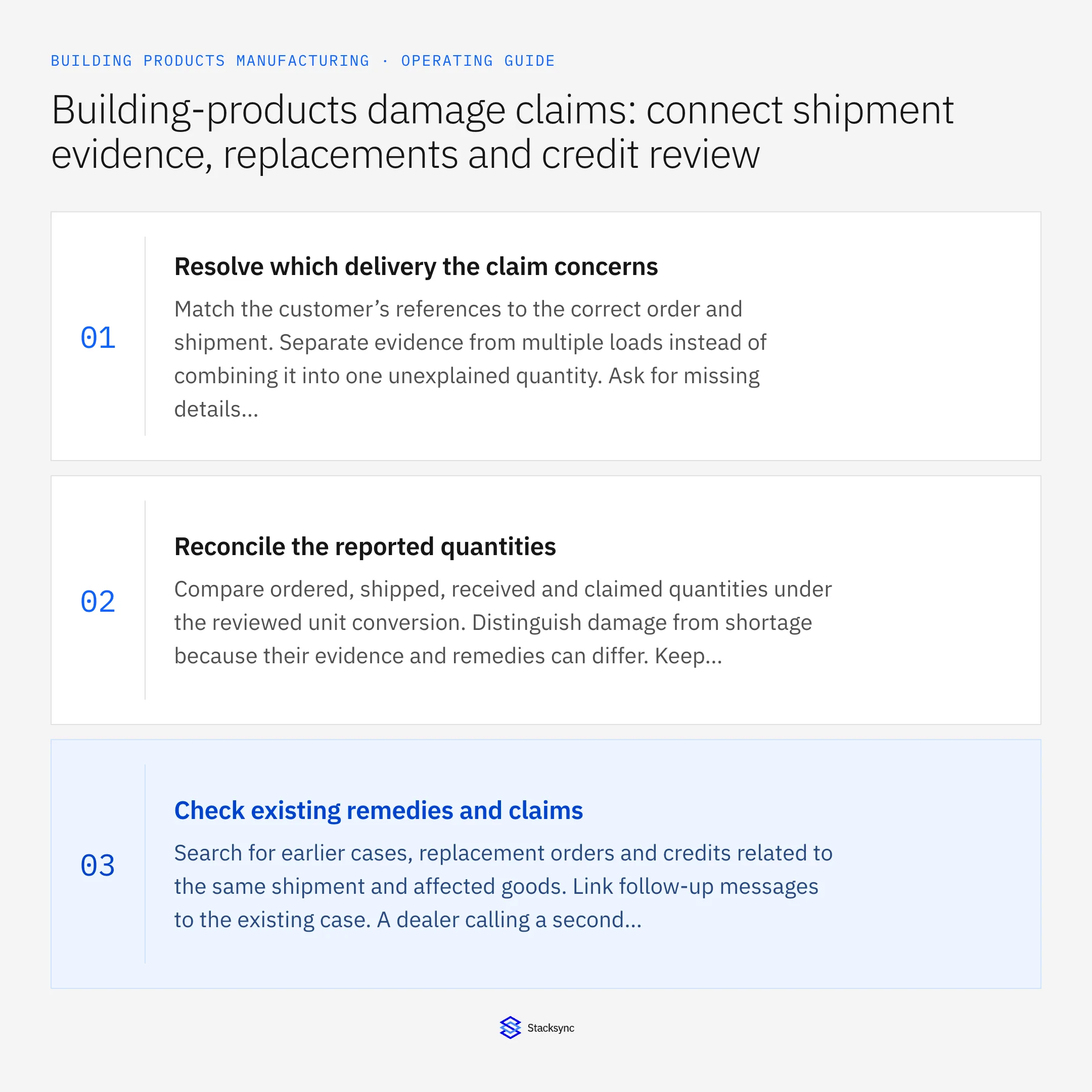
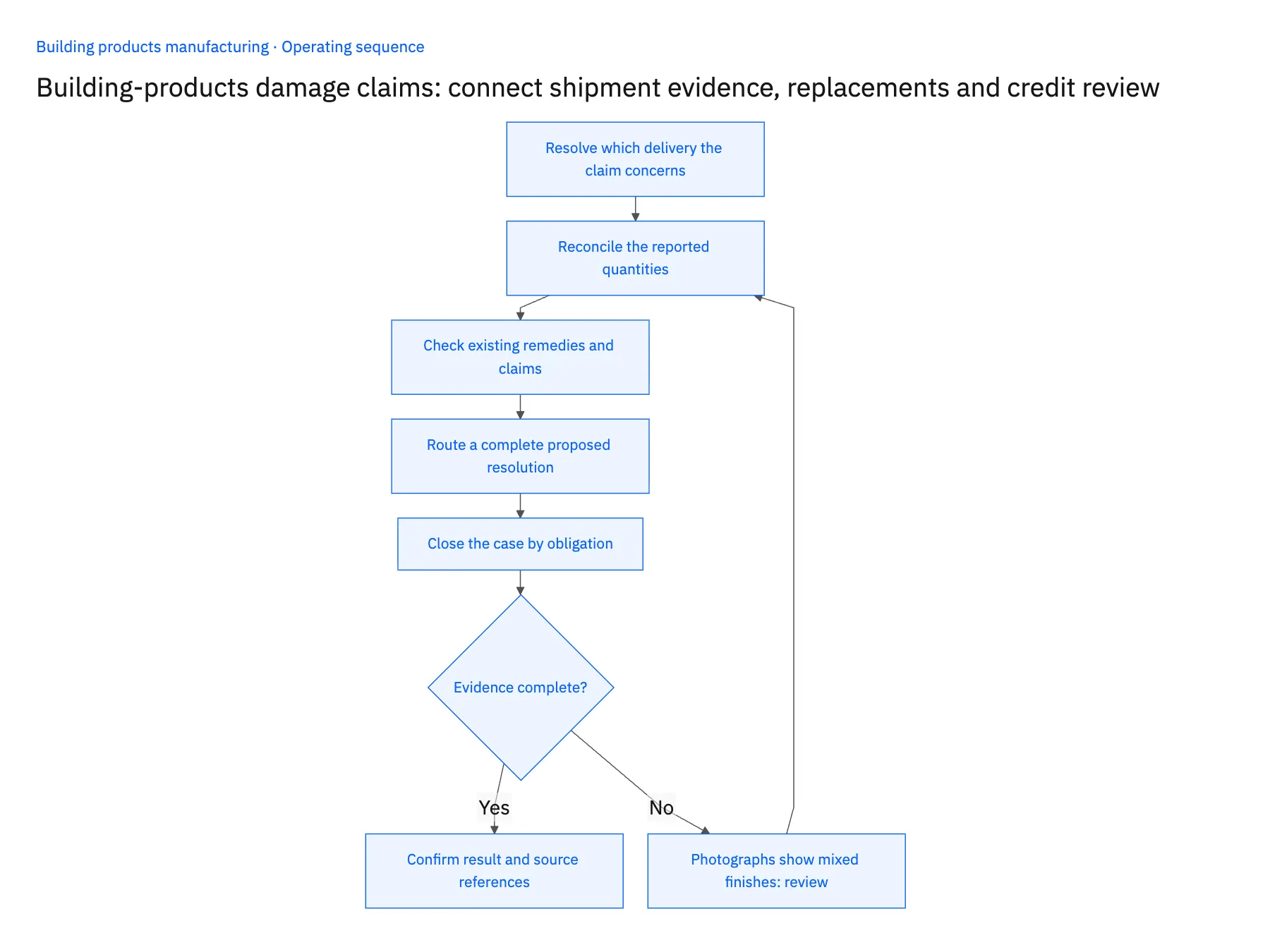
- 01Resolve which delivery the claim concernsMatch the customer’s references to the correct order and shipment. Separate evidence from multiple loads instead of combining it into one unexplained quantity. Ask for missing details when the photographs do not establish the applicable product or delivery.
- 02Reconcile the reported quantitiesCompare ordered, shipped, received and claimed quantities under the reviewed unit conversion. Distinguish damage from shortage because their evidence and remedies can differ. Keep uncertain quantities visible rather than automatically using the customer’s total as accepted liability.
- 03Check existing remedies and claimsSearch for earlier cases, replacement orders and credits related to the same shipment and affected goods. Link follow-up messages to the existing case. A dealer calling a second employee should not create an independent entitlement.
- 04Route a complete proposed resolutionPresent the evidence and requested action to the appropriate owners. Operations confirms replacement availability and finance approves financial treatment. A replacement may be an urgent commercial decision while the investigation continues; record that scope explicitly.
- 05Close the case by obligationTrack the accepted replacement, return requirement and financial disposition separately. Reconcile the quantities resolved by each action so the same damage is not credited and replaced beyond the approved remedy. Keep unresolved balances assigned.
Handle the exceptions explicitly
Photographs show mixed finishes
Ask the customer or reviewer to identify the affected variants before preparing replacement lines.
The dealer reports the same damage twice
Retain both communications on one claim and review any new evidence without duplicating the remedy.
Replacement stock is unavailable
Return an approved alternative plan to customer service. Do not substitute another finish or promise an unsupported delivery date.
What to verify before expanding
- The accepted claim quantity traces to identified products and shipment evidence.
- Duplicate reports cannot create duplicate replacement or credit actions.
- Operational and financial remedies have separately recorded approvals.
- The final case reconciles accepted damage or shortage with the remedies actually completed.

Connect this process to the rest of your operation
Explore Stacksync workflows and scope the records and actions against your actual systems. Book a demo with a real claim request example and the exception your team handles most often, for example photographs show mixed finishes.
- Staged-delivery automation for building-products manufacturers
- Building-products staged deliveries: coordinate project releases without losing the original order
- AI agents for building-products dealer orders: prepare product and delivery drafts
- Building-products AI order exceptions: dimensions, finishes and selling units
- Fast Shopify API Integration via Bi‑Directional Sync
- EDI Integration for Ecommerce: Scale Without Chargebacks
The shared architecture guide covers record matching, ownership, and recovery across systems.
Technical references
FAQ
Frequently asked questions










Related articles