







Preserve the approved scope
Keep product, lot, location, approver, action, and effective time attached to every operational handoff.
 Salesforce
  HubSpot
  NetSuite
  Zendesk
  Microsoft Dynamics 365 Sales
  Dynamics 365 F&O
  Attio
Attio  Pipedrive
  Zoho CRM
  Campfire
  Rillet
  Front
Front  Shopify
  Amazon Seller Central
  SendGrid
 Pet food and treats
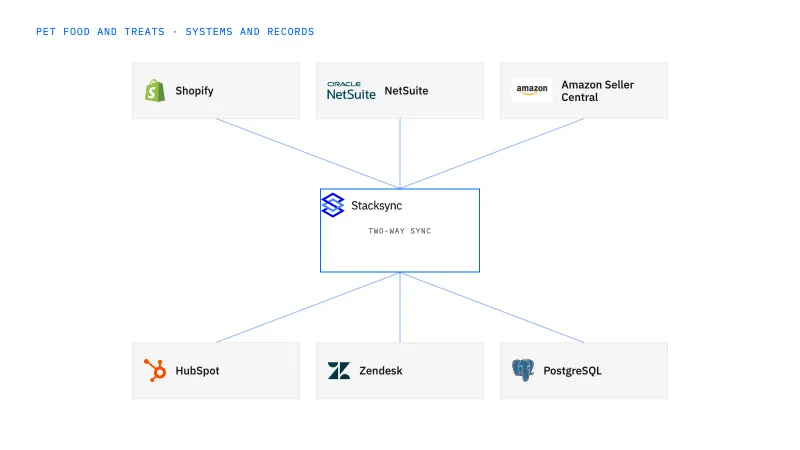
Carry a quality owner’s approved lot-hold decision into verified order and warehouse operations. This fits pet-food teams that need a clear record of which actions succeeded, which records are ambiguous, and which cases require manual review. The workflow coordinates an authorized decision and does not determine product safety.
A hold decision reaches multiple teams, but no shared record confirms the actual operational state for every affected location.
Explore your process in a demo, or get our shared two-way sync architecture guide.
When this fits
Pet food and treat brands combining production, DTC, marketplaces, independent retail, and wholesale distribution.
Keep product, lot, location, approver, action, and effective time attached to every operational handoff.
Read back the intended state and leave unsupported, failed, or ambiguous actions visibly incomplete for the named owner.
The approved hold, with its product, lot, locations, approver, and effective time, is entered once by the quality owner and is not edited by the workflow. The workflow reads lot-to-order evidence from NetSuite and Postgres, applies only the ERP or warehouse actions you have confirmed and permissioned, and posts each result to Slack. Releasing the hold takes a new approved decision.
The process, end to end
A quality manager approves a hold for a specific product and lot at two warehouses. A demo should show the authorized scope, reliable affected-record links, verified actions, and an already-shipped exception that remains assigned to quality and logistics rather than being falsely marked stopped.
Scope your implementation
Review current platform pricing alongside the records, volume, and actions in your process. Use your own operating baseline to evaluate the economics.
Explore your process in a demo, or get our shared two-way sync architecture guide.
From foundation to action
Keep shared customer, order, and operational records aligned, with clear field ownership.
Explore two-way sync 02Move approved work between systems, assign exceptions, and confirm the result.
Explore workflows 03Investigate cross-system questions, assemble the evidence, and prepare the next action.
Explore ai agents (genies) 04Connect trading-partner documents to operational records and exception handling.
Explore ediGo deeper
Under-minimum and free-freight requests from independent stores go to the person with authority, and the approved terms stay attached to the NetSuite order.
A quality manager's hold on one lot at two warehouses becomes a checklist of confirmed NetSuite actions, open manual tasks, and escalations for goods already gone.
Explore all pet food and treats integration and automation guides ↗
No. The quality team owns that decision. The workflow carries the accepted instructions and verifies the operational result.
It goes to the exception case, owned by quality and logistics, with the original decision attached. The workflow does not report it as stopped, because an internal hold does not recall goods already in transit. Lot-to-order evidence in NetSuite and Postgres tells you which released orders carried the affected lot; where an order has no reliable lot association, the case is escalated under the quality owner's policy rather than guessed. The Slack notice to the owners names the shipment, the lot, and the decision it needs.
Two-way sync keeps lot, order, and location records consistent between NetSuite and Postgres, and that shared copy is what the hold workflow reads. The workflow is where you start here: it carries the quality owner's approved hold into confirmed ERP actions, reads back each state, and posts exceptions to Slack. Genies follow when a complaint must be traced to an order and lot before quality decides on a hold. EDI matters once retailer purchase orders and shipment notices enter the same operation.


