







Approve the intended allocation
Resolve the recipient and requested products, then record the authorized sample items and quantities.
 Salesforce
  HubSpot
  NetSuite
  Zendesk
  Microsoft Dynamics 365 Sales
  Dynamics 365 F&O
  Attio
Attio  Pipedrive
  Zoho CRM
  Campfire
  Rillet
  Front
Front  Shopify
  Amazon Seller Central
  SendGrid
 Nutrition and supplements
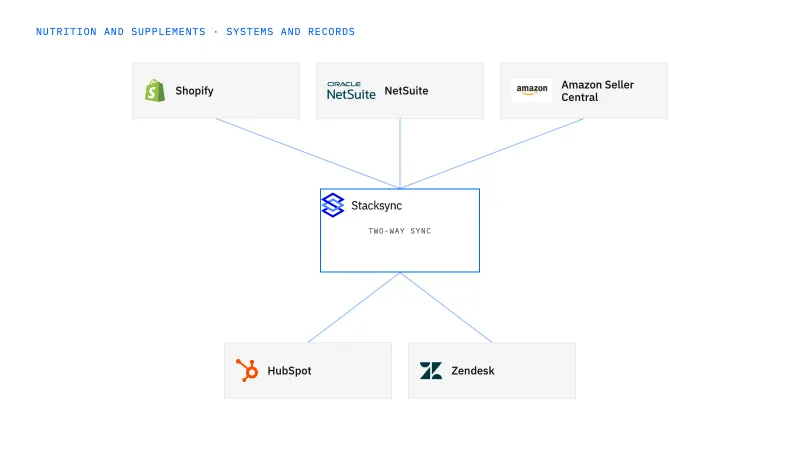
Coordinate practitioner and retailer sample requests from approval through actual fulfillment and sales follow-up. This fits nutrition brands whose reps, operations teams, and finance owners work from different versions of the sample request. Keep sample allocation distinct from the approval of a later paid wholesale account.
Sales follows up on requested samples without knowing which flavors actually shipped or whether the recipient account is approved.
Explore your process in a demo, or get our shared two-way sync architecture guide.
When this fits
Nutrition and supplement brands combining manufacturing, DTC, marketplaces, practitioner sales, and retail distribution.
Resolve the recipient and requested products, then record the authorized sample items and quantities.
Report actual fulfillment and associate later opportunities without presenting the sample itself as a paid commercial order.
The workflow reads the HubSpot contact, company, and sample request, routes approval requests and shipment notices through Slack, and records the authorized allocation against the request. It does not create a NetSuite customer or set terms on its own; finance approves the legal payer before a paid order is released. The commercial owner approves substitutions, and operations owns the shipped items and tracking evidence.
The process, end to end
A rep asks for several flavors for a clinic. One is unavailable and the receiving details are incomplete. The workflow gathers the missing information, routes substitutions for approval, and gives sales the actual shipment result so the next conversation reflects what the clinic received.
Scope your implementation
Review current platform pricing alongside the records, volume, and actions in your process. Use your own operating baseline to evaluate the economics.
Explore your process in a demo, or get our shared two-way sync architecture guide.
From foundation to action
Keep shared customer, order, and operational records aligned, with clear field ownership.
Explore two-way sync 02Move approved work between systems, assign exceptions, and confirm the result.
Explore workflows 03Investigate cross-system questions, assemble the evidence, and prepare the next action.
Explore ai agents (genies) 04Connect trading-partner documents to operational records and exception handling.
Explore ediGo deeper
Three flavors requested, one unavailable and no ship-to contact: the workflow fills the gaps, routes the substitution, and records what shipped to the clinic before sales calls.
Wrong tub size reported, nothing back at the warehouse yet: the workflow keeps the ticket, the authorization, the receipt, and the credit as four separate facts.
Explore all nutrition and supplements integration and automation guides ↗
No. Samples can establish sales activity while legal account, terms, and ordering approval remain separate business decisions.
An unavailable flavor is not swapped by the workflow. It flags the gap to the commercial owner, who approves a substitute or a revised request, and the approved item list is stored apart from the rep's original ask so follow-up reflects what shipped. When a second rep forwards the same clinic request, the workflow compares the HubSpot account and request history and resolves both to the reviewed allocation instead of shipping twice. Sales sees the actual shipment result, not an assumed delivery.
Start with two-way sync so HubSpot contacts and companies resolve to the correct NetSuite payer before any sample moves. Workflows are the product for this page: they carry the sample request through validation, approval, fulfillment evidence, and Slack notification with named owners at each state. Genies fit later, when a wholesale buyer asks for batch documents that need assembling from several sources. EDI becomes relevant once a retailer wants pack configurations and item numbers exchanged as partner documents.


