

















Rillet Closes in Real Time. Your Integrations Have to Match.
A buyer's guide to choosing an integration platform for Rillet. It explains what separates an enterprise iPaaS from a point connector, why an ERP built for a continuous close raises the bar on how fast and how reliably data has to arrive, and the coverage, reliability, and security a finance deployment should hold a platform to. Covers where Rillet's numbers actually come from, how a sync engine keeps the general ledger in step with CRM, billing, databases, and the warehouse, and how to evaluate one.
- Author
- Ruben Burdin · Founder & CEO
- Published
- Read time
- 9 min read
Rillet is built on a promise that most ERPs never made: the close is continuous, not a two-week scramble at month end. Entries land as the business happens, reporting is current, and every line is traceable back to where it came from. That promise holds right up to the point where the data has to get into the ledger.
Because a general ledger does not generate its own facts. Contracts are signed in the CRM, invoices and payments happen in the billing platform, usage sits in a product database, and reporting lives in the warehouse. If those systems reach Rillet through nightly exports and a spreadsheet, the ledger is only as continuous as the slowest job feeding it. The integration layer is what decides whether a real-time ERP behaves like one.
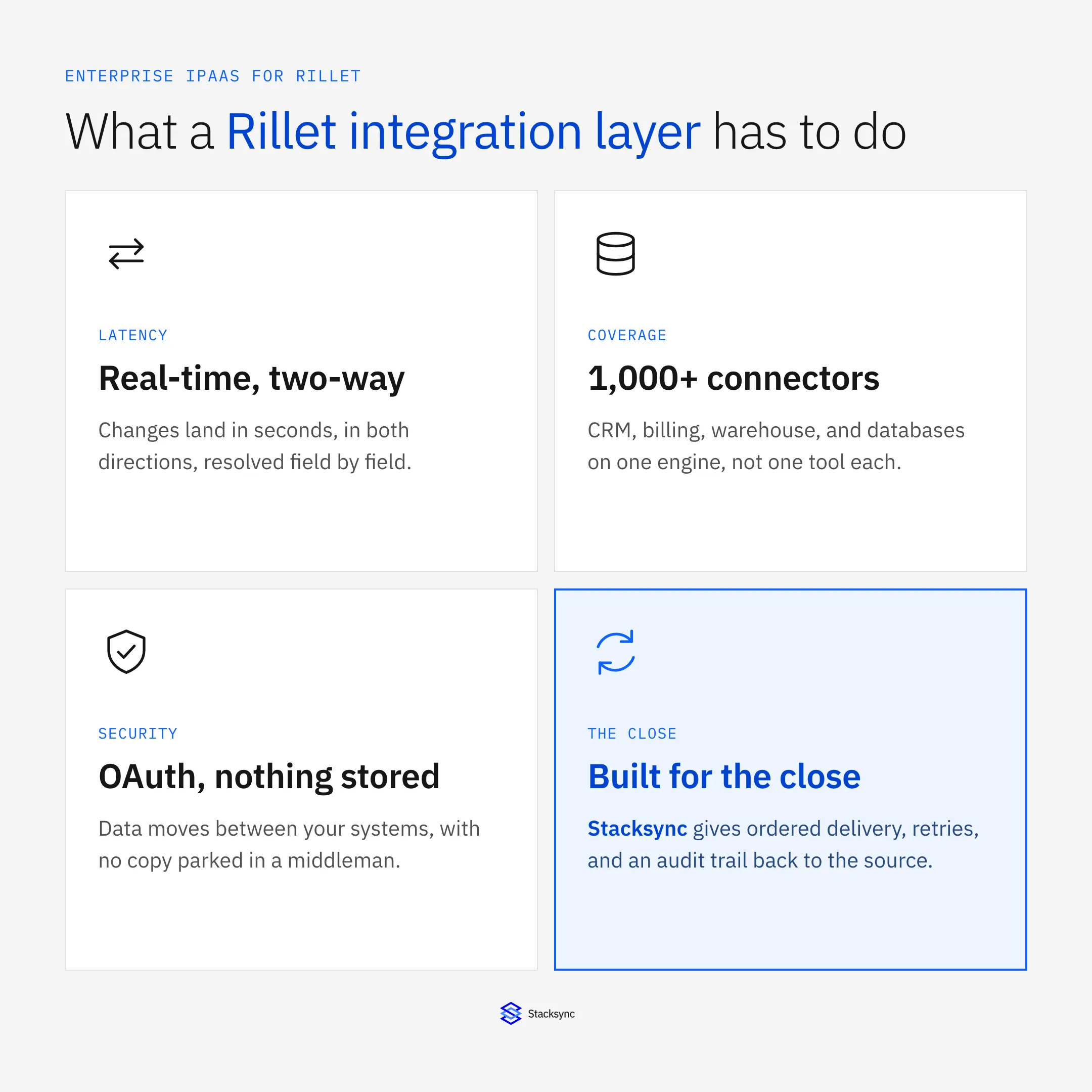
This guide covers what to hold an integration platform to before you plug it into Rillet: what an enterprise iPaaS actually is, why a continuous close raises the bar, the five capabilities that separate a real platform from a connector, and where the ledger's data comes from in practice.
What an enterprise iPaaS actually is
An integration platform as a service is a hosted layer that sits between your systems, watches for changes, and applies them where they belong. You configure it rather than build it: authenticate the systems, map the records and fields, choose a direction and a conflict policy, and the platform runs the plumbing, including the retries, the rate limiting, and the monitoring nobody enjoys writing twice.
The word enterprise is doing real work in that phrase. Plenty of tools will move a record from A to B. What distinguishes a platform you can put underneath a general ledger is that it handles the ugly cases: the same field edited on both sides in the same minute, a system that goes down for an hour, a bulk update that touches fifty thousand rows, a compliance team that wants to know exactly which system wrote a value and when.
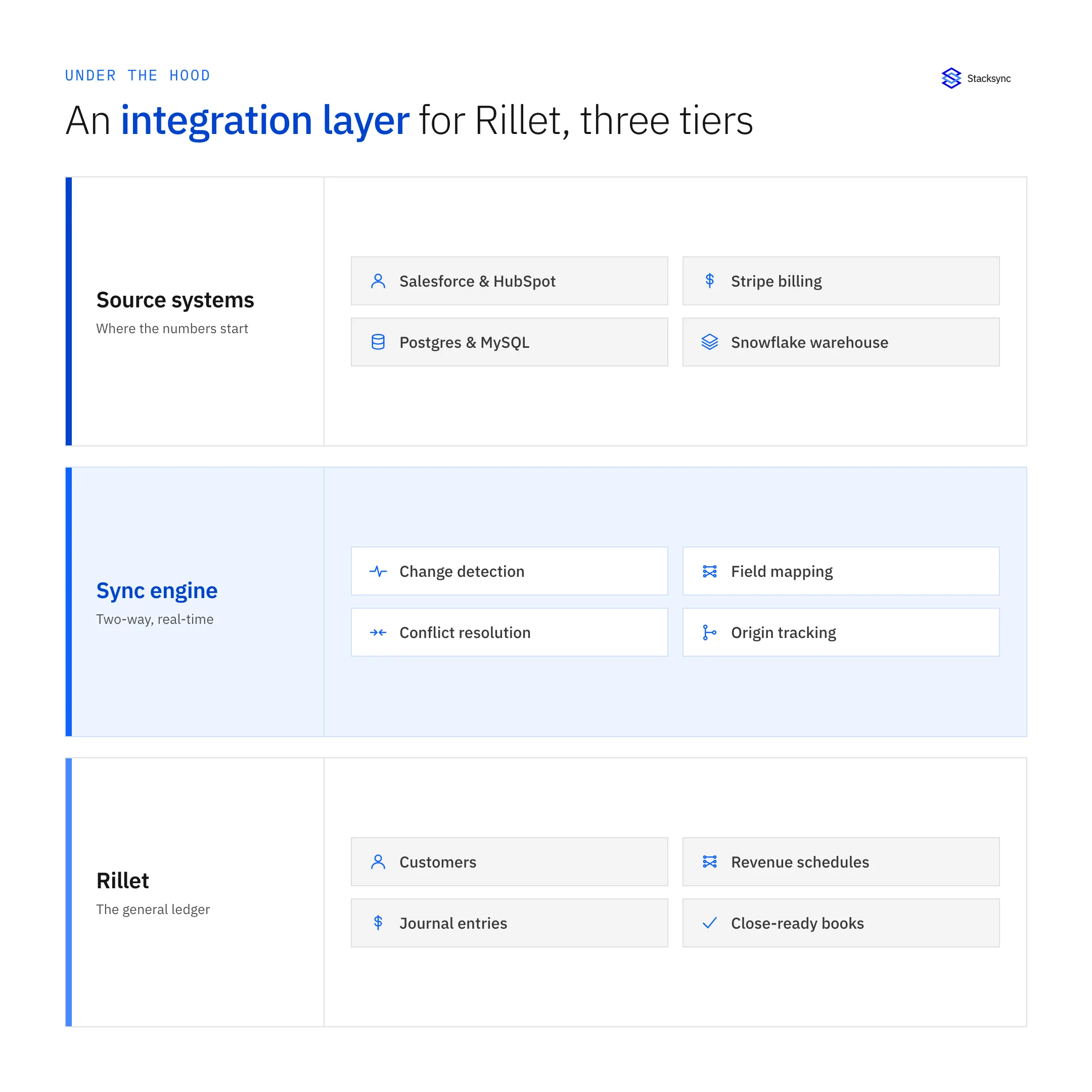
Drawn as a stack it is obvious, but it is worth stating: the sync engine is a tier in its own right. When it is instead a set of scripts attached to whichever system was convenient, the failure modes become somebody's afternoon rather than a monitored, retried, logged event.
Why a real-time ERP raises the bar
With a traditional ERP, a nightly batch is survivable. The close is a scheduled event, so data arriving eight hours late still arrives before anyone looks at it. Rillet inverts that. If the point is that the books are current and revenue recognition runs continuously, then a source system that reports once a day quietly caps how current anything can be.
There is a second, less obvious cost. Batch pipelines tend to be full reloads, because tracking what changed is harder than re-sending everything. Full reloads burn API budget, arrive as a spike rather than a stream, and make it genuinely difficult to answer the question an auditor will ask: which system originated this value, and when. A field-level sync moves only what changed and can name the origin of every write.
| Scheduled batch pipeline | Real-time sync engine | |
|---|---|---|
| Latency to the ledger | Hours, or a nightly window | Seconds, as the change happens |
| What moves | Full reload of the object | Only the fields that changed |
| Direction | One way, per pipeline | Two way on one connection |
| Conflicts | Last job wins, silently | Resolved per field, by policy |
| Audit trail | Job logs, if any | Every write traced to its source |
The difference is not speed for its own sake. It is whether the ledger can be trusted between closes.
Five things to hold a platform to
Vendor pages all claim the same adjectives, so evaluate against capabilities you can test in a trial. These five are the ones that decide whether the integration survives contact with a real finance team.
- Real-time two-way sync, resolved per field. Not two one-way pipelines pointed at each other. One engine, both directions, with a policy for what happens when the same field changes on both sides and origin tracking so writes do not echo back and forth.
- Coverage across the whole finance stack. The CRM, the billing platform, the product database, and the warehouse, on one engine with one operational model. A platform that covers one of the four leaves you maintaining three other integrations by hand.
- Reliability you can point at. Ordered delivery, automatic retries with backoff, and monitoring that tells you a sync is behind before finance does. Ask what happens when a system is down for two hours and how the backlog drains.
- Security that survives review. OAuth rather than stored credentials, no copy of your data parked in a middleman, encryption in transit, and role-scoped access. Revenue data raises the bar on every one of these.
- An audit trail per write. Which system wrote this value, when, and what it replaced. This is the difference between a ledger you can defend and one you can only explain.
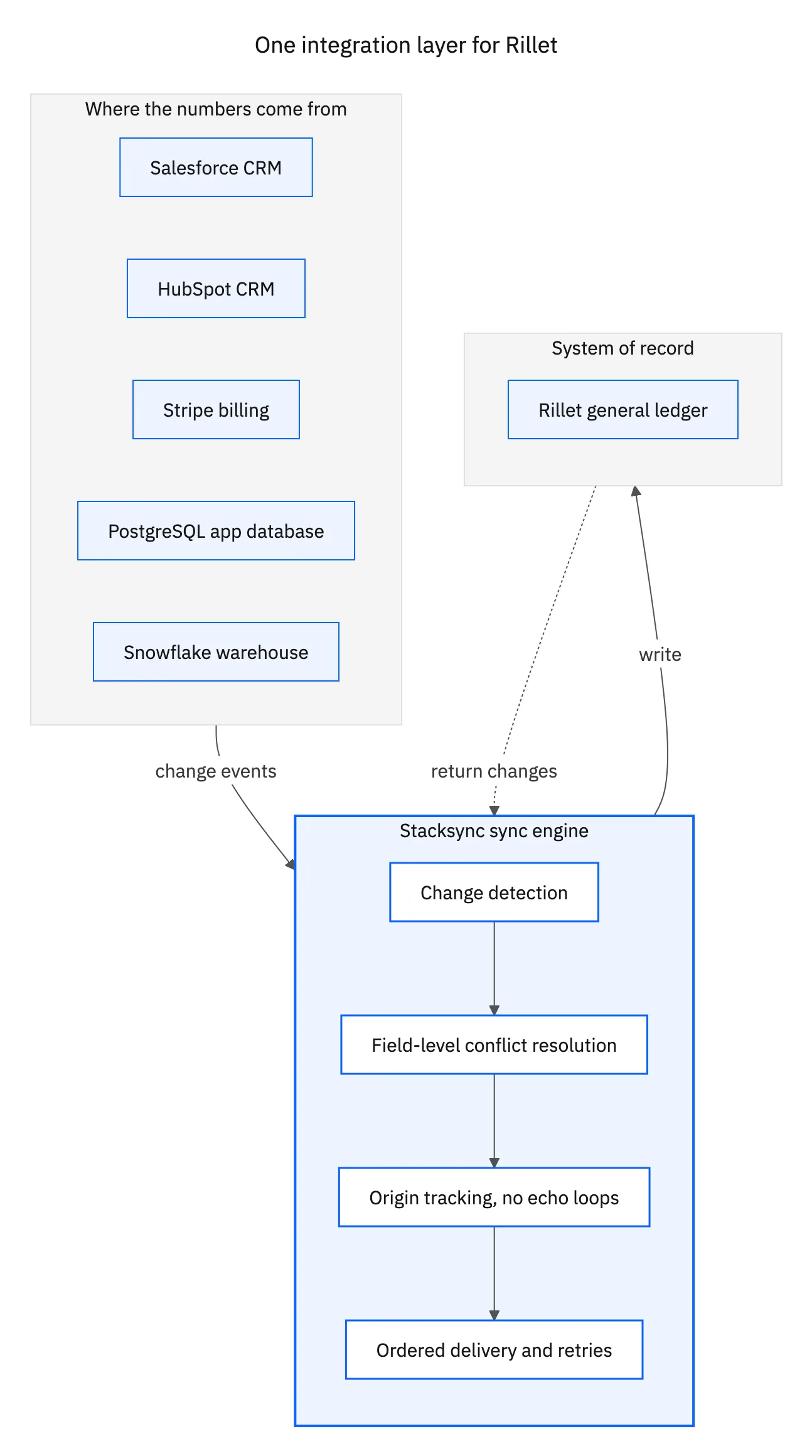
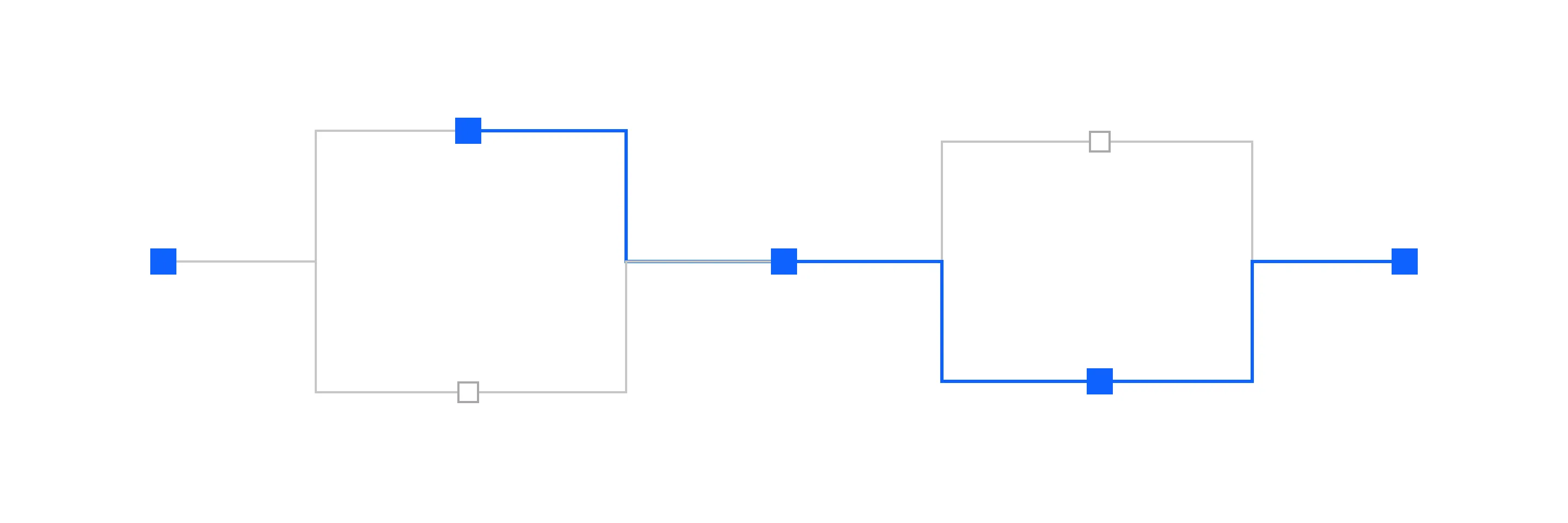
The shape above is the one to aim for. Every source connects to the same engine, and the engine connects to Rillet. The alternative, a separate integration per system with its own schedule, credentials, and failure behaviour, is how finance teams end up reconciling their integrations instead of their books.
Where Rillet's numbers actually come from
In practice four systems feed a modern finance stack, and each one wants a slightly different treatment. Getting them right individually is most of the work, so each has its own guide.
- The CRM. A closed-won opportunity is the event that starts revenue recognition. See how to sync Rillet with Salesforce for the contract and revenue-schedule mapping.
- The previous ERP. Most Rillet rollouts run alongside the outgoing system for a while. See two-way sync between Rillet and NetSuite for how to do that without double entry.
- The billing platform. Invoices, payments, and subscription changes are the raw material of the sub-ledger. See syncing Rillet and Stripe.
- The warehouse. Board reporting and operator metrics get built where the rest of the company's data already is. See real-time sync between Rillet and Snowflake.
The pattern worth noticing is that none of these is a one-way problem. The CRM sends contracts and wants invoice status back. The billing platform sends payments and wants customer records back. The warehouse reads the ledger and often writes enriched attributes back. Choose a platform that treats two-way as the default, not as a second pipeline you configure later.

Security, and what the close depends on
Finance data is the set most likely to trigger a security review, and the review usually turns on one question: where does the data rest. A platform that copies your revenue records into its own store has just become another system in scope. Stacksync connects over OAuth and moves data between systems without keeping a copy, so the answer is that it rests where it always did.
The other dependency is quieter. A continuous close only works if the data arriving is ordered and complete. If an invoice update lands before the invoice, or a bulk correction arrives half applied, the ledger is wrong in a way that is hard to spot and harder to unwind. Ordered delivery with retries is unglamorous and it is the whole ballgame.
Worth checking on any shortlist: SOC 2 and GDPR posture, whether access can be scoped per connection, whether the audit log is exportable, and what the platform does when a downstream system rejects a write. The last one separates products that were built for finance from products that were adapted to it.
Match the integration layer to the ERP
Rillet earns its reputation by making the close continuous and every entry traceable. An integration layer that delivers data in nightly batches, one way, with no record of what wrote what, gives that away before the finance team ever sees it. The bar is the same one the ERP set: real time, both directions, every write accounted for.
Stacksync connects Rillet to more than 1,000 systems on a single engine, in real time and both ways, over OAuth and without storing a copy of your data. To see it running against your own stack, book a demo, or read more about the Rillet connector and the Rillet partnership.

FAQ
Frequently asked questions










Explore these integrations and topics
Related articles