







Describe the physical shipment
Use actual item and case contents for each required handling unit rather than a universal cases-per-pallet assumption.
 Salesforce
  HubSpot
  NetSuite
  Zendesk
  Microsoft Dynamics 365 Sales
  Dynamics 365 F&O
  Attio
Attio  Pipedrive
  Zoho CRM
  Campfire
  Rillet
  Front
Front  Shopify
  Amazon Seller Central
  SendGrid
 Beverages
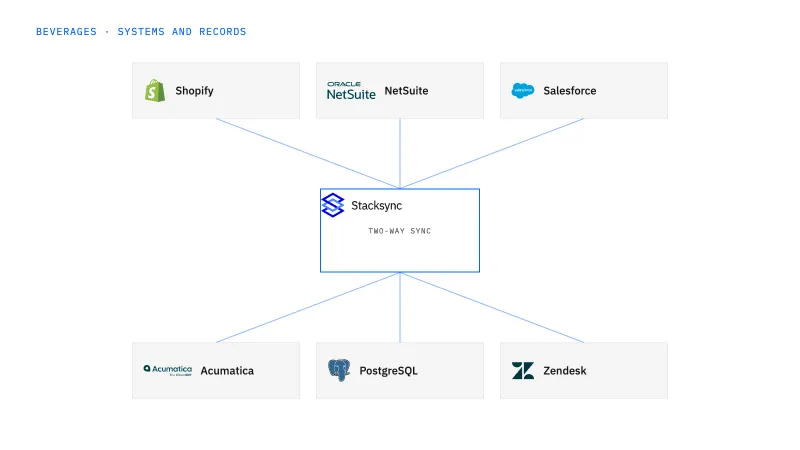
Connect beverage distributor documents to actual case and pallet contents. This fits brands handling full pallets, partial pallets, mixed loads, and partner-specific receiving requirements. Scope the EDI transaction chain around real warehouse evidence and retain distributor location and item identities throughout.
Shipment documents describe planned pallet counts while the actual truck contains a different mixture of cases and products.
Explore your process in a demo, or get our shared two-way sync architecture guide.
When this fits
Beverage brands combining production, DTC sales, distributor networks, and retail delivery.
Use actual item and case contents for each required handling unit rather than a universal cases-per-pallet assumption.
Preserve partner order and location references through shipment, invoice, and later receiving reconciliation.
Orderful carries the ship notice to the distributor and records the acknowledgment that the file was received. That acknowledgment proves transmission, not what the depot counted on the dock. The distributor receipt stays a separate record owned by accounts receivable, and any shortage it reveals goes to operations or finance for a decision. Moving a document through EDI does not create two-way sync of NetSuite orders or pallet contents.
The process, end to end
A distributor order becomes a mixed pallet plus loose cases during packing. The ERP contains order lines, the warehouse knows the final contents, and the partner expects a specific shipment hierarchy. A demo should show the final physical configuration flowing into the required document without treating transmission as proof of receipt.
Scope your implementation
Review current platform pricing alongside the records, volume, and actions in your process. Use your own operating baseline to evaluate the economics.
Explore your process in a demo, or get our shared two-way sync architecture guide.
From foundation to action
Keep shared customer, order, and operational records aligned, with clear field ownership.
Explore two-way sync 02Move approved work between systems, assign exceptions, and confirm the result.
Explore workflows 03Investigate cross-system questions, assemble the evidence, and prepare the next action.
Explore ai agents (genies) 04Connect trading-partner documents to operational records and exception handling.
Explore ediGo deeper
The advance ship notice describes the mixed pallet the warehouse loaded, not the pallet count on the order, and a distributor receipt is matched to it rather than replaced by it.
No. Product, loading configuration, and mixed or partial contents determine the actual case quantities.
The notice must describe the truck, not the plan. When packing turns a full pallet plus loose cases into one mixed pallet, the prepared document is regenerated or corrected under the distributor’s process before it is sent through Orderful. The corrected notice lists item-level case contents for the mixed pallet and keeps loose cases explicit rather than rounding them into a whole-pallet count. Its totals are reconciled to the NetSuite order lines and remaining balance, and it is validated against the partner’s guidelines before release.
It can be the entry point when a distributor mandate is the pressing problem, but the layers stack in order. Two-way sync keeps NetSuite order lines and the warehouse’s pallet contents on the same item and destination identifiers the documents will carry. Workflows hold the ship notice until final packing is confirmed and block release when loose cases are missing. Genies compare a pallet-only distributor receipt with the transmitted notice and draft the item-detail request for a shortage. EDI through Orderful is the partner document layer on top.


