







Route the real cause
Separate missing receipt evidence, physical shortages, and incorrect pack definitions so each case reaches the team that can resolve it.
 Salesforce
  HubSpot
  NetSuite
  Zendesk
  Microsoft Dynamics 365 Sales
  Dynamics 365 F&O
  Attio
Attio  Pipedrive
  Zoho CRM
  Campfire
  Rillet
  Front
Front  Shopify
  Amazon Seller Central
  SendGrid
 Packaged food and snacks
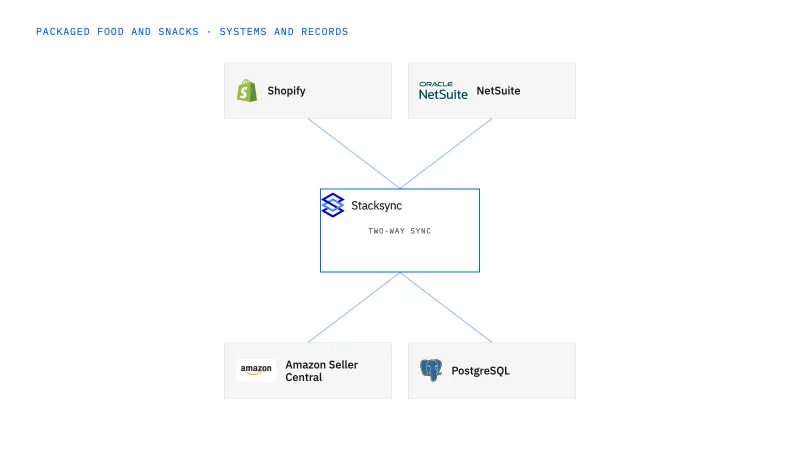
Coordinate the decisions behind a mismatched co-packer receipt before operations accepts a correction. This workflow fits snack brands whose supply, receiving, and ERP teams repeatedly compare packing lists, physical counts, and pack definitions. It gives each discrepancy a responsible owner and a verified resolution state.
Supplier documents, warehouse counts, and ERP receipts disagree, and email threads do not show which fact was accepted.
Explore your process in a demo, or get our shared two-way sync architecture guide.
When this fits
Packaged-food and snack manufacturers combining DTC, marketplaces, co-packing, and grocery distribution.
Separate missing receipt evidence, physical shortages, and incorrect pack definitions so each case reaches the team that can resolve it.
Keep supplier, observed, accepted, and held quantities distinguishable and attach the approved destination result before closure.
The workflow reads NetSuite item receipts and the Postgres reconciliation rows, and it raises targeted evidence requests through Gmail under the mailbox scope you grant. It does not post a correction on its own. Receiving or the authorized ERP owner approves the specific receipt change in NetSuite; the workflow stores that destination reference, reads the result back and only then moves the case to closed.
The process, end to end
A co-packer revises a packing list after delivery while receiving holds part of the load. Supply needs the supplier explanation, product operations must confirm the case size, and the ERP owner must approve any correction. The workflow organizes that handoff and records the accepted outcome instead of merely forwarding the email.
Scope your implementation
Review current platform pricing alongside the records, volume, and actions in your process. Use your own operating baseline to evaluate the economics.
Explore your process in a demo, or get our shared two-way sync architecture guide.
From foundation to action
Keep shared customer, order, and operational records aligned, with clear field ownership.
Explore two-way sync 02Move approved work between systems, assign exceptions, and confirm the result.
Explore workflows 03Investigate cross-system questions, assemble the evidence, and prepare the next action.
Explore ai agents (genies) 04Connect trading-partner documents to operational records and exception handling.
Explore ediGo deeper
A promotion workflow gives the commercial owner one record showing committed grocery quantities, accepted supply evidence, and the Shopify launch window before go-live.
When a supplier's revised packing list, the dock count, and the NetSuite receipt disagree, this workflow keeps one case open until the right owner records a decision.
Explore all packaged food and snacks integration and automation guides ↗
No. Supplier notices are evidence. Receiving and the authorized ERP owner control the accepted operational result.
It keeps both document versions with their timestamps and stated quantities, and it leaves the receiving count and the NetSuite item receipt untouched. The case shows supplier, observed, accepted and held quantities side by side in Postgres. When the revision points to an old case size, the workflow routes the pack question to product operations; when it points to a physical shortage, to receiving and supply. Any change to the ERP receipt waits for the authorized owner, and the case closes once the read-back confirms the accepted result.
Start with two-way sync between NetSuite item receipts and the Postgres reconciliation rows, so supplier, observed, accepted and held quantities sit in one view before anyone routes an exception. Then add this workflow to give each discrepancy an owner, raise targeted requests through Gmail and read back the approved NetSuite correction. Genies come next, reconstructing shipment and receipt evidence when a grocer files a shortage claim against the same finished goods. EDI arrives last, carrying grocery purchase orders and ship notices as partner documents.


