







Capture the commercial boundary
Record who requested the visit, who authorized charges and which rate or spending limit applies.
 Salesforce
  HubSpot
  NetSuite
  Zendesk
  Microsoft Dynamics 365 Sales
  Dynamics 365 F&O
  Attio
Attio  Pipedrive
  Zoho CRM
  Campfire
  Rillet
  Front
Front  Shopify
  Amazon Seller Central
  SendGrid
 Commercial HVAC, plumbing and electrical contractors
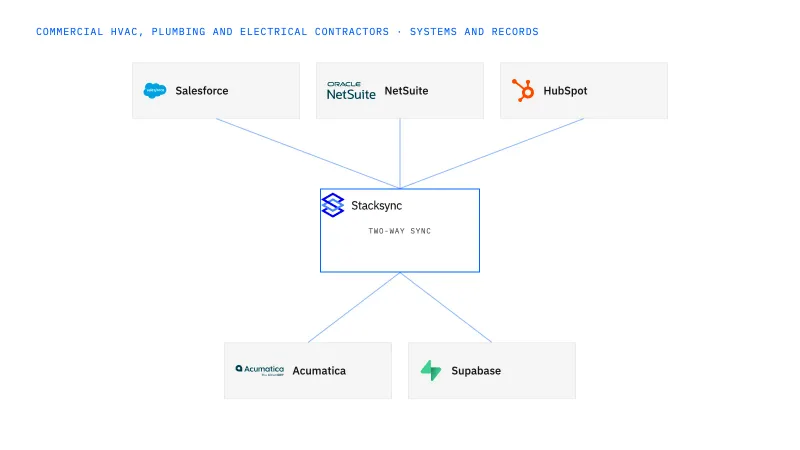
Coordinate emergency HVAC, electrical and plumbing calls from intake through closeout. The workflow connects site identity, dispatch decisions, rate authorization and actual work, then prepares the finance handoff. It keeps access permission, purchasing authority and additional repair approval distinct.
Urgent work gets done while the evidence needed to explain and bill it arrives later.
Explore your process in a demo, or get our shared two-way sync architecture guide.
When this fits
US commercial HVAC, plumbing, electrical and multi-trade service groups with 100–1,000 employees.
Record who requested the visit, who authorized charges and which rate or spending limit applies.
Keep the initial callout and later recommended or approved repairs linked without treating all activity as one authorization.
Route rate, site and acceptance questions to the person able to resolve them before the packet reaches finance.
The process, end to end
a tenant calls about a plumbing issue after hours, while the building owner controls purchasing. Dispatch follows the contractor's policy; the workflow preserves that decision and routes the separate commercial approval instead of leaving billing to reconstruct it later.
Scope your implementation
Review current platform pricing alongside the records, volume, and actions in your process. Use your own operating baseline to evaluate the economics.
Explore your process in a demo, or get our shared two-way sync architecture guide.
From foundation to action
Keep shared customer, order, and operational records aligned, with clear field ownership.
Explore two-way sync 02Move approved work between systems, assign exceptions, and confirm the result.
Explore workflows 03Investigate cross-system questions, assemble the evidence, and prepare the next action.
Explore ai agents (genies) 04Connect trading-partner documents to operational records and exception handling.
Explore ediGo deeper
Coordinate emergency HVAC, electrical and plumbing callouts without losing authorization, rate and visit evidence.
Route multi-trade service renewals through scope, pricing and customer approval before activating the next contract term.
Explore all commercial HVAC, plumbing and electrical contractors integration and automation guides ↗
No. Qualified personnel and operating procedures control the physical response. The workflow coordinates administrative evidence.
Yes. A complete, owned billing packet is a useful first automation scope.
Track missing-authorization cases, evidence-chasing time and duplicate handoffs for comparable call types.
Start with two-way sync. The workflow can mark a caller's billing identity unresolved, but it runs more cleanly when Salesforce and NetSuite already agree on the site, the billing customer and the job reference, so a callout lands on a known record. Then add workflows to carry the dispatch decision, rate authorization and performed work into the finance handoff. Genies follow when supervisors want the technician's notes, parts and acceptance evidence assembled into a packet with open questions marked. EDI applies later to equipment purchase orders from HVAC distributors, not to service billing.


