







Preserve the original units
Keep supplier quantities and approved conversions available so receiving and finance can reproduce the comparison.
 Salesforce
  HubSpot
  NetSuite
  Zendesk
  Microsoft Dynamics 365 Sales
  Dynamics 365 F&O
  Attio
Attio  Pipedrive
  Zoho CRM
  Campfire
  Rillet
  Front
Front  Shopify
  Amazon Seller Central
  SendGrid
 Commercial flooring and interior installation
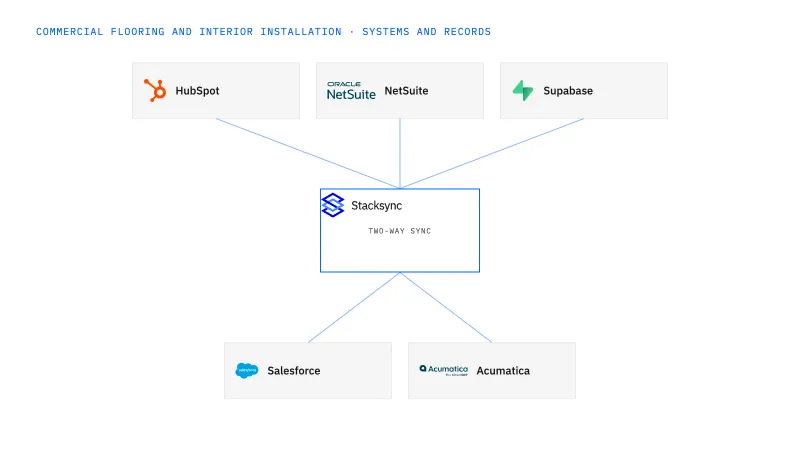
Use EDI to connect flooring supplier documents to project purchase lines while preserving boxes, rolls, pallets and area units. Stacksync can support the document-to-system design with partner-specific mapping and controlled workflow handoffs. Receiving and finance still verify physical quantities, condition and commercial differences.
Supplier packaging and invoice units differ from the takeoff, causing avoidable quantity and price disputes.
Explore your process in a demo, or get our shared two-way sync architecture guide.
When this fits
US flooring and interior contractors with 100–1,000 employees that supply materials and install commercial projects.
Keep supplier quantities and approved conversions available so receiving and finance can reproduce the comparison.
Retain purchase-line and shipment references when one order arrives in several phases or partial packages.
Technical processing does not prove material was accepted at the site or that an invoice is approved.
The process, end to end
a supplier ships a mixture of full and partial pallets while invoicing by area. The contractor needs line-level conversions and receipt evidence so purchasing, warehouse and accounts payable agree on the actual quantity.
Scope your implementation
Review current platform pricing alongside the records, volume, and actions in your process. Use your own operating baseline to evaluate the economics.
Explore your process in a demo, or get our shared two-way sync architecture guide.
From foundation to action
Keep shared customer, order, and operational records aligned, with clear field ownership.
Explore two-way sync 02Move approved work between systems, assign exceptions, and confirm the result.
Explore workflows 03Investigate cross-system questions, assemble the evidence, and prepare the next action.
Explore ai agents (genies) 04Connect trading-partner documents to operational records and exception handling.
Explore ediGo deeper
Map flooring supplier EDI with explicit product units, package hierarchy and partial-delivery references.
Explore all commercial flooring and interior installation integration and automation guides ↗
The buyer and supplier must agree the product-specific rule. The mapping preserves and applies that approved meaning.
Keep damage and usable quantity in receiving evidence and route the resulting commercial exception.
Choose recurring volume with clear partner documentation and a manageable set of products and units.
Usually the last. Two-way sync comes first when NetSuite purchase lines, product conversions and receiving records must match what your project and finance teams see elsewhere. Workflows follow, routing supplier quantity, price and substitution changes to the buyer and accounts payable. Genies come next when a receipt disagrees with the takeoff and the difference needs an explanation with sources. EDI arrives once the trading-partner implementation guide and item and unit mappings are agreed. If supplier documents are the only open problem, begin with EDI.


