/
Data integration platforms that deliver sub-second sync for BI dashboards use real-time streaming architectures, change data capture, and event-driven processing. Unlike traditional batch-based ETL tools that update every 15-30 minutes, modern platforms propagate changes in milliseconds, enabling instant decision-making for operational teams.
Traditional BI dashboards refresh on fixed schedules, creating data lag that impacts operational decisions. When a customer service rep views outdated order status or a sales team works with stale inventory numbers, the result is poor customer experiences and missed opportunities.
Sub-second synchronization eliminates this gap. Changes appear across all connected systems almost instantly, transforming dashboards from historical reports into real-time operational tools.
Not every dashboard needs sub-second updates. The right latency depends on your use case:
For operational scenarios where decisions happen in real time, batch processing with 30-minute delays creates operational friction and data inconsistencies.
Modern platforms achieve sub-second latency through several technical approaches.
CDC monitors database logs or triggers to detect inserts, updates, and deletes at the field level. This method captures changes as they happen without invasive database modifications, achieving sub-second replication delays for mission-critical applications.
Instead of polling systems on schedules, event-driven platforms push updates the moment changes occur. This approach minimizes latency by eliminating waiting periods between sync cycles.
Streaming architectures process data continuously rather than in batches. Platforms like Tinybird and Estuary Flow can ingest and analyze millions of events per second, keeping dashboards updated in real time.
Storing frequently accessed data in memory rather than on disk accelerates retrieval. Combined with materialized views and pre-computed aggregations, this reduces query latency from seconds to milliseconds.
Different platforms specialize in different aspects of real-time data integration.
Power BI offers streaming semantic models through integrations with PubNub and Azure Stream Analytics. However, this approach focuses primarily on displaying streaming data rather than bi-directional operational synchronization.
Limitations: No persistent storage for historical analysis, limited to visualization-only scenarios without building separate data pipelines.
Tinybird and similar platforms provide real-time data ingestion with query engines optimized for millisecond responses. These excel at serving high-concurrency analytical queries.
Best for: User-facing analytics applications, real-time monitoring dashboards, and scenarios requiring complex analytical queries at scale.
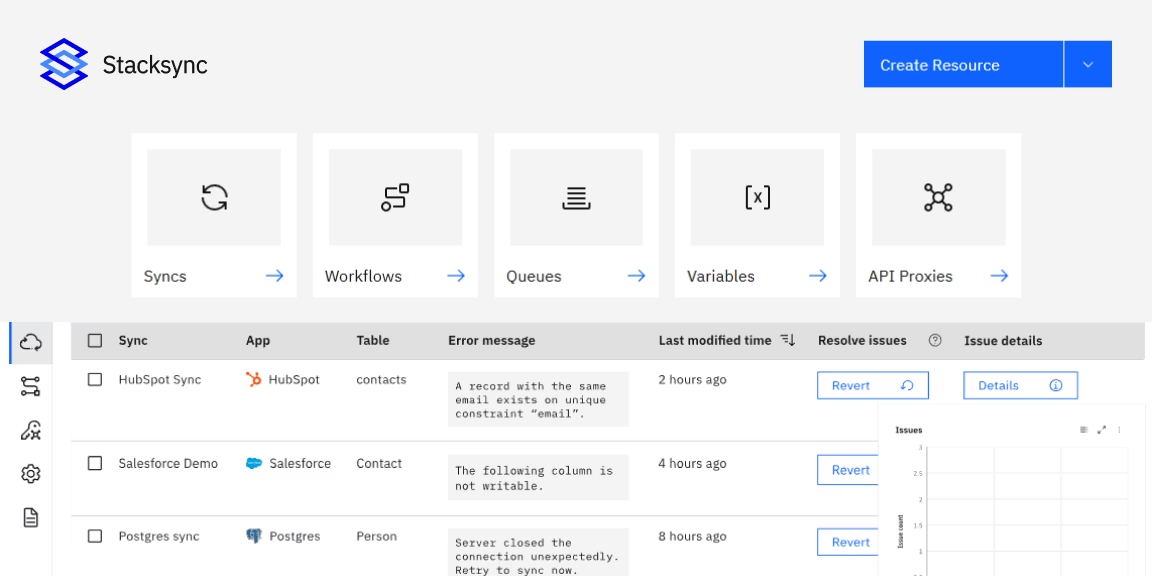
For businesses that need operational consistency across CRMs, ERPs, and databases, specialized synchronization platforms provide bi-directional, real-time updates with sub-second propagation.
These platforms focus on maintaining data accuracy across business systems rather than just moving data for analytics. When a record updates in Salesforce, that change reflects in PostgreSQL, NetSuite, and connected dashboards within seconds.
Key capabilities:
Achieving reliable sub-second latency requires more than fast data movement.
The best platform depends on your specific requirements.
For analytics-focused dashboards: Tools like Power BI with streaming features or dedicated real-time analytics platforms work well when you need to visualize continuously updated data.
For operational consistency: When business processes depend on synchronized data across multiple systems, purpose-built bi-directional sync platforms ensure changes propagate instantly and reliably.
For hybrid scenarios: Many organizations use streaming platforms for real-time data landing in warehouses, followed by scheduled transformations using tools like dbt.
Consider these evaluation criteria:
The shift from batch ETL to real-time streaming represents a fundamental change in how organizations handle operational data. For BI dashboards powering time-sensitive decisions, sub-second synchronization is no longer optional.
Whether you are building customer-facing analytics, operational monitoring dashboards, or real-time reporting tools, understanding the technical requirements and platform capabilities ensures your dashboards deliver accurate, actionable insights when teams need them most.
Modern data integration platforms eliminate the complexity of building custom real-time pipelines, offering no-code setup with enterprise-grade reliability. For organizations where operational accuracy directly impacts business outcomes, investing in sub-second synchronization transforms dashboards from static reports into dynamic operational tools.
Ready to eliminate data lag in your dashboards? Explore how real-time data synchronization can transform your BI infrastructure and empower your teams with instant, accurate insights across all connected systems.