

















From Silos to AI-Driven Ops: A Recap of Stacksync's Silicon Valley NetSuite User Group Event
Recap of Stacksync’s Silicon Valley NetSuite User Group event featuring insights from Fellow, Orderful, and Stacksync on real-time data infrastructure and AI-driven operations in 2026.
- Author
- Ruben Burdin · Founder & CEO
- Published
- Read time
- 5 min read
On February 4, 2026, Stacksync hosted the SF NetSuite Series at Fellow's San Francisco office. More than 40 NetSuite practitioners, data engineers, ERP architects, and finance operations leaders attended. Three speakers were tasked to speak on the same question: what does the data infrastructure underneath an AI-native enterprise actually need to look like in 2026?
This is a recap of what was discussed:
Hosted by Fellow
The evening started with a word of thanks to Fellow, who opened their San Francisco office and made the event possible. Their space was set up with champagne, gourmet appetizers, and room for real conversation after the formal program. Fellow designs and manufactures specialty coffee equipment — kettles, grinders, and brewing gear — and was named one of Fast Company's Most Innovative Companies in 2023. The company raised a $30 million Series B in 2022 and operates its flagship store in San Francisco's Mission District, a few blocks from where the event was held. Having Fellow host a night about data infrastructure and AI-driven retail operations made sense: as a high-growth consumer brand managing e-commerce and ERP data at scale, they live the problem the speakers were describing.
Arvind Jeyakumar: How Fellow Saved 12 Hours Each Month Without Machine Learning
The opening talk set the technical foundation for everything that followed. Arvind Jeyakumar, Head of Data & Analytics Engineering at Fellow, presented a specific operational problem he inherited at Fellow Products and the infrastructure he built to eliminate it.
Arvind Jeyakumar joined Fellow in July 2022 as Founding Data Member. Over the following two and a half years, he built Fellow's complete analytics infrastructure from the ground up: the data pipelines, the data models, the dashboards, and the layer that product and finance teams rely on daily. In March 2025, he was promoted to Staff Analytics Engineer and Head of Data.
His path to that role covered the full range of data engineering environments. He started at Infosys, progressing from Systems Engineer Trainee to Senior Analytics Consultant in Data Engineering. He then moved to CleanRobotics as Lead Data Engineer, applying machine learning to waste stream classification in physical environments. He holds a Master of Science in Business Analytics from UC Davis Graduate School of Management and a Bachelor of Engineering in Mechanical Engineering from Anna University. He also teaches as a Lecturer in the UC Davis MSBA program, bringing practitioner experience directly into the academic curriculum.
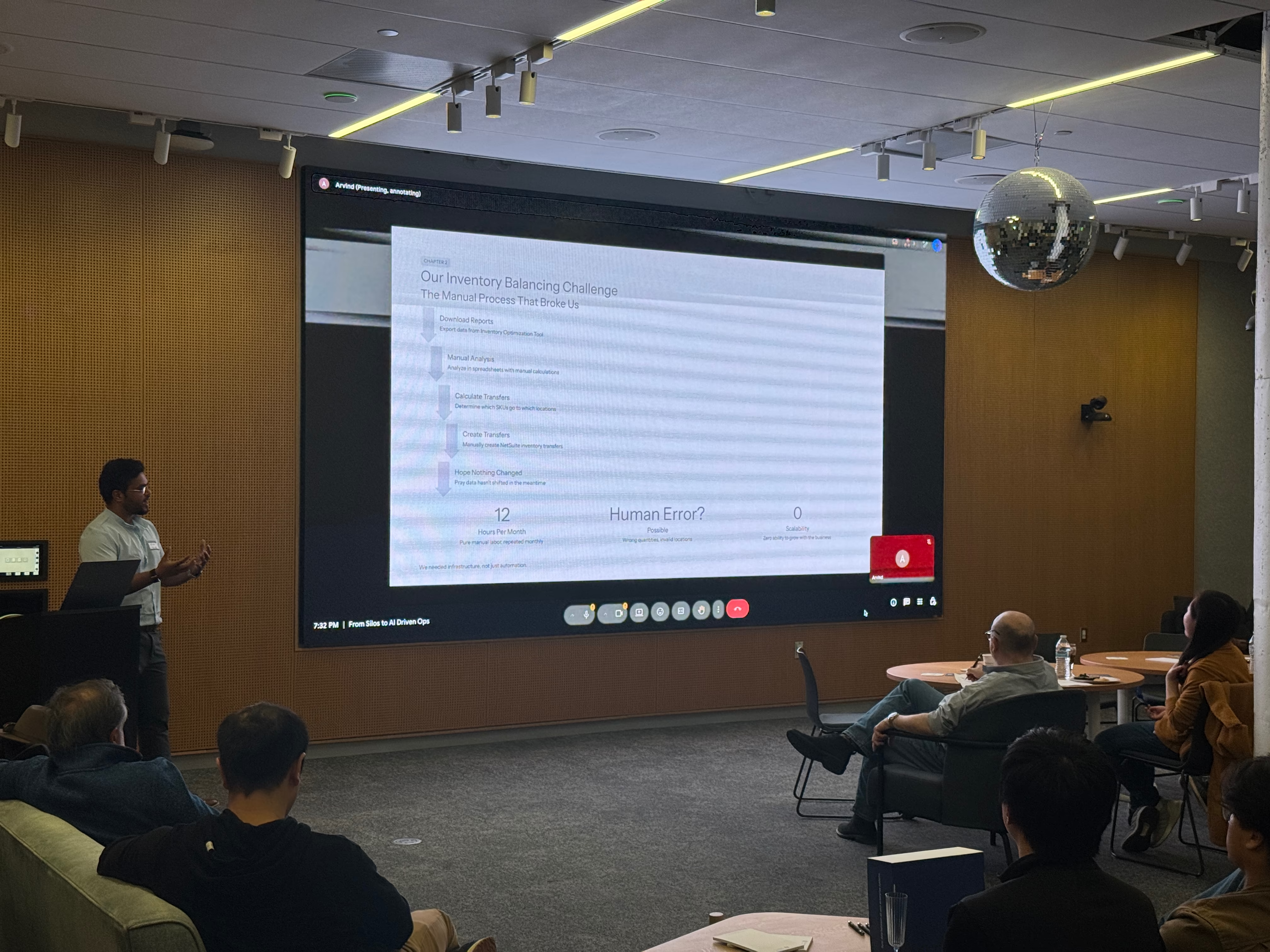
At the SF NetSuite Series, Arvind Jeyakumar walked through what he called Fellow's inventory balancing challenge – the manual process that broke the team before he rebuilt it. The original workflow had five steps: download reports from NetSuite, run manual analysis in spreadsheets, calculate which SKUs to transfer between locations, manually create NetSuite transfer records, and then hope the inventory data had not shifted in the meantime. That process consumed 12 hours per month, had no scalability, and introduced human error at every step.
The replacement workflow Arvind Jeyakumar built saves those 12 hours every month and notably, it uses no machine learning models, no neural networks, and no LLMs. The solution was proper data infrastructure. There were reliable pipelines, clean data models, and automated logic connected directly to NetSuite. His point was direct; most companies reach for AI before fixing the underlying data plumbing, and the result is automation built on a foundation that still breaks.
Arvind Jeyakumar built the system he was describing, inside a real company, against a real deadline. That made the talk concrete in a way that a theoretical presentation on data architecture could not have been.
Ruben Burdin: The Sync Problem Underneath Every AI Workflow
The data freshness problem Arvind Jeyakumar described at the application layer has a direct infrastructure cause. Ruben Burdin, CEO of Stacksync (Y Combinator W24), presented on why most NetSuite environments are structurally set up to produce stale data.
Most NetSuite environments still move data through nightly batch jobs. A record changes in NetSuite, and a downstream system sees it hours later. For reporting, that delay is acceptable. For AI agents that need to act on current state, it produces wrong outputs on correct models.
Stacksync connects NetSuite, CRMs, and databases through real-time, bidirectional sync. A change in NetSuite propagates to downstream systems immediately. A change in the CRM writes back to NetSuite. No batch jobs, no obsolete reads.

Blake Harries: AI-Native EDI For NetSuite Supply Chain Operations
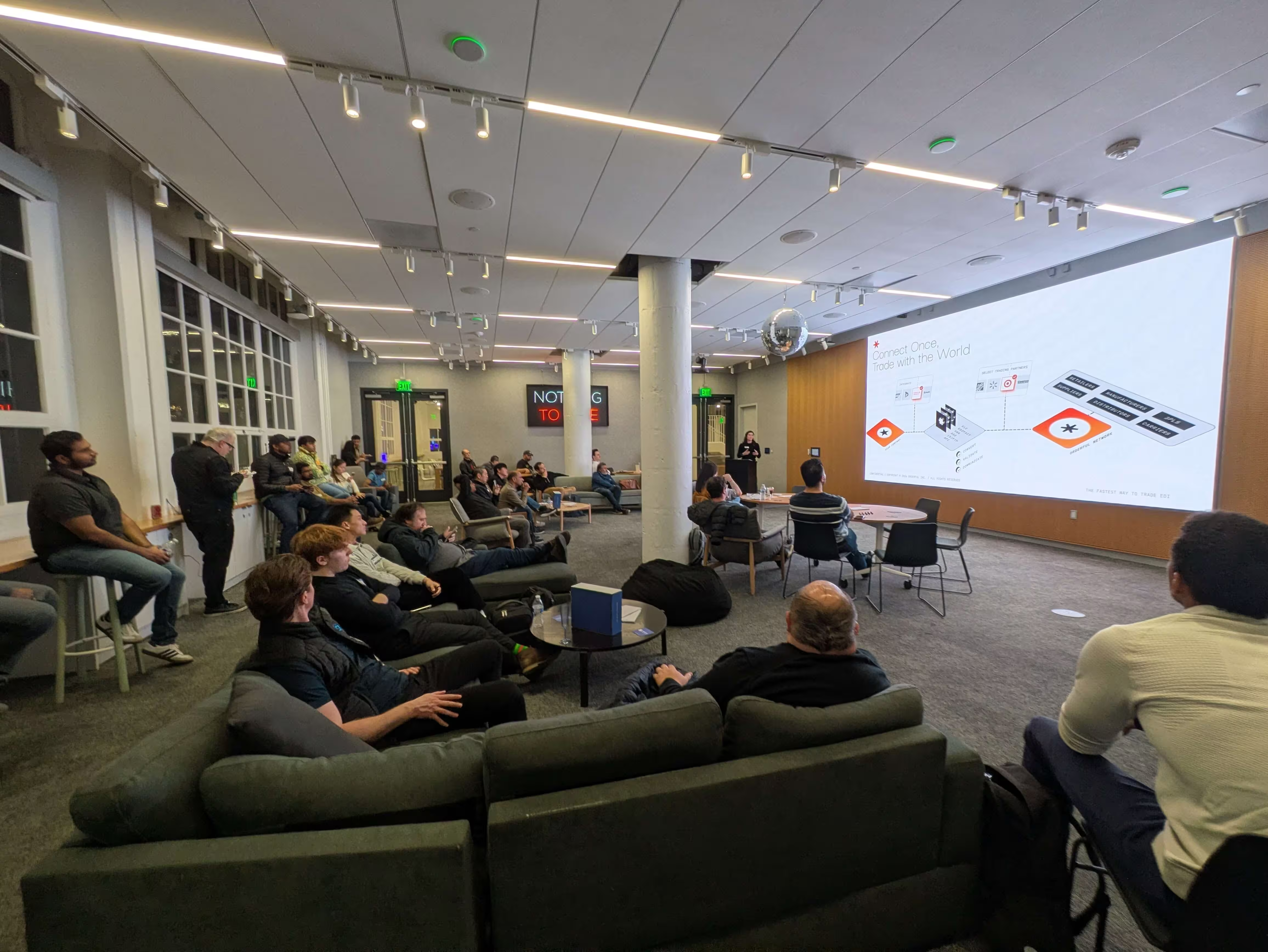
The third speaker brought the conversation to the supply chain side of NetSuite operations. Blake Harries, Senior Channel Manager at Orderful (a16z-backed), presented on EDI and why trading partner data has stayed disconnected for so long.
Orderful's product Mosaic removes manual field mapping from EDI integrations. For NetSuite users managing multiple trading partners, onboarding that previously took months now takes days!
The Event
More than 40 practitioners attended: NetSuite Administrators, ERP Architects, RevOps leaders, Data Engineers, and Finance Operations Leads. Keeping the headcount small was intentional, the goal was a room where the conversations after the program were as useful as the talks themselves.
The SF NetSuite Series continues in 2026. The next event will be announced on Stacksync's LinkedIn page. Stay tuned!

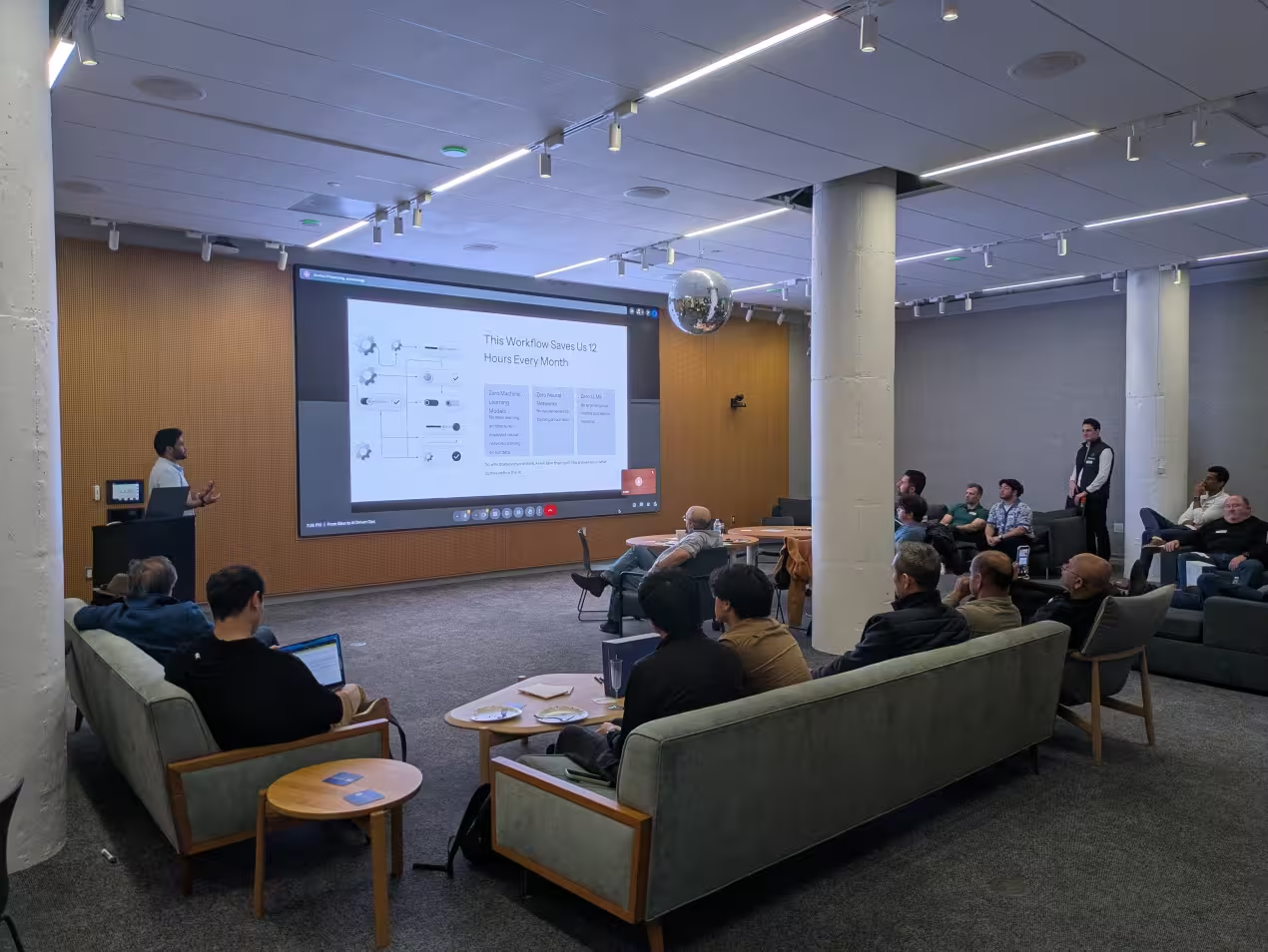
Thank you to Arvind Jeyakumar and the Fellow team
Fellow team opened their San Francisco office for this event, and Arvind Jeyakumar delivered a talk grounded in what he has actually built. We are grateful to Arvind Jeyakumar and to the entire Fellow Products team for their hospitality. Interested in real-time, bidirectional sync between NetSuite and your other systems? Learn more atstacksync.com
FAQ
Frequently asked questions